Tree Care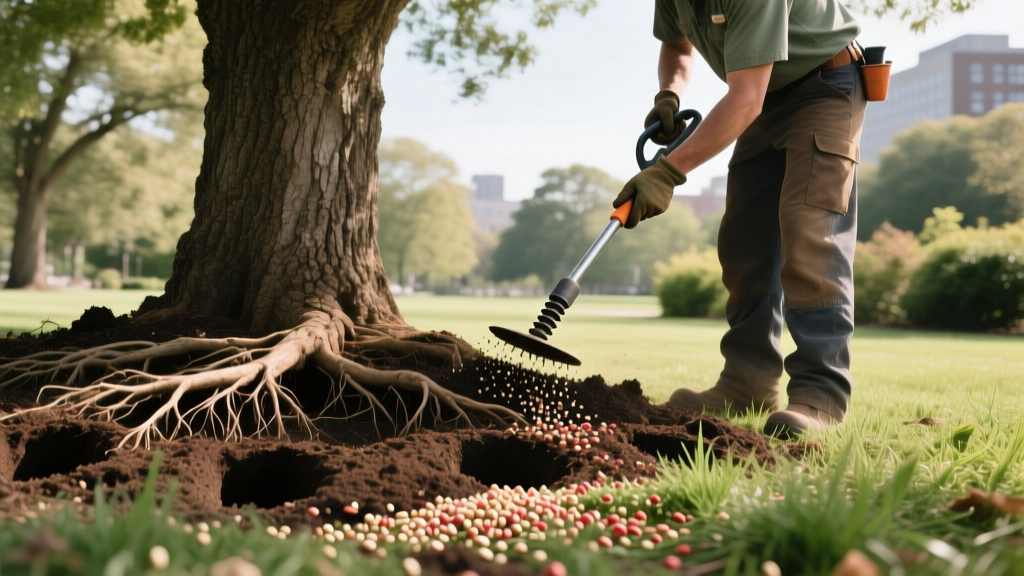
Tree Root Zone Aeration And Shade Overseeding Guide
David ParkPublished
The Hidden Conflict: Tree Roots, Soil Compaction, and Turfgrass
Maintaining a lush lawn beneath a mature tree canopy is one of the most persistent challenges in landscape management. While trees and turfgrass can coexist, they are naturally competitive. Trees cast dense shade that limits photosynthesis for grass, while their extensive root networks aggressively compete for water and soil nutrients. However, the most insidious enemy of both tree health and understory turf in urban and suburban environments is soil compaction.
Foot traffic, construction equipment, and even heavy mowers compress the soil particles in the critical root zone. This compression destroys the macropores necessary for oxygen exchange and water infiltration. Without adequate oxygen, tree feeder roots suffocate and die back, leading to canopy thinning, increased susceptibility to borers and diseases, and eventual structural failure. Simultaneously, compacted soil creates a hardpan surface where grass seed struggles to establish, leading to bare, muddy patches under the dripline.
To resolve this, homeowners and landscape professionals must adopt specialized aeration and overseeding techniques that prioritize the biological needs of the tree while creating a viable seedbed for shade-tolerant grasses. According to the Morton Arboretum's tree and plant care guidelines, addressing soil compaction without damaging the existing root architecture is the foundational step in urban tree preservation and landscape restoration.
Why Standard Lawn Aeration Harms Trees
When homeowners notice compacted soil or thinning grass, the standard reflex is to rent a mechanical core aerator (plug aerator) and run it over the lawn. While this is excellent for open turf, it is highly destructive when performed within a tree's dripline.
Approximately 80% of a tree's fine feeder roots—the roots responsible for absorbing water and nutrients—are located in the top 6 to 12 inches of the soil. Mechanical core aerators use heavy, hollow metal tines that violently punch into the ground, severing and tearing these vital root networks. The Arbor Day Foundation emphasizes that protecting the critical root zone from mechanical damage is paramount for long-term tree vitality. Repeated core aeration under a mature oak or maple can lead to severe root loss, inviting opportunistic pathogens like Armillaria root rot and drastically reducing the tree's drought tolerance.
Therefore, arborists and specialized landscape contractors utilize non-destructive, tree-safe aeration methods that relieve compaction and improve soil structure without slicing through the root system.
Safe Tree Root Zone Aeration Techniques
To safely alleviate compaction and prepare the soil for overseeding, professionals rely on three primary techniques. Each method introduces oxygen, organic matter, and pore space into the soil profile while respecting the tree's biology.
1. Air Spading (Pneumatic Excavation)
Air spading is the gold standard for tree root zone aeration. This technique utilizes a specialized pneumatic tool (often referred to by the brand name AirSpade®) that blows compressed air at supersonic speeds (up to 1,200 mph). The high-velocity air fractures and displaces compacted mineral soil but safely bends around flexible, organic tree roots without causing abrasion or tearing.
Arborists typically use air spading to perform 'root collar excavations' (clearing soil away from the trunk flare) or to create radial trenches. Once the soil is safely loosened, it is mixed with organic compost and biochar before being gently replaced, creating an ideal, aerated seedbed for surface planting.
2. Vertical Mulching
Vertical mulching is a highly effective, lower-cost alternative to full air spading. Using a standard 2-inch to 3-inch auger attached to a heavy-duty drill, operators bore narrow holes 8 to 12 inches deep throughout the tree's dripline. Crucially, the operator avoids the immediate trunk area and navigates around major structural roots.
These holes are then filled with a porous, nutrient-rich mixture of expanded shale, coarse sand, and high-quality compost. This creates permanent vertical columns of aeration and moisture retention. The surrounding soil structure remains undisturbed, and the fine feeder roots quickly colonize these compost-filled columns.
3. Radial Trenching
Radial trenching involves digging narrow, shallow trenches (4 inches wide, 6 to 8 inches deep) that radiate outward from the trunk like the spokes of a wheel, starting about 3 feet away from the trunk and extending past the dripline. The excavated soil is replaced with a compost and perlite blend. This method is particularly useful for breaking up severe surface crusting and providing a structured pathway for water and new grass roots to penetrate.
Comparing Tree-Safe Aeration Methods
| Method | Depth / Scope | Estimated Cost (Per Tree) | Best Use Case |
|---|---|---|---|
| Air Spading | Full root zone / 6-12 inches | $600 - $1,500+ | Severe compaction, root collar excavation, high-value heritage trees |
| Vertical Mulching | 8-12 inches deep (2" wide holes) | $250 - $500 | Moderate compaction, routine maintenance, preparing for overseeding |
| Radial Trenching | 6-8 inches deep (4" wide trenches) | $400 - $800 | Breaking up surface hardpans, improving drainage on heavy clay soils |
Overseeding Under Trees: The Challenge and the Solution
Once the soil has been safely aerated and amended, the next step is overseeding. However, you cannot simply broadcast standard Kentucky Bluegrass or Perennial Ryegrass under a mature tree and expect success. These species require full sun and will quickly succumb to shade stress, disease (like powdery mildew), and root competition.
According to University of Minnesota Extension lawn care guidelines, selecting the correct shade-tolerant seed blend is the single most important factor in establishing turf under a tree canopy. The undisputed champions of shady environments are the Fine Fescues.
Selecting the Right Shade-Tolerant Seed
- Creeping Red Fescue: Excellent shade tolerance and spreads via rhizomes to fill in bare patches, though it can struggle in extreme summer heat.
- Chewings Fescue: Grows in dense, upright bunches. It is highly competitive against tree roots and tolerates acidic soil conditions often found under pine and oak trees.
- Hard Fescue: The most drought-tolerant and low-maintenance of the group. It requires less nitrogen fertilizer, which is ideal since excess nitrogen can stimulate excessive, weak tree canopy growth.
Pro Tip: Look for commercial 'Deep Shade' or 'Dense Shade' seed mixes that list Fine Fescues as the primary ingredient (comprising 70% or more of the seed blend by weight). Avoid mixes heavy in Tall Fescue, as it tends to form coarse, unattractive clumps in low-light settings.
Step-by-Step Tree-Safe Overseeding Process
To achieve a lush understory without compromising the tree, follow this precise, low-impact overseeding protocol:
Step 1: Canopy Pruning for Dappled Light
Before touching the soil, hire a certified arborist to perform a 'crown thinning' and 'limbing up.' Removing select interior branches and raising the lower canopy allows dappled sunlight to reach the ground. Grass requires at least 3 to 4 hours of filtered sunlight daily to survive. Never remove more than 15-20% of the live canopy in a single season.
Step 2: Soil Preparation via Vertical Mulching
Perform the vertical mulching technique described above. This provides the necessary aeration without the destructive raking and tearing associated with traditional lawn dethatching or core aeration.
Step 3: The Compost Top-Dressing
Instead of aggressively raking the soil (which damages surface roots), apply a thin layer (no more than 1/4 to 1/2 inch) of screened, high-quality organic compost over the seeded area. This compost acts as a moisture-retentive blanket, protects the seed from birds, and provides a gentle nutrient release.
CRITICAL WARNING: Protect the Root Flare!
When applying compost or topsoil for overseeding, you must maintain a strict 'mulch-free and soil-free' zone around the base of the trunk. The root flare (where the trunk widens and meets the roots) must remain visible and exposed to the air. Burying the root flare under compost or topsoil traps moisture against the bark, leading to fatal girdling roots, fungal cankers, and Phytophthora root rot. Keep all amendments at least 6 to 12 inches away from the trunk base.
Step 4: Sowing the Seed
Use a handheld broadcast spreader to apply the Fine Fescue blend at a rate of 5 to 6 pounds per 1,000 square feet. The seed will settle into the compost and the holes created by the vertical mulching auger, ensuring excellent seed-to-soil contact without the need for aggressive raking.
Step 5: Precision Watering
The challenge of watering newly overseeded grass under a tree is balancing the high moisture needs of the germinating seed with the tree's susceptibility to root rot in waterlogged soils. Water lightly 2 to 3 times a day for the first 14 days to keep the top inch of compost consistently moist, but not saturated. Once the Fine Fescue reaches 2 inches in height, transition to deep, infrequent watering (e.g., 1 inch of water once a week) to encourage both grass and tree roots to grow deeper into the newly aerated soil profile.
Maintenance and Long-Term Coexistence
Establishing grass under a tree is only half the battle; maintaining it requires a shift in standard lawn care practices. Mow the shade grass higher than your sunlit lawn—set your mower deck to 3.5 or 4 inches. Taller grass blades have more surface area to capture limited sunlight and shade out germinating weeds.
Furthermore, reduce your nitrogen fertilization in these zones. Excess nitrogen promotes rapid, weak grass growth and can alter the soil pH, negatively impacting the tree's ability to uptake essential micronutrients like iron and manganese. By combining safe, non-destructive aeration techniques like vertical mulching with the strategic use of Fine Fescue seed, you can cultivate a vibrant, healthy landscape where both your trees and your turfgrass thrive in harmony.