Tree Care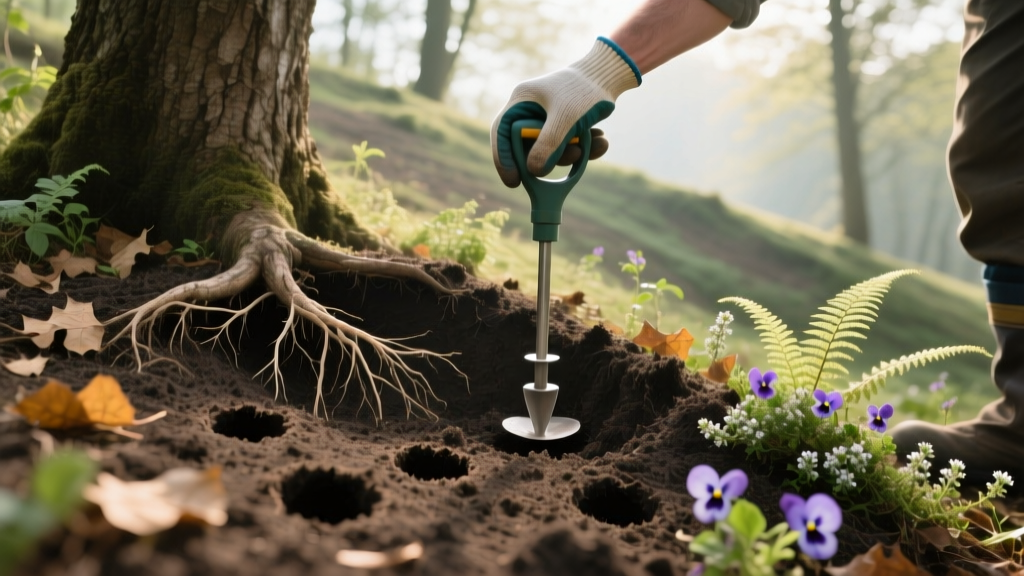
Tree Root Zone Aeration and Soil Decompaction Guide
Robert HayesPublished
The Silent Killer: Soil Compaction in the Critical Root Zone
When homeowners think of aeration and overseeding, they almost exclusively picture lawn care. However, these concepts are equally vital to the health, longevity, and structural integrity of mature landscape trees. Urban and suburban trees face a unique set of environmental stressors, with soil compaction acting as a silent killer. Heavy foot traffic, construction equipment, and even routine lawn mowing compress the soil particles in the Critical Root Zone (CRZ), drastically reducing the pore space necessary for oxygen and water infiltration.
Ideally, healthy soil consists of 50% solid material (minerals and organic matter), 25% water, and 25% air. In heavily compacted urban soils, the air space can drop below 10%, leading to root hypoxia (oxygen deprivation). Without adequate oxygen, fine feeder roots die off, leaving the tree vulnerable to drought stress, secondary pests, and structural failure. According to the University of Minnesota Extension, alleviating soil compaction is one of the most impactful cultural practices an arborist or homeowner can perform to extend the lifespan of an established tree.
Advanced Tree Root Aeration Techniques
Unlike turfgrass, which can be aggressively core-aerated with mechanical plug aerators, tree roots require specialized, low-impact decompaction methods to avoid severing vital structural and feeder roots. Below are the three most effective techniques used in modern arboriculture.
1. Radial Trenching
Radial trenching involves digging narrow, wedge-shaped trenches radiating outward from the tree trunk, much like the spokes of a wheel. These trenches are typically 2 to 4 inches wide, 12 to 18 inches deep, and begin at least 3 feet away from the trunk to avoid damaging the root flare. The excavated soil is replaced with a porous mix of compost, expanded shale, and coarse sand. This method creates permanent channels for water, air, and nutrients to reach the outer canopy drip line.
2. Vertical Mulching
Vertical mulching is a less invasive alternative to trenching. Using a specialized soil auger, arborists drill holes 2 to 3 inches in diameter and 12 to 24 inches deep throughout the CRZ. The holes are spaced in a grid pattern, usually 2 to 3 feet apart. These voids are then filled with a slow-release organic amendment, such as a blend of biochar, peat moss, and mycorrhizal inoculants. This technique is highly effective for trees in confined spaces where trenching is impractical.
3. Air Spading (Pneumatic Excavation)
Air spading is the gold standard for root zone decompaction. An AirSpade tool uses a supersonic stream of compressed air (typically 90 to 120 PSI) to safely fracture and blow away compacted soil without cutting or damaging the flexible tree roots. This allows arborists to expose girdling roots, incorporate organic matter directly into the root mat, and dramatically lower the soil bulk density. While highly effective, air spading requires professional equipment and training.
Technique Comparison and Cost Guide
Selecting the right aeration method depends on the tree's health, the severity of the compaction, and your budget. The following table outlines the practical differences between these techniques.
| Technique | Depth / Dimensions | Equipment Needed | Estimated Cost (Per Tree) | Best Application |
|---|---|---|---|---|
| Radial Trenching | 12-18' deep, 2-4' wide | Shovel, trenching spade, wheelbarrow | $150 - $300 (DIY/Labor) | Severe compaction, large open lawns |
| Vertical Mulching | 12-24' deep, 2-3' diameter | Power auger, soil amendments | $200 - $450 | Moderate compaction, restricted access areas |
| Air Spading | Variable (Root flare to drip line) | Air compressor, AirSpade nozzle | $500 - $1,500+ (Pro) | Root collar excavation, girdling root removal |
'Overseeding' the Tree Base: Groundcovers and Biological Inoculants
In traditional lawn care, overseeding introduces new grass seed to thicken a turf canopy. In tree care, 'overseeding' takes on a different, more ecologically sound meaning. Turfgrass and trees are natural competitors. Grass roots are incredibly dense and aggressively hog the top few inches of soil, intercepting water and fertilizer before they can reach the tree's feeder roots. Furthermore, maintaining grass under a tree often leads to 'mower blight'—mechanical damage to the tree's trunk and surface roots from string trimmers and mower decks.
Instead of overseeding with turfgrass, arborists recommend 'overseeding' the CRZ with shade-tolerant groundcovers or biological inoculants.
Botanical Overseeding: Groundcover Seeds
Replacing the grass under your tree's drip line with a living mulch or groundcover reduces competition and eliminates the need for mowing near the trunk. Excellent seed options for this include:
- Dutch White Clover (Trifolium repens): A nitrogen-fixing legume that thrives in partial shade, requires minimal mowing, and naturally fertilizes the soil.
- Creeping Thyme (Thymus serpyllum): A low-growing, drought-tolerant perennial that forms a dense mat, suppressing weeds without competing deeply for water.
- Fine Fescue Mixes: If a walkable surface is desired, shade-tolerant fine fescues (like creeping red fescue) have much lower water and nutrient demands than traditional Kentucky Bluegrass.
Biological Overseeding: Mycorrhizal Fungi
When aerating the soil, it is the perfect time to 'overseed' the root zone with beneficial biology. Mycorrhizal fungi form symbiotic relationships with tree roots, effectively extending the root system's absorptive capacity by up to 1,000%. Applying a granular endo- and ectomycorrhizal inoculant directly into aeration holes or radial trenches ensures the fungi make direct contact with the feeder roots, drastically improving the tree's drought resistance and nutrient uptake.
Step-by-Step Implementation Guide
Ready to decompact and rejuvenate your tree's root zone? Follow this actionable workflow for the best results.
Step 1: Delineate the Critical Root Zone
Measure the diameter of your tree's trunk at breast height (DBH), which is 4.5 feet above the ground. For every 1 inch of trunk diameter, calculate 1 foot of radial distance outward from the trunk. This circle represents your minimum CRZ and the primary target area for aeration.
Step 2: Remove Competing Turf
Use a flat spade or a sod cutter to carefully remove the grass within the CRZ. Skim just below the surface to avoid severing the tree's fine surface roots. The Arbor Day Foundation strongly recommends maintaining a mulched or groundcovered bed around trees to prevent mechanical damage and reduce competition.
Step 3: Execute the Aeration Method
Choose your aeration technique (vertical mulching or radial trenching are best for DIY). If using an auger for vertical mulching, drill holes in a staggered grid pattern, staying at least 3 feet away from the trunk to protect the structural root flare.
Step 4: Amend and Biologically 'Overseed'
Fill the aeration holes or trenches with a high-quality, porous amendment. A mix of 50% coarse compost and 50% expanded shale or pumice is ideal. Dust the amendment with mycorrhizal inoculant before backfilling.
Step 5: Apply Proper Mulch
After aerating and seeding your groundcover, apply a 2 to 3-inch layer of organic arborist wood chips over the bare soil. According to the International Society of Arboriculture (TreesAreGood.org), mulch helps maintain soil moisture, regulate temperature, and slowly add organic matter as it decomposes. Crucially, keep the mulch at least 3 inches away from the tree trunk to prevent rot and rodent damage—never create a 'mulch volcano'.
Seasonal Timing and Best Practices
Timing is critical when performing invasive root zone work. The optimal time for tree root aeration and groundcover seeding is during the tree's dormant season or just as it breaks dormancy. Early Fall (September to October) is generally the best window. Soil temperatures are still warm enough to encourage root growth and groundcover seed germination, but the tree's canopy demands for water are dropping. Early Spring (March to April) is the second-best option, provided the soil is not overly saturated, which can worsen compaction if heavy equipment is used.
Avoid aerating during the heat of summer or during severe drought conditions, as the temporary exposure of roots and disruption of the soil matrix can induce severe water stress. Always ensure the tree is deeply watered 48 hours before and immediately after the aeration process to help settle the amendments and reduce transplant-like shock.
Conclusion
Adapting aeration and overseeding techniques for tree care is a powerful way to reverse the hidden damage of urban soil compaction. By replacing aggressive turfgrass with shade-tolerant groundcovers, utilizing vertical mulching or air spading to restore soil pore space, and inoculating the root zone with beneficial fungi, you can dramatically improve the vigor, stability, and lifespan of your landscape trees. Treat the soil beneath the canopy with the same dedication you give to the branches above, and your trees will thrive for generations.