Gardening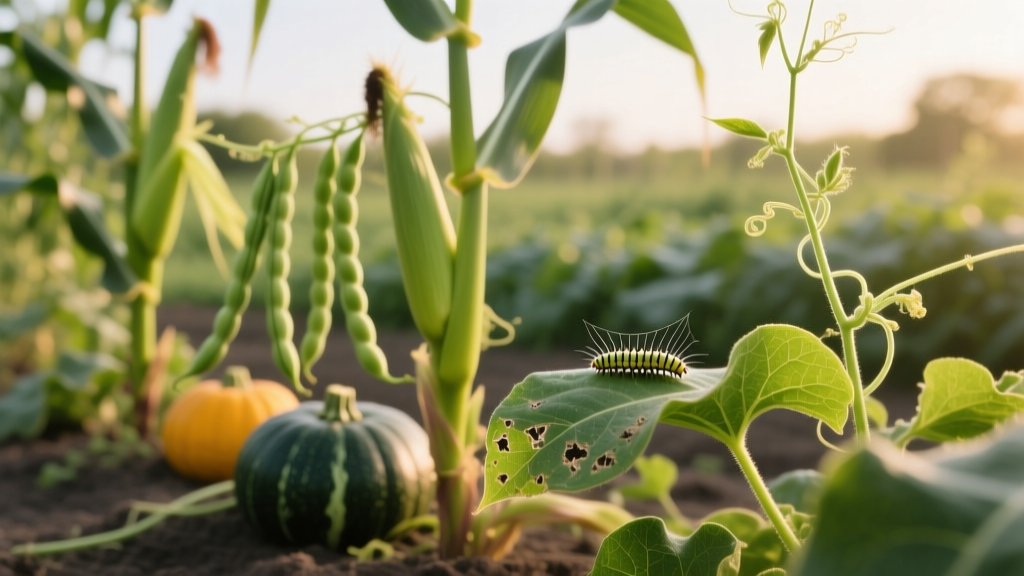
Tree Web Worm Control & Three Sisters Planting 2026
Sarah ChenPublished
The Canopy-to-Garden Pest Pipeline
When managing a holistic homestead or integrated food forest in the 2026 growing season, arborists and gardeners must look at the landscape as a single, interconnected ecosystem. As a pest management specialist, my primary focus is often the canopy: specifically, eradicating destructive fall web worms (Hyphantria cunea) from pecan, cherry, walnut, and persimmon trees. However, the indigenous Three Sisters companion planting method—growing corn, beans, and squash together in shared mounds—is increasingly popular near these exact woodlines and orchard edges. This creates a unique challenge. According to the University of Minnesota Extension, fall web worms can defoliate significant portions of a tree canopy in late summer, dropping massive amounts of frass (caterpillar droppings) and web debris. When this debris falls onto the broad leaves of squash and the delicate silks of corn below, it introduces secondary fungal pathogens and physically smothers the garden.
To achieve effective tree web worm control in 2026, we cannot simply ignore the garden beds beneath the trees. We must adapt our pest management protocols to protect the trees above while actively nurturing the Three Sisters guild below. This requires abandoning outdated, broad-spectrum chemical sprays in favor of a unified biological and cultural control strategy.
Why Broad-Spectrum Web Worm Sprays Ruin the Three Sisters
Historically, property owners dealing with unsightly web worm tents in their trees would reach for broad-spectrum pyrethroid sprays or systemic tree injections. In a standalone orchard, this might seem like a viable quick fix. But when applied near a Three Sisters garden, these chemicals are catastrophic. The Three Sisters method, deeply rooted in Native American agricultural traditions as documented by the National Park Service, relies heavily on a robust population of native pollinators, particularly the specialized squash bee (Peponapis pruinosa) and various bumblebees.
If chemical drift from tree web worm treatments reaches the garden, it annihilates these vital pollinators. Without them, the squash and bean blossoms will fail to set fruit, rendering the entire companion planting effort useless. Furthermore, harsh chemical runoff alters the delicate soil microbiome of the garden mounds, disrupting the nitrogen-fixing bacteria (rhizobia) that the pole beans rely on to feed the corn. In 2026, modern organic arboriculture demands that tree web worm control strategies actively protect, rather than destroy, the beneficial insect populations residing in the garden below.
The 2026 Biological Control Strategy
The most effective way to control tree web worms without harming your Three Sisters garden is to weaponize the garden itself. By strategically designing the edges of your companion planting mounds, you can create an insectary border that harbors the exact parasitic wasps and flies that naturally hunt web worms in the canopy above.
Leveraging the Three Sisters for Parasitoid Habitats
The Three Sisters guild is already a masterpiece of spatial and nutritional efficiency. Corn provides a trellis for the pole beans; beans fix atmospheric nitrogen into the soil; and squash acts as a living mulch, shading out weeds and deterring mammalian pests with its prickly vines. To integrate tree web worm control, we must add a fourth element to the periphery of the mounds: insectary plants.
Planting sweet alyssum, dill, yarrow, and cilantro around the base of the Three Sisters mounds attracts Trichogramma wasps and tachinid flies. These tiny, non-stinging parasitoids are the natural enemies of the fall web worm. When the web worms hatch in the tree canopy above, the parasitoids migrate upward to lay their eggs inside the caterpillars, naturally collapsing the web worm population before it can cause severe defoliation or drop excessive frass onto your crops below.
Targeted Bt Applications: Saving the Trees, Sparing the Garden
When biological controls need a boost during a severe outbreak year, Bacillus thuringiensis kurstaki (Btk) is the gold standard for 2026 tree web worm control. As outlined by the Environmental Protection Agency (EPA), Btk is a naturally occurring soil bacterium that specifically targets the digestive systems of caterpillars. It is entirely harmless to bees, earthworms, birds, and the soil microbiome of your Three Sisters mounds.
The key to using Btk near a garden is targeted application. Instead of broadcasting sprays, use a pressurized orchard sprayer with a narrow cone nozzle to inject the Btk solution directly into the web worm tents and the surrounding foliage in the tree canopy. Because Btk must be ingested by the caterpillar to be effective, it poses zero risk to the squash bees foraging on the blossoms below, even if microscopic drift occurs. Apply Btk in the late evening when the caterpillars are actively feeding and native pollinators have returned to their nests.
Building the 2026 Three Sisters Mound for Pest Resilience
To ensure your garden can withstand the environmental stress of nearby tree pests, your mound construction must be flawless. In 2026, we recommend building mounds that are 18 inches high and 3 feet across, spaced 4 feet apart. This elevation improves drainage and keeps the base of the corn stalks away from the damp, frass-heavy soil that can accumulate under infested trees.
Start by amending the native soil with generous amounts of aged compost and biochar. Biochar is particularly valuable in 2026 soil science, as it provides a permanent habitat for the mycorrhizal fungi that help the corn and squash uptake phosphorus, even if the tree canopy above is temporarily stressed by web worms and dropping fewer nutrients.
- Corn: Plant 4 to 6 seeds of a sturdy, tall heirloom variety like 'Bloody Butcher' or 'Oaxacan Green' in the center of the mound. These varieties have thick stalks that can withstand the physical impact of falling web debris and provide a rock-solid trellis for the beans.
- Beans: Once the corn is 6 inches tall, plant pole beans like 'Scarlet Runner' or 'Mayflower' in a circle around the corn. The beans will climb the stalks, pulling nitrogen from the air to feed the heavy-feeding corn.
- Squash: Plant vining squash varieties like 'Tahitian Melon' or 'Waltham Butternut' around the outer edge of the mound. Their massive leaves will shade the soil, retaining moisture and preventing weed growth, while their prickly stems deter rodents that might otherwise seek shelter in the mound during late-summer web worm outbreaks.
Canopy and Garden Integration Matrix
| Component | Role in Three Sisters Garden | Role in Tree Web Worm Control |
|---|---|---|
| Corn (Tall Heirlooms) | Structural trellis for beans; primary carbohydrate yield. | Acts as a visual barrier; stalks harbor ground beetles that eat fallen web worm pupae. |
| Pole Beans | Nitrogen fixation; vertical yield. | Dense foliage creates a humid microclimate that encourages entomopathogenic fungi to attack web worm caterpillars. |
| Squash (Vining) | Living mulch; weed suppression; soil moisture retention. | Prickly vines deter rodents and deer that might damage tree trunks while foraging. |
| Alyssum and Dill (Border) | Attracts native pollinators for squash and bean blossoms. | Provides nectar for Trichogramma wasps and tachinid flies that parasitize canopy web worms. |
| Btk Spot Treatment | Zero impact on garden soil or pollinators. | Eliminates canopy caterpillars safely without chemical drift. |
Seasonal Timeline for the 2026 Growing Season
To successfully merge tree web worm control with the Three Sisters method, timing is everything. Follow this 2026 seasonal protocol to keep both your canopy and your garden thriving.
Early Spring (April - May): Inspect the bark crevices of your pecan, cherry, and walnut trees for overwintering web worm pupae. Use a stiff brush to remove them before they emerge. Concurrently, prepare your Three Sisters mounds, incorporating compost and biochar. Plant your insectary borders (alyssum and dill) early so they are blooming by the time the garden needs pollination.
Early Summer (June): Plant the corn, followed by the beans and squash. Monitor the tree canopy for the first signs of web worm tents. At this stage, the tents are small. Use a long pole to physically knock out the small webs, exposing the young caterpillars to native birds. Do not use any chemical sprays, as the squash bees are actively establishing their ground nests near the garden mounds.
Mid-to-Late Summer (July - August): This is peak web worm season. If biological controls and manual removal are insufficient, apply targeted Btk sprays directly into the canopy tents during the evening hours. The Three Sisters garden below will be in full production, and the living mulch of the squash will protect the soil from any falling debris. Harvest your beans and squash continuously to encourage further production, knowing your pest management strategy has kept the ecosystem intact.
By viewing the tree canopy and the garden floor as a single, unified battlefield, you can achieve exceptional tree web worm control in 2026 while honoring the ancient, highly effective companion planting wisdom of the Three Sisters. This integrated approach ensures that your harvest is bountiful, your trees remain healthy, and your local pollinator populations thrive for generations to come.
