Tree Care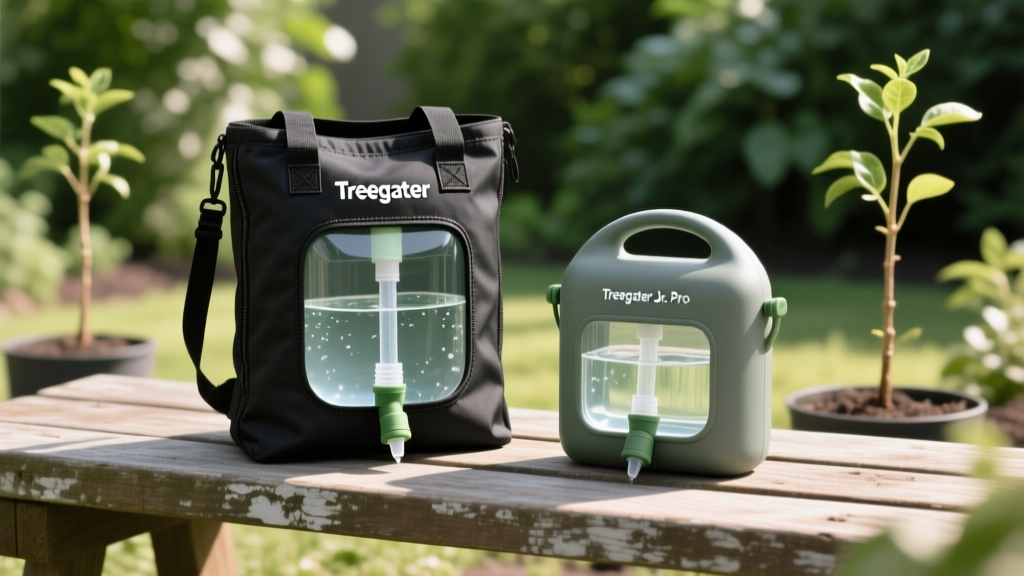
Treegator Original vs Jr Pro: Best Tree Watering Bag
Mike RodriguezPublished
The Critical Role of Deep Watering for New Trees
Planting a new tree is an investment in your property's future, but the first two years are the most vulnerable period in a tree's life. During this establishment phase, the root system is confined to the original root ball, making it highly susceptible to drought stress and transplant shock. According to the University of Minnesota Extension, newly planted trees require consistent, deep watering to encourage roots to grow outward into the surrounding native soil. Surface watering often leads to shallow root development, which compromises the tree's long-term structural integrity and drought resistance.
To solve the challenge of deep, consistent irrigation without the labor of standing over a root ball with a hose, arborists and landscapers frequently turn to slow-release tree watering bags. These products hold large volumes of water and release it slowly through micro-perforations, ensuring the soil reaches optimal saturation without runoff. In the world of slow-release irrigation, two products dominate the market: the Treegator Original and the Treegator Jr. Pro. But which one is right for your specific landscape? In this comprehensive comparison, we break down the design, capacity, use cases, and longevity of both products to help you make the best choice for your trees.
Meet the Contenders
Treegator Original: The Upright Classic
The Treegator Original is the pioneer of the slow-release watering bag industry. Designed as an upright, zippered pouch, it wraps snugly around the trunk of the tree and stands vertically. It features a heavy-duty zipper that runs from the base to the top, allowing for easy installation and removal. The bag is constructed from UV-treated polyethylene, which resists degradation from prolonged sun exposure. Water is dispensed through micro-perforations located at the base and lower seams, delivering a steady drip directly to the root ball over a period of 5 to 9 hours, depending on soil type and temperature.
The primary advantage of the Treegator Original is its massive 20-gallon capacity and its ability to keep water off the trunk itself, reducing the risk of fungal diseases and bark rot. However, its upright design requires a relatively straight trunk and a minimum branch clearance of about 30 inches to prevent the lower branches from puncturing the bag or interfering with the zipper.
Treegator Jr. Pro: The Low-Profile Challenger
Recognizing that not all trees fit the mold of a standard, single-trunk sapling, the manufacturers introduced the Treegator Jr. Pro. Unlike its upright predecessor, the Jr. Pro is a flat, donut-shaped ring that lays directly on the ground over the tree's root ball. It holds 15 gallons of water and utilizes a similar micro-drip technology to release moisture evenly across the soil surface over a 5 to 7 hour window.
The Jr. Pro shines in scenarios where the Original fails. Because it sits flat on the ground, it is entirely unaffected by low-hanging branches, making it perfect for evergreens, weeping trees, and multi-trunk specimens. Furthermore, its low center of gravity makes it vastly superior for trees planted on slopes or uneven terrain, where an upright bag would lean, spill, or fail to distribute water evenly.
Head-to-Head Specification Comparison
| Feature | Treegator Original | Treegator Jr. Pro |
|---|---|---|
| Water Capacity | 20 Gallons | 15 Gallons |
| Design Profile | Upright Zippered Bag | Flat Ground Ring |
| Ideal Trunk Caliper | 1 to 4 inches | 1 to 5 inches (or multi-trunk) |
| Minimum Branch Clearance | 30 inches | None (Ground Level) |
| Slope Performance | Poor (Prone to leaning/spilling) | Excellent (Lays flat) |
| Fill Time | 3 - 5 minutes | 2 - 4 minutes |
| Average Retail Cost | $20 - $25 | $25 - $30 |
Performance on Slopes and Uneven Terrain
Topography plays a massive role in irrigation efficiency. When planting on a slope, gravity is your enemy. The Texas A&M Forest Service emphasizes that water applied to sloped terrain will naturally run downhill, often bypassing the uphill portion of the root ball entirely. The Treegator Original struggles in these environments. Because it stands upright and relies on a central trunk for support, a sloped planting bed will cause the bag to lean. This leaning not only stresses the zipper but also causes water to pool and leak out of one side, resulting in uneven soil saturation and wasted water.
The Treegator Jr. Pro, however, is practically engineered for slopes. Because it lays flat against the soil contour, it maintains consistent contact with the ground regardless of the incline. The water seeps out of the bottom perforations evenly, ensuring that the entire root ball receives adequate moisture. If you are landscaping a hilly property or planting on a graded berm, the Jr. Pro is the undisputed winner.
Navigating Low Branches and Multi-Trunk Trees
Tree architecture varies wildly by species. If you are planting a weeping willow, a Colorado blue spruce, or a crape myrtle with multiple diverging trunks, the Treegator Original will be a source of immense frustration. Zipping an upright bag around a multi-trunk tree is nearly impossible without pinching the bark or leaving gaps that cause rapid water leakage. Furthermore, low-hanging evergreen branches will rest on the top of the upright bag, trapping moisture against the foliage and creating a microclimate ripe for fungal pathogens.
The Treegator Jr. Pro completely bypasses these issues. You simply lay the ring on the mulch, zip it closed, and insert the hose nozzle into the fill valve. It accommodates wide, irregular trunks and multi-stemmed trees with ease. As the Arbor Day Foundation advises, keeping the trunk and lower foliage dry while maintaining soil moisture is key to preventing diseases like root rot and bark cankers. The Jr. Pro's ground-level application aligns perfectly with this best practice.
Longevity, UV Resistance, and Cost Analysis
Both products are constructed from UV-treated polyethylene, designed to withstand multiple seasons of harsh sunlight. However, their physical designs dictate their lifespan. The Treegator Original's primary point of failure is its heavy-duty zipper. Over time, exposure to dirt, mulch debris, and calcium buildup from hard water can cause the zipper to snag or separate. Additionally, if left filled with water during a sudden freeze, the expanding ice can burst the seams or permanently warp the zipper track.
The Treegator Jr. Pro also utilizes a zipper, but because it lays flat, it experiences less structural tension when filled. However, because it sits directly on the soil and mulch, the bottom perforations are more susceptible to clogging from mud, slime molds, and organic debris. To maximize the lifespan of either bag—which should be 3 to 5 seasons with proper care—you must flush them with a mild bleach solution at the end of the growing season, dry them completely, and store them indoors during the winter.
From a cost perspective, the Treegator Original is generally a few dollars cheaper upfront. However, considering the Jr. Pro's superior versatility and lower risk of zipper failure due to structural leaning, the slight premium for the Jr. Pro often yields a better long-term return on investment for diverse landscapes.
Best Practices for Slow-Release Irrigation
Regardless of which product you choose, using a slow-release watering bag requires adherence to specific arboricultural guidelines to prevent harming your tree:
- Do Not Leave Bags On Permanently: Watering bags should only be used during the active establishment phase (the first 1-2 years). Leaving them on mature trees can trap moisture against the bark, invite rodent damage, and girdle the trunk as it expands.
- Mulch Properly: Place your 2 to 3 inches of organic mulch over the root ball before placing the Treegator Jr. Pro. For the Original, ensure the mulch does not pile up against the trunk (avoiding 'volcano mulching') so the bag can sit flush against the soil.
- Adjust for Rainfall: These bags supplement natural rainfall; they do not replace the need for monitoring. If your area receives a heavy, soaking rain, skip your scheduled bag fill-up to prevent waterlogging the soil, which deprives roots of essential oxygen.
- Clean the Micro-Pores: If you notice the bag is taking longer than 12 hours to empty, the pores are clogged. Scrub the inside gently with a soft brush and a vinegar-water solution to dissolve mineral deposits.
Final Verdict: Which Bag Should You Buy?
The choice between the Treegator Original and the Treegator Jr. Pro ultimately comes down to the specific trees you are planting and the terrain of your landscape. If you are planting standard, single-trunk shade trees (like maples, oaks, or elms) on flat ground, the Treegator Original is a cost-effective, high-capacity workhorse that will serve you well. Its 20-gallon capacity provides a massive reservoir for thirsty saplings during the peak of summer.
However, if your landscape features slopes, uneven grading, low-branching evergreens, weeping varieties, or multi-trunk ornamentals, the Treegator Jr. Pro is the superior choice. Its flat, ground-level design eliminates the structural vulnerabilities of an upright bag and ensures even water distribution exactly where the roots need it most. By matching the right tool to the right tree, you ensure your new plantings survive their critical establishment years and thrive for decades to come.