
Landscaping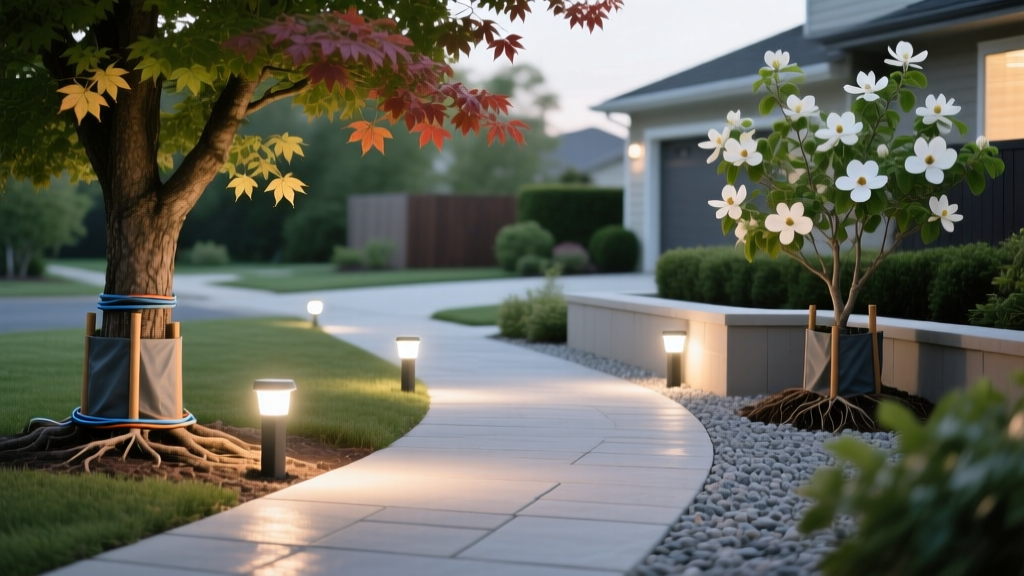
Planting Trees Near Hampton Bay LED Path Lights 2026
Sarah ChenPublished
Integrating Tree Selection with Hampton Bay Low-Voltage LED Fixtures
As we navigate the landscaping trends of 2026, the intersection of softscaping and outdoor illumination has never been more critical. Homeowners are increasingly drawn to the energy efficiency and smart-home integration of Hampton Bay low-voltage LED pathway lights. However, a common dilemma arises during landscape renovations: how to properly select and plant trees without disrupting the intricate network of low-voltage wiring, transformers, and fixture stakes. Planting trees near pathway lighting requires a strategic understanding of root systems, canopy growth, and safe trenching practices. This comprehensive guide will walk you through selecting the right tree species, protecting critical root zones, and installing your Hampton Bay LED fixtures harmoniously within your garden beds.
The 2026 Landscape Lighting Standard: Hampton Bay Low-Voltage LEDs
In 2026, Hampton Bay continues to dominate the residential landscape lighting market with its low-voltage LED systems. Modern kits now feature integrated smart transformers with Wi-Fi connectivity, astronomical timers, and dimmable 2700K warm-white LEDs that mimic traditional halogen bulbs while consuming a fraction of the wattage. Because these systems operate on 12-volt to 15-volt currents, they are safer for DIY installation and pose less risk to nearby plant life and soil biology compared to high-voltage line-wiring. However, the 12-gauge or 14-gauge copper wiring used to connect these fixtures must be buried or carefully routed through garden beds. When planting new trees, the digging process can easily sever these vital lines or damage the delicate feeder roots of the tree if not planned correctly.
Selecting Trees That Complement Pathway Lighting
When choosing trees to plant near a pathway illuminated by Hampton Bay LED fixtures, you must consider both the above-ground canopy and the below-ground root architecture. Trees with aggressive, shallow surface roots—such as Silver Maples, Willows, or certain species of Ficus—can quickly heave pathway pavers, expose low-voltage wiring, and push fixture stakes out of alignment. Instead, opt for deep-rooted understory trees or ornamental species that provide dappled shade rather than dense, light-blocking canopies.
According to the Arbor Day Foundation, selecting a tree that matches its planting site's spatial constraints is vital for long-term landscape health. For pathway borders, consider trees like the Eastern Redbud (Cercis canadensis), Japanese Maple (Acer palmatum), or Flowering Dogwood (Cornus florida). These species offer stunning seasonal color, maintain manageable root systems, and possess open branching structures that allow moonlight and pathway lighting to filter through beautifully.
Tree Species Compatibility Chart for Pathway Lighting
| Tree Species | Root Aggressiveness | Canopy Density | Suitability Near Path Lights |
|---|---|---|---|
| Japanese Maple | Low (Non-invasive) | Open / Dappled | Excellent |
| Eastern Redbud | Moderate (Deep taproot) | Moderate | Excellent |
| Flowering Dogwood | Low to Moderate | Open / Layered | Very Good |
| Silver Maple | Very High (Surface roots) | Dense | Poor (Avoid) |
| Weeping Willow | Extreme (Water-seeking) | Dense / Drooping | Poor (Avoid) |
Protecting Tree Roots During Wire Trenching
If you are retrofitting Hampton Bay LED path lights into an existing garden bed with established trees, you must respect the Critical Root Zone (CRZ). The CRZ is generally calculated as a circle with a radius of one foot for every inch of the tree's trunk diameter at breast height (DBH). Trenching through this zone with mechanical edgers or shovels can sever structural roots, leading to tree decline or hazardous instability.
The University of Minnesota Extension advises that when utilities or lighting wires must be routed near trees, trenching should be avoided within the dripline. Instead, use a technique called radial trenching or tunneling. For low-voltage Hampton Bay wiring, which only requires a shallow trench of 3 to 6 inches, you can often use an air spade or careful hand-digging to route the wire under major structural roots without causing fatal damage to the tree. Always route wires parallel to the trunk rather than cutting directly across the primary root flares.
Step-by-Step Planting and Wiring Guide
When installing new trees and Hampton Bay low-voltage LED fixtures simultaneously in 2026, follow this sequential workflow to ensure both systems thrive without interference.
- Step 1: Call Before You Dig. Always contact your local utility locator service (such as 811 in the United States) before digging holes for trees or trenching for lighting transformers to avoid striking buried high-voltage lines or gas pipes.
- Step 2: Map the Layout. Place your Hampton Bay LED path light stakes temporarily along the walkway. Determine the exact location for your new trees, ensuring they are planted at least 2 to 3 feet behind the light fixtures. This prevents the tree trunk from blocking the light beam as it matures and keeps the fixture's integrated solar panels or LED lenses clear of falling debris.
- Step 3: Dig the Tree Hole. Dig the tree hole two to three times wider than the root ball, but no deeper than the root ball itself. As noted by the U.S. Department of Energy, proper landscape planning reduces the need for excessive artificial lighting by preserving natural sightlines. Keep the excavated soil on a tarp to prevent it from burying your low-voltage wire trenches.
- Step 4: Route the Low-Voltage Wire. Lay your 12-gauge Hampton Bay low-voltage wire through the garden bed. Where the wire must cross near the newly planted tree, route it along the outer edge of the planting hole, avoiding the immediate root ball area. Use landscape staples to secure the wire to the soil before covering it with mulch.
- Step 5: Backfill and Connect. Backfill the tree hole with native soil, tamping down gently to remove air pockets. Connect your Hampton Bay LED fixtures using the included quick-connect wire connectors, ensuring all connections are elevated slightly above the soil grade to prevent waterlogging and corrosion.
Mulching and Long-Term Maintenance
Mulching is essential for retaining soil moisture and regulating temperature for newly planted trees, but it must be applied carefully around landscape lighting. Never pile mulch against the trunk of the tree (a practice known as volcano mulching), as this invites rot and rodent damage. Similarly, do not bury the base of your Hampton Bay LED path light fixtures or their wire connectors under thick layers of wet mulch, which can accelerate copper oxidation and cause voltage drops.
Maintain a 2-to-3-inch layer of organic hardwood mulch around the tree, keeping it a few inches away from the trunk and carefully raking it around the lighting stakes. As the tree grows, annual pruning of the lower canopy (canopy lifting) will ensure that the warm 2700K glow of your Hampton Bay LEDs continues to illuminate the pathway safely without casting harsh shadows or being obstructed by low-hanging branches. By thoughtfully integrating your tree selection with your low-voltage lighting design, you create a sustainable, breathtaking landscape that will enhance your home's curb appeal for decades to come.

