Lawn Care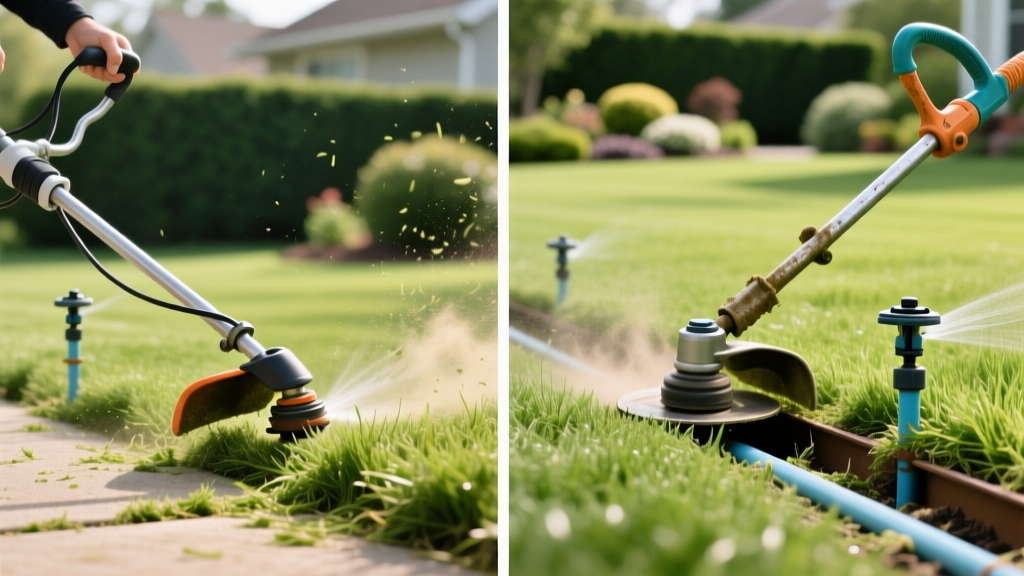
String Trimmer vs Edger: Protecting Irrigation in 2026
Mike RodriguezPublished
The Hidden Cost of Lawn Border Maintenance
Maintaining crisp, clean lawn borders is a hallmark of professional-grade landscaping, but it presents a unique and expensive hazard to your home's irrigation infrastructure. As homeowners in 2026 increasingly invest in high-efficiency smart irrigation systems, the physical vulnerability of sprinkler heads, PVC risers, and shallow drip lines has never been more apparent. Replacing a single smart rotary nozzle or repairing a severed poly-pipe can easily cost upwards of $75 to $150 in parts and labor, completely erasing the water-saving benefits of your system.
When it comes to maintaining the perimeter of your lawn, the two primary weapons in your arsenal are the string trimmer (weed whacker) and the walk-behind lawn edger. However, using these tools around irrigation zones requires a strategic approach. According to the EPA WaterSense program, proper irrigation maintenance and physical protection of sprinkler components are vital to maintaining landscape water efficiency and preventing costly underground leaks.
In this comprehensive guide, we will break down the string trimmer vs. edger debate specifically through the lens of irrigation protection. We will explore the unique risks each tool poses to your sprinkler system, compare their effectiveness for border maintenance, and provide actionable 2026 best practices to keep your lawn looking pristine and your irrigation system fully intact.
The String Trimmer: Precision vs. Sprinkler Head Decapitation
The string trimmer is the undisputed king of versatility. It allows you to maneuver around tight corners, garden beds, and irregular hardscapes with ease. However, when it comes to irrigation systems, the string trimmer is notoriously destructive. The high-speed monofilament nylon line acts like a serrated whip, capable of shredding plastic pop-up nozzles, snapping fragile PVC swing joints, and stripping the threads off brass sprinkler bodies in a matter of seconds.
In 2026, many modern battery-operated trimmers, such as the latest Ego Power+ and Ryobi models, feature aggressive auto-feed mechanisms that maintain a longer, more aggressive cutting line. While this is excellent for clearing overgrown weeds, it dramatically increases the "strike zone" around your sprinkler heads. If a pop-up head fails to retract fully due to debris or low water pressure, a passing string trimmer will easily decapitate the nozzle.
The Pros of Using a Trimmer Around Irrigation:
- Maneuverability: Easily navigates around complex valve manifolds and irregular drip zones.
- Surface Safety: Nylon line will not slice through shallowly buried poly tubing or drip lines the way a steel blade will.
- Speed: Quickly clears overgrown grass that may be blocking the spray pattern of rotary nozzles.
The Cons:
- Nozzle Destruction: The leading cause of cracked sprinkler housings and broken wiper seals.
- Riser Damage: Repeated "bumping" of the trimmer head against the sprinkler body can snap the underground PVC riser, requiring excavation to repair.
The Lawn Edger: Crisp Lines vs. Poly-Pipe Peril
A walk-behind lawn edger utilizes a spinning steel blade to carve a sharp, vertical trench between the lawn and hardscapes like sidewalks, driveways, and patios. For pure aesthetic border maintenance, the edger is unmatched. It creates the deep, clean lines that define a manicured 2026 landscape. However, the edger poses a completely different, and often more catastrophic, threat to your irrigation system.
Many irrigation lines, particularly the flexible poly tubing used for drip irrigation and the lateral lines feeding sprinkler heads near driveways, are buried just a few inches below the soil surface. When an edger's steel blade dips below the turf line, it can effortlessly slice through a pressurized poly-pipe or shallow PVC lateral line. Unlike a cracked sprinkler head which is immediately visible, a severed underground lateral line can wash out soil, sink your hardscape, and waste thousands of gallons of water before the leak is discovered.
Experts at the University of Minnesota Extension note that understanding the depth and layout of your underground irrigation infrastructure is critical before performing any aggressive mechanical edging or aeration. Blindly running an edger along a driveway where irrigation lines frequently cross to feed parkway strips is a recipe for disaster.
The Pros of Using an Edger Around Irrigation:
- Head Safety: The blade passes cleanly over flush-mounted or slightly recessed sprinkler heads without damaging the nozzles.
- Aesthetic Superiority: Creates a physical trench that prevents grass rhizomes from invading hardscapes and blocking surface drip emitters.
- Clearance: Removes soil buildup around valve boxes, ensuring easy access for 2026 smart controller troubleshooting.
The Cons:
- Subterranean Slicing: High risk of severing shallow lateral lines, poly tubing, and low-voltage irrigation wiring.
- Concrete Sprinkler Risk: If a sprinkler head is installed too close to a concrete edge and sits slightly proud of the soil, the steel blade will chip the concrete and shatter the sprinkler body.
Tool Comparison: Trimmer vs. Edger for Irrigation Zones
To help you decide which tool to deploy in specific areas of your yard, refer to the comparison table below. This matrix evaluates the tools based on their interaction with common 2026 irrigation components.
| Feature | String Trimmer | Walk-Behind Edger |
|---|---|---|
| Sprinkler Head / Nozzle Risk | High (Shreds plastic nozzles) | Low (Passes over if flush) |
| Shallow Poly / Drip Line Risk | Low (Nylon line bounces off) | Severe (Steel blade slices pipes) |
| Underground PVC Riser Risk | Moderate (Impact can snap riser) | Moderate (Blade can strike pipe) |
| Best Irrigation Use Case | Clearing grass from valve boxes and drip zones | Defining borders away from lateral line crossings |
| Precision Around Hardscapes | Moderate (Requires a steady hand) | Excellent (Guided by wheels) |
2026 Best Practices for Trimming and Edging Around Irrigation
The Irrigation Association consistently emphasizes that proactive system protection is far more cost-effective than reactive repairs. To maintain your lawn borders in 2026 without destroying your irrigation investment, implement the following best practices.
1. Install Physical Sprinkler Guards
If you must use a string trimmer near your irrigation heads, install physical barriers. Concrete sprinkler donuts, heavy-duty rubber guard rings, or specialized plastic sleeves (like the Sprinkler Guard) create a physical buffer zone. These guards allow you to run the trimmer head directly against the barrier, cutting the grass right up to the edge without the nylon line ever touching the delicate wiper seal or nozzle.
2. Map Your Shallow Line Crossings
Before edging along driveways or sidewalks, identify where your irrigation lateral lines cross under the hardscape. In most systems, lines cross at perpendicular angles to feed parkway strips or median beds. Mark these crossing points with small landscape stakes or colored sand. When using the walk-behind edger, lift the blade or disengage the clutch when crossing these marked zones to prevent slicing the shallow pipes.
3. Upgrade Border Zones to Subsurface Drip
If you find that maintaining the grass border along a narrow sidewalk is constantly resulting in damaged spray heads, consider eliminating the spray heads entirely. In 2026, converting narrow border strips to subsurface drip irrigation (such as Netafim Techline CV) is a highly recommended strategy. Subsurface drip lines eliminate the need for pop-up heads entirely, removing the risk of trimmer decapitation while delivering water directly to the root zone with near-perfect efficiency.
4. Utilize the "Halo" Trimming Technique
When trimming around an unguarded sprinkler head, never swing the trimmer in a continuous motion past the head. Instead, use the "Halo" technique: approach the head, lift the trimmer slightly to allow the line to retract or bounce off the guard, and trim in a careful semi-circle around the back of the head. Always ensure the sprinkler head is fully retracted before trimming; if it is stuck up, manually push it down or turn off the zone before proceeding.
5. Calibrate Your Edger Depth
Modern 2026 edgers feature adjustable depth levers. For general border maintenance, you do not need to trench deeper than 2 to 3 inches. Setting your depth stop to a maximum of 3 inches will cut the grass rhizomes effectively while providing a margin of safety for shallow irrigation lines and low-voltage smart controller wiring, which are typically buried at least 4 to 6 inches deep (though poor installation practices often leave them much shallower).
Conclusion
The debate between a string trimmer and an edger for lawn border maintenance is not about which tool is universally better, but rather which tool is appropriate for the specific irrigation infrastructure present in that zone. The string trimmer is your go-to for delicate maneuvering around valve manifolds and drip zones, provided you use guards to protect the pop-up heads. The walk-behind edger is unmatched for creating crisp hardscape borders, but it demands respect and prior knowledge of where your shallow lateral lines and poly tubing are buried.
By understanding the unique risks each tool poses to your sprinkler system and adopting proactive protection strategies like physical guards and zone mapping, you can achieve a manicured, professional-looking lawn in 2026 without footing the bill for constant irrigation repairs. Protect your infrastructure, respect the underground network, and your landscape will thrive efficiently for years to come.