Lawn Care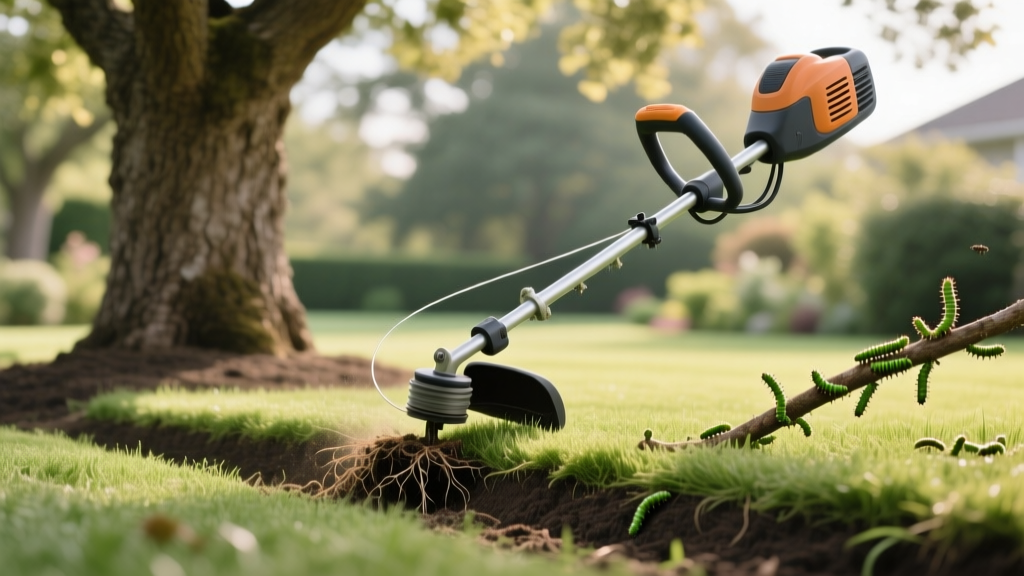
Trimmer vs Edger: Lawn Borders & Web Worm Control 2026
Emily WatsonPublished
The Hidden Link Between Lawn Borders and Tree Pests
When homeowners think about lawn border maintenance, they usually picture crisp lines along driveways and garden beds. However, the tools you use to maintain these edges—specifically string trimmers versus dedicated lawn edgers—play a surprising and critical role in the health of your landscape trees. In 2026, as extended warm autumns continue to expand the active season for defoliating pests, understanding the intersection of hardscape edging and integrated pest management (IPM) is more important than ever. This is especially true for managing the fall webworm (Hyphantria cunea), a notorious pest that can strip a tree of its foliage and rely on poorly maintained lawn borders to complete its life cycle.
Understanding the Web Worm Threat in 2026
Fall webworms are caterpillars that spin large, unsightly silken webs over the branches of deciduous trees in late summer and early fall. While the visual damage is alarming, the real threat to tree vitality occurs when consecutive years of defoliation weaken the tree's carbohydrate reserves. According to Penn State Extension, these pests overwinter as pupae in protected areas, often within leaf litter, soil crevices, and thick thatch layers located near the tree's drip line and along overgrown lawn borders.
In 2026, arborists are noting a shift in pest pressure. Milder winters and longer autumns allow for partial second or even third generations of webworms in USDA Hardiness Zones 6 through 8. If your lawn borders are overgrown, choked with weeds, and lack a defined edge, they provide the perfect insulated habitat for webworm pupae to survive the winter. Furthermore, trees stressed by improper border maintenance are far less equipped to survive the subsequent spring and summer feeding cycles.
String Trimmers: Speed vs. Tree Vulnerability
The string trimmer (or weed whacker) is a staple of lawn care, prized for its speed and versatility. However, when used to maintain borders near trees, it introduces severe risks that indirectly exacerbate web worm damage.
The Danger of Trimmer Blight
Using a nylon string trimmer to cut grass right up to the tree trunk frequently results in 'trimmer blight'—mechanical damage to the tree's bark and underlying cambium layer. This girdling effect disrupts the flow of water and nutrients. A stressed, girdled tree emits specific volatile organic compounds (VOCs) that signal distress, making it a prime target for secondary borers and reducing its natural ability to compartmentalize wounds and survive webworm defoliation.
Disrupting the Soil Ecosystem
String trimmers operate by violently slicing through vegetation and blowing debris laterally. When operated near the base of trees or along overgrown borders, trimmers scatter leaf litter and thatch. While this might seem like a good way to clean up, it actually disperses webworm pupae hidden in the debris, spreading them across the lawn where they can safely overwinter in new, undisturbed thatch patches. Furthermore, the aggressive trimming action destroys the habitat of ground beetles and predatory spiders, which are essential natural predators that hunt crawling webworm larvae before they reach the tree canopy.
Lawn Edgers: Precision Borders and Pest Disruption
A dedicated lawn edger, whether manual, gas-powered, or battery-electric, uses a metal blade to cut a precise, vertical trench between the lawn and the landscape bed. This tool is vastly superior for tree health and webworm control for several reasons.
Creating a Physical Barrier
Edging creates a clean, 2-to-4-inch deep trench along the border of your tree rings and garden beds. Entomologists at the University of Kentucky note that fall webworm larvae often drop from the canopy and crawl along the ground to find suitable pupation sites. A sharp, clean-edged trench acts as a micro-barrier, exposing the soil surface and making it difficult for larvae to hide in overgrown border grass.
Facilitating Proper Mulching
A clean edge allows you to maintain a proper mulch ring around the tree (often called the 'donut' method, keeping mulch away from the trunk flare). Proper mulching retains soil moisture and regulates temperature, keeping the tree vigorous and capable of pushing through a webworm infestation. Edging prevents grass rhizomes from invading the mulch ring, eliminating the need to use a string trimmer near the vulnerable trunk flare.
Exposing Overwintering Pupae
The vertical blade of an edger slices through the thatch layer and slightly turns the topsoil at the border edge. This mechanical disruption exposes overwintering webworm pupae to the elements, as well as to foraging birds and predatory insects, significantly reducing the local population before the spring emergence.
Feature Comparison: Trimmer vs. Edger for Tree Zones
| Feature | String Trimmer | Dedicated Lawn Edger |
|---|---|---|
| Primary Action | High-speed nylon line slicing | Vertical metal blade trenching |
| Impact on Tree Bark | High risk of girdling and cambium damage | Zero risk when used along defined borders |
| Effect on Webworm Pupae | Scatters debris, spreading pupae into thatch | Exposes pupae to predators and elements |
| Predator Habitat Impact | Destroys ground beetle and spider habitats | Preserves mulch ring ecosystems |
| Best Use Case | Open lawn areas, distant hardscapes | Tree rings, garden beds, driveways |
Best Practices for Border Maintenance and Web Worm IPM
To maximize your defense against webworms while maintaining pristine lawn borders in 2026, adopt an Integrated Pest Management (IPM) approach that leverages the right tools.
- Edge First, Trim Second: Use a dedicated edger to define the perimeter of your tree rings and landscape beds. Reserve the string trimmer for open lawn areas and hardscape edges far away from tree trunks.
- Maintain the Drip Line: The drip line (the outer edge of the tree canopy) is where the majority of a tree's feeder roots are located, and coincidentally, where webworm larvae often drop to the ground. Keep this zone cleanly edged and properly mulched.
- Biological Controls: If you spot early webworm webbing in late summer, prune out the affected branches. For larger trees, apply Bacillus thuringiensis var. kurstaki (Btk), a natural soil bacterium that targets caterpillars. A clean, edged border ensures that any Btk applied to the soil surface to target crawling larvae is not blocked by thick, matted border grass.
- Fall Cleanup: After edging, use a rake or leaf vacuum to remove leaf litter from the tree ring. Since webworms overwinter in fallen leaves, removing them breaks the life cycle.
2026 Tool Recommendations for Clean Edges
The battery-powered outdoor power equipment (OPE) market in 2026 has made edging more accessible and powerful than ever, eliminating the need for messy gas mixtures while providing the torque needed to disrupt compacted border soil.
- EGO Power+ Multi-Head System with Edger Attachment: EGO's 2026 brushless edger attachment offers immense torque, easily slicing through thick St. Augustine and Bermuda grass borders without bogging down. Its 56V ARC Lithium battery provides enough runtime to edge an entire acre on a single charge, allowing you to maintain deep pest-disrupting trenches efficiently.
- Toro 60V MAX String Trimmer/Edger Combo: Toro's latest iteration features a pivoting head that locks into a rigid edging position. The metal blade guard is redesigned to prevent soil buildup, ensuring a clean trench that disrupts pest habitats effectively without requiring constant manual clearing.
- Worx Nitro 20V Power Share Pro Edger: For smaller suburban lots, this lightweight 2026 model offers exceptional precision. Its guide wheel rides perfectly along concrete, but when used around tree rings, the adjustable depth dial allows you to shallow-cut, protecting shallow tree roots while still clearing the thatch layer where pupae hide.
Conclusion
The debate between a string trimmer and an edger for lawn border maintenance extends far beyond simple aesthetics. When viewed through the lens of tree health and web worm control, the edger emerges as the undisputed champion. By creating clean, defined borders, you protect tree bark from mechanical damage, disrupt the overwintering sites of destructive pests, and foster a landscape environment where natural predators can thrive. As you plan your 2026 lawn care routines, invest in a quality edger and treat your tree borders with the precision they deserve. Your trees will reward you with robust health and vibrant foliage, season after season.