Pest Control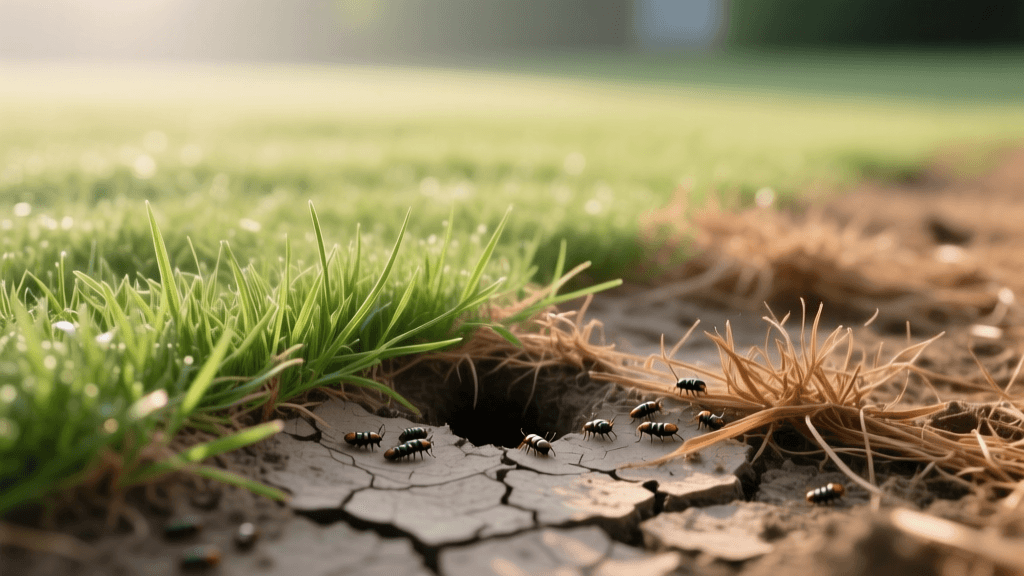
Troubleshooting Brown Lawns: Grubs vs Chinch Bugs vs Drought
Introduction to Lawn Pest Troubleshooting
When your once-lush turfgrass begins to develop unsightly brown patches, the immediate assumption is often a lack of water. However, before you increase your irrigation schedule and drive up your water bill, it is crucial to properly diagnose the root cause. Brown patches can be the result of environmental stress, fungal diseases, or destructive turfgrass insects. Misdiagnosing a pest infestation as drought stress can lead to severe lawn loss, as the pests continue to feed and multiply unchecked. In this comprehensive troubleshooting guide, we will break down how to accurately diagnose and treat three of the most common lawn-destroying pests: white grubs, chinch bugs, and fall armyworms. By utilizing integrated pest management (IPM) principles, you can save your lawn and your wallet.
The Tug Test and Soil Inspection: Ruling Out White Grubs
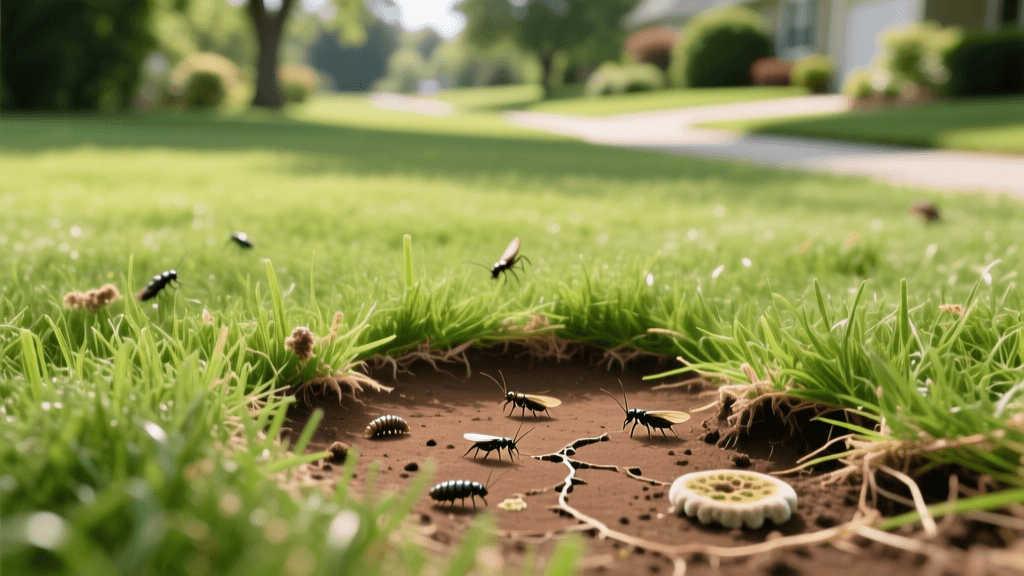
White grubs—the larval stage of various scarab beetles such as Japanese beetles, June bugs, and European chafers—are notorious for severing the root systems of turfgrass. Because the damage occurs below the soil surface, the above-ground symptoms closely resemble drought stress. The grass will wilt, turn brown, and fail to respond to irrigation.
To troubleshoot for grubs, perform the "tug test." Grab a handful of the brown, wilting grass and pull gently. If the turf rolls back like a freshly laid carpet with little to no root resistance, you likely have a grub infestation. Furthermore, you may notice increased activity from foraging animals like skunks, raccoons, and crows tearing up your lawn in search of the protein-rich larvae.
According to turfgrass experts at Penn State Extension, confirming a grub infestation requires a physical soil inspection. Using a sharp spade, cut a one-foot by one-foot square of sod, about two to three inches deep, and peel it back. Count the number of C-shaped, white grubs in the top three inches of soil.
Grub Treatment Thresholds and Solutions
Finding a few grubs is normal; they are a part of the soil ecosystem. Treatment is only warranted when populations exceed the damage threshold. For most cool-season and warm-season grasses, the threshold is roughly eight to ten grubs per square foot. If your count exceeds this number, chemical intervention is necessary.
- Preventative Control (Late Spring to Early Summer): Products containing Chlorantraniliprole (e.g., Acelepryn or Scotts GrubEx) are highly effective and safe for pollinators. Apply in May or June. Cost: Approximately $30-$45 per 5,000 sq. ft. bag.
- Curative Control (Late Summer to Early Fall): If you missed the preventative window and are seeing active damage in August or September, use a fast-acting curative insecticide like Trichlorfon (e.g., Dylox). Water it in immediately with at least 0.5 inches of irrigation to move the chemical into the root zone. Cost: Approximately $25-$35 per 5,000 sq. ft. bag.
The Coffee Can Flush: Identifying Chinch Bug Damage
If your lawn features St. Augustinegrass, Zoysiagrass, or Centipedegrass, and the brown patches are appearing in hot, dry, sunny areas near sidewalks or driveways, chinch bugs are the prime suspect. Chinch bugs damage grass by piercing the plant stems and injecting a toxic saliva that blocks the vascular system, preventing water uptake. This is why chinch bug damage is almost universally mistaken for localized drought stress.
To troubleshoot chinch bugs, you need to force them to the surface. The University of Florida IFAS extension recommends the "coffee can flush" method. Take a large coffee can, remove both ends, and push it two to three inches into the soil at the margin of the brown and green grass. Fill the can with water and wait for about five minutes. Chinch bugs will float to the surface.
As noted by entomologists at University of Florida IFAS, a population of 20 to 25 chinch bugs per square foot is the economic threshold for treatment.
Chinch Bug Treatment Strategies
Chinch bugs have developed resistance to several classes of insecticides, making chemical rotation vital.
- Chemical Controls: Look for products containing Bifenthrin or Lambda-cyhalothrin for immediate knockdown. For longer residual control, products with Clothianidin are effective. Apply in the late afternoon to minimize UV degradation and protect foraging bees. Always irrigate lightly before application to draw the bugs closer to the surface.
- Biological Controls: The beneficial fungus Beauveria bassiana naturally attacks chinch bugs. Maintaining proper soil moisture and avoiding excessive nitrogen fertilization can encourage this fungus to keep populations in check.
The Soap Flush: Troubleshooting Fall Armyworms
Fall armyworms can devour an entire lawn in a matter of days. Unlike grubs and chinch bugs, armyworms are above-ground foliage feeders. Early instars feed on the leaf surface, leaving a transparent, "windowpane" effect. As they mature, they consume the entire leaf blade, leaving behind ragged edges and frass (caterpillar droppings) that resembles green sawdust.
Because armyworms feed primarily at night and hide in the thatch during the day, a simple visual inspection often yields no results. To diagnose an armyworm infestation, perform a soap flush. Mix two tablespoons of liquid dish soap with two gallons of water and pour it over a one-square-yard area at the edge of the damaged turf. Within a few minutes, the caterpillars will wriggle to the surface to escape the soap irritation.
According to turfgrass pathologists at NC State TurfFiles, early detection is paramount, as larger caterpillars (late instars) consume 80% or more of the total foliage they eat during their final days of development.
Armyworm Eradication Tactics
- Organic/Biological Treatment: For young caterpillars, Bacillus thuringiensis var. kurstaki (Bt) is highly effective and completely safe for beneficial insects. It must be ingested by the caterpillar, so apply it to dry foliage in the late afternoon. Cost: $15-$20 per bottle.
- Chemical Treatment: For severe infestations or mature caterpillars, pyrethroids like Bifenthrin or Cyfluthrin provide rapid knockdown. Spinosad is another excellent organic-approved option that offers both contact and ingestion activity. Cost: $20-$30 per application.
Diagnostic Comparison Chart
Use the following table to quickly cross-reference your lawn's symptoms and confirm your diagnosis before purchasing treatment products.
| Diagnostic Factor | White Grubs | Chinch Bugs | Fall Armyworms | Drought Stress |
|---|---|---|---|---|
| Damage Location | Below ground (roots) | Base of stems / crowns | Above ground (leaves) | Uniform across turf |
| Visual Symptoms | Turf rolls back like carpet | Yellowing to brown patches in hot areas | Windowpane feeding, ragged leaf edges | Footprints remain, dull bluish-gray color |
| Presence of Frass/Insects | C-shaped white larvae in soil | Tiny black/white bugs at soil line | Green sawdust-like droppings, caterpillars | None |
| Best Diagnostic Test | Tug Test / Spade Cut | Coffee Can Flush | Soap Flush | Soil Moisture Probe |
| Primary Treatment | Chlorantraniliprole / Trichlorfon | Bifenthrin / Clothianidin | Bt / Spinosad / Bifenthrin | Deep, infrequent irrigation |
Final Troubleshooting Tips for Lawn Care Professionals and Homeowners
Never apply broad-spectrum insecticides "just in case." Indiscriminate spraying harms vital pollinators, earthworms, and beneficial predatory insects like ground beetles and parasitic wasps that naturally regulate pest populations. Always confirm the presence of the pest and verify that the population exceeds the economic threshold before initiating chemical controls. Furthermore, maintaining a healthy lawn through proper mowing heights, deep and infrequent watering, and annual core aeration builds a robust root system that can tolerate minor pest pressures without suffering catastrophic aesthetic or functional loss. Troubleshooting lawn pests requires patience, observation, and a commitment to targeted, science-backed solutions rather than guesswork.