Pest Control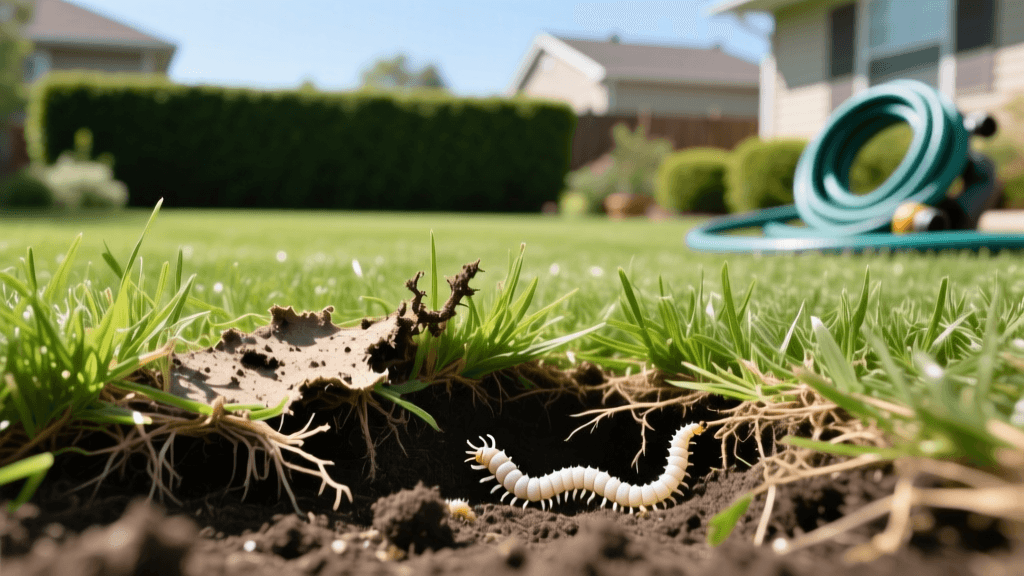
Troubleshooting Lawn Grub Infestations: Diagnosis & Control
The Brown Patch Dilemma: Is It Grubs or Drought?
When unsightly brown patches begin to spread across your once-lush turf, the immediate assumption is often a lack of water or a fungal disease. However, beneath the soil surface, a destructive army of C-shaped larvae might be severing your grass from its root system. Troubleshooting lawn grub infestations requires a methodical approach to accurately diagnose the problem before spending hundreds of dollars on ineffective chemical treatments. According to Penn State Extension, misdiagnosing grub damage as drought stress is one of the most common errors homeowners make, leading to unnecessary watering that actually exacerbates fungal issues while the grubs continue to feast unchecked.
The 'Tug Test' and the Sponge Effect
The most definitive diagnostic tool for grub activity is the 'tug test.' Walk to the edge of a brown patch where the dying grass meets the green, healthy grass. Grip a handful of the turf and pull upward gently. If the lawn is suffering from drought or disease, the roots will hold firm, and you will feel resistance. If grubs are the culprit, the turf will peel back effortlessly, much like pulling up a freshly laid roll of sod, because the roots have been entirely consumed. Additionally, walk across the suspected area. Grub-damaged turf often feels spongy or loose underfoot due to the hollowed-out soil structure and the tunneling activity of the larvae and secondary predators.
Secondary Symptoms: Animal Digging
Often, the first sign of a grub problem isn't the brown grass, but the destructive behavior of local wildlife. Skunks, raccoons, armadillos, and flocks of starlings or crows will tear up your lawn in search of these protein-rich morsels. If you notice small, conical holes or large patches of peeled-back turf accompanied by animal tracks, you must investigate the soil immediately. As noted by University of Kentucky Entomology, animal damage is a secondary indicator; the primary issue remains the grub population threshold.
Step-by-Step Grub Sampling and Thresholds
To properly troubleshoot and quantify a grub infestation, you must perform a soil count. Guessing leads to overtreatment and environmental harm.
- Select Sample Sites: Choose 3 to 5 areas in your lawn, focusing on the borders of damaged zones and historically sunny, south-facing slopes where beetles prefer to lay eggs.
- Cut the Sod: Using a sharp spade or a specialized turf cutter, carve out a 12-inch by 12-inch square of turf, about 3 to 4 inches deep.
- Inspect the Soil: Peel the sod back and crumble the soil in your hands. Count the number of C-shaped, white grubs with brown heads and six legs.
- Calculate the Threshold: Replace the sod and water it down. According to Michigan State University Extension, a healthy, well-irrigated lawn can tolerate 5 to 10 grubs per square foot. If your count exceeds 8 to 10 grubs per square foot, or if the turf is already stressed by shade or drought, chemical intervention is required.
Common Lawn Grub Species and Timelines
Identifying the specific grub species can help refine your treatment timeline. Below is a diagnostic chart for the most common turf-destroying larvae in North America:
| Grub Species | Adult Emergence | Peak Damage Period | Preventative Treatment Window |
|---|---|---|---|
| Japanese Beetle | June - July | August - October | May - June |
| European Chafer | May - June | July - September | April - May |
| June Bug (May Beetle) | May - June | August - November | May - June |
| Asiatic Garden Beetle | July - August | September - October | June - July |
Troubleshooting Treatment Failures
One of the most frustrating aspects of lawn pest control is applying a product only to see the damage continue. If you have treated for grubs and the problem persists, troubleshoot the following common points of failure:
1. Thatch Barrier Interference
Thatch is the layer of dead and living organic matter that sits between the green grass blades and the soil surface. While a thin layer (under 0.5 inches) is beneficial, a thick thatch layer acts as an impenetrable shield. If you apply a granular grub killer and fail to dethatch or aerate first, the active ingredient gets trapped in the thatch layer. It never reaches the soil where the grubs are feeding, rendering the treatment entirely useless.
2. Failure to 'Water In' the Product
Granular insecticides require immediate and thorough irrigation to activate. After applying a product like trichlorfon or imidacloprid, you must apply at least 0.5 inches of water via rainfall or irrigation. This washes the chemical off the grass blades, through the thatch, and into the top 2 inches of the root zone. Without this crucial step, the product degrades in the UV sunlight and fails to reach the target pest.
3. Incorrect Product Selection and Timing
Using a preventative product when you already have large, mature grubs is a guaranteed failure. Preventatives like chlorantraniliprole (Acelepryn) or imidacloprid (Merit) are slow-acting and must be ingested by young, newly hatched grubs. They will not kill large, third-instar grubs actively destroying your lawn in late summer. Conversely, applying a fast-acting curative product in early spring is a waste of money, as the grubs are deep in the soil, not feeding, and preparing to pupate.
Pro Troubleshooting Tip: Always check the expiration date and storage history of your insecticides. Chemicals stored in unclimate-controlled sheds over freezing winters or blistering summers can lose their efficacy, leading to perceived treatment failures.
Actionable Control Strategies: Curative vs. Preventative
Once you have diagnosed the infestation and identified the grub life stage, you must select the correct chemical or organic intervention.
Curative Treatments (Late Summer / Early Fall)
If your soil sampling reveals large, active grubs in August or September, you need a curative contact insecticide. The industry standard is Trichlorfon (commonly sold under the brand name Dylox). Trichlorfon acts quickly, killing grubs within 24 to 48 hours of contact or ingestion. It has a short residual life (about 1 to 2 weeks), making it ideal for immediate crisis management but useless for long-term prevention. Expect to pay around $60 to $80 for a bag covering 5,000 square feet. Apply it in the late afternoon to avoid rapid UV degradation, and water it in immediately.
Preventative Treatments (Spring / Early Summer)
To stop an infestation before it starts, use a systemic preventative. Chlorantraniliprole (Acelepryn) is widely considered the safest and most effective option for residential lawns. It has a low toxicity profile for bees and earthworms but is lethal to turf-destroying grubs. It must be applied between April and June, allowing it several weeks to bind to the soil and root system before the beetle eggs hatch in mid-summer. Imidacloprid is another popular preventative, but it carries higher risks for pollinators and should be applied carefully, avoiding blooming weeds like clover in your turf.
Organic and Biological Controls
For homeowners strictly adhering to organic integrated pest management (IPM) principles, Beneficial Nematodes (specifically the Heterorhabditis bacteriophora species) are a highly effective troubleshooting tool. These microscopic worms are applied via a hose-end sprayer and actively hunt down grub larvae in the soil, infecting them with a fatal bacteria. Nematodes require moist soil and must be applied in the late afternoon or on cloudy days, as UV light will kill them instantly. Another organic option is Milky Spore (Paenibacillus popilliae), a bacterium that specifically targets Japanese Beetle grubs. While Milky Spore can take 2 to 3 years to fully establish in the soil, it can provide residual control for up to 15 years once established.
Post-Treatment Lawn Recovery
Eradicating the grubs is only half the battle; troubleshooting the resulting lawn damage is the final step. Grub-damaged turf will not magically reattach to the soil. For small patches, press the peeled-back sod firmly into the soil and water heavily to encourage any surviving root nodes to re-establish. For large, dead zones where the roots are entirely gone, you must rake out the dead debris, amend the soil with a quarter-inch of compost, and overseed with a drought-resistant turfgrass blend. Keep the newly seeded areas consistently moist for 14 to 21 days. By combining accurate diagnosis, precise chemical timing, and diligent lawn recovery practices, you can restore your turf and fortify it against future underground invasions.