Gardening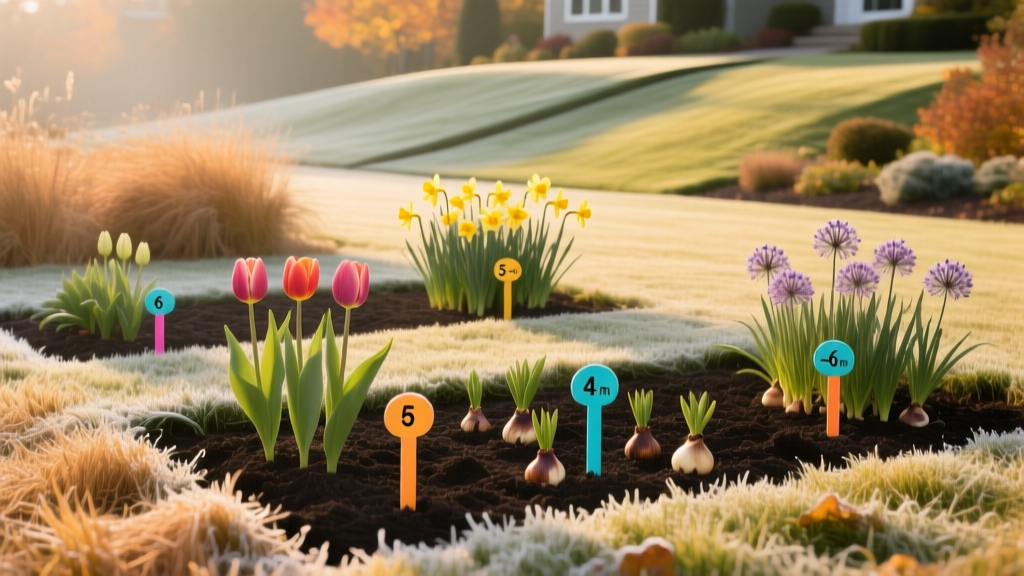
Fall Lawn Care 2026: Tulip, Daffodil & Allium Planting Depths
Emily WatsonPublished
The Intersection of Fall Lawn Care and Spring Bulb Planting
As the crisp air of autumn settles over our yards in 2026, homeowners and landscaping professionals alike are faced with a dual opportunity: executing essential fall lawn care while simultaneously laying the groundwork for a spectacular spring floral display. Integrating spring bulb planting into your fall lawn maintenance schedule is a highly efficient use of time, especially since both tasks require similar soil preparation and temperature thresholds. However, the success of your spring blooms hinges entirely on precise planting depths and proper coordination with turfgrass management.
In 2026, shifting climate patterns mean that soil temperatures are fluctuating more unpredictably in early autumn. According to recent turfgrass and horticultural extensions, waiting for the soil to cool to a consistent 55°F at a depth of four inches is the golden rule for planting spring-blooming bulbs. If you plant too early while the soil is still warm, the bulbs may sprout prematurely and suffer frost damage. If you wait until the ground is frozen, you miss the window for root establishment. Coordinating this temperature drop with your fall aeration and overseeding schedule is the hallmark of expert landscape management.
Proper fall lawn care and bulb planting are not mutually exclusive; they are complementary processes that share the same critical soil temperature thresholds and soil amendment requirements.
Tulip vs. Daffodil vs. Allium: The 2026 Depth and Spacing Guide
Before breaking ground, it is crucial to understand that not all bulbs are created equal. The depth at which you plant a tulip differs significantly from that of an allium or a daffodil. Planting too shallow exposes the bulbs to frost heave and foraging wildlife, while planting too deep can exhaust the plant's energy reserves before it ever breaks the soil surface in spring.
| Bulb Type | Planting Depth | Spacing | Target Soil Temp | Best Lawn Zone Integration |
|---|---|---|---|---|
| Tulip (Standard) | 6 to 8 inches | 4 to 6 inches | 55°F | Formal Beds & Hardscape Borders |
| Daffodil (Narcissus) | 6 to 9 inches | 6 to 12 inches | 50°F to 55°F | Naturalized Turf & Orchard Edges |
| Allium (Globemaster) | 8 inches | 8 to 12 inches | 55°F | Perennial Borders & Pathways |
| Allium (Purple Sensation) | 4 to 5 inches | 4 to 6 inches | 55°F | Rock Gardens & Front Lawn Edges |
For a comprehensive overview of regional planting times and soil requirements, the University of Minnesota Extension provides excellent, up-to-date guidelines on spring-flowering bulbs that apply to a wide variety of hardiness zones.
Deep Dive: Planting Tulips in the Fall Landscape
Tulips are the undisputed royalty of the spring garden, but they are also the most finicky when it comes to fall lawn care integration. Tulips require a deep, well-draining environment. The standard rule of thumb is to plant tulips at a depth equal to three times the height of the bulb. For most standard hybrid tulips in 2026, this translates to a depth of 6 to 8 inches measured from the base of the bulb.
Tulip Challenges and Lawn Care Solutions
The primary challenge with tulips is their susceptibility to voles and squirrels, especially in lawns that have been heavily aerated. Core aeration, a vital fall lawn care practice that alleviates soil compaction, unfortunately creates easy tunnels for rodents. To combat this, landscape professionals in 2026 are increasingly using biodegradable wire mesh cages placed directly into the planting holes. Furthermore, avoid using high-nitrogen synthetic fertilizers directly in the bulb hole, as this can cause bulb rot. Instead, opt for a specialized bulb fertilizer rich in phosphorus and potassium to encourage strong root development over the winter months.
Deep Dive: Naturalizing Daffodils in Turf Areas
Daffodils are remarkably resilient and are the premier choice for naturalizing directly within lawn areas or at the edges of wooded property lines. Unlike tulips, daffodils contain lycorine, a toxic alkaloid that makes them highly resistant to deer, rabbits, and rodents. This makes them an ideal candidate for integration into broader lawn spaces where wildlife pressure is high.
Daffodil Planting Depth Mechanics
Daffodils should be planted slightly deeper than tulips, typically between 6 and 9 inches deep. This extra depth serves two purposes: it protects the bulb from severe frost heave during the freeze-thaw cycles of late winter, and it provides a stable anchor for the plant's extensive root system. When naturalizing daffodils in a lawn area, the Penn State Extension recommends delaying your first spring mowing until the daffodil foliage has completely yellowed and died back. This means you must be willing to let your lawn look slightly unkempt in those specific zones for about six weeks after blooming to allow the bulbs to complete their photosynthetic cycle and store energy for the following year.
Deep Dive: Architectural Alliums and Border Integration
Alliums, the ornamental onions, have surged in popularity due to their striking, architectural globe-shaped blooms and their natural resistance to pests. When integrating alliums into your fall landscape design, depth is highly dependent on the specific cultivar you are planting.
- Allium Globemaster: These massive bulbs require a planting depth of 8 inches. Their large size demands deep soil preparation and excellent drainage to prevent basal rot.
- Allium Purple Sensation: These smaller bulbs thrive at a depth of 4 to 5 inches. They are perfect for planting in the front edges of lawn borders where the soil may be slightly more compacted.
- Allium Schubertii: Known for its explosive, star-like flower heads, this variety prefers a depth of about 6 inches and requires generous spacing of at least 12 inches apart.
For detailed cultivar-specific guidance and soil drainage requirements, the Royal Horticultural Society (RHS) offers an exceptional growing guide that remains a benchmark for horticultural best practices. Alliums prefer a slightly alkaline soil pH, which often aligns perfectly with lawns that have been treated with lime during fall soil amendment routines.
Step-by-Step: Integrating Bulb Planting with Fall Lawn Prep
To maximize efficiency and ensure the health of both your turfgrass and your spring bulbs, follow this sequenced approach to your 2026 fall lawn care and planting schedule.
Step 1: Soil Testing and Amendment
Begin in early autumn by conducting a comprehensive soil test. Lawns generally thrive at a pH of 6.5 to 7.0, which is also the sweet spot for daffodils and alliums. If your soil is too acidic, apply pelletized lime now. It will take several months to break down and adjust the soil profile, perfectly timing the pH correction for spring root growth.
Step 2: Core Aeration and Overseeding
Execute your core aeration and overseeding before you plant your bulbs. Running heavy aeration equipment over newly planted bulb zones risks crushing the bulbs or disrupting their careful depth placement. Aerate the lawn, spread your cool-season grass seed, and apply a starter fertilizer. Keep the bulb planting zones clearly marked with biodegradable flags to avoid seed overlap, as dense turfgrass can sometimes choke out delicate bulb shoots in early spring.
Step 3: Precision Digging with 2026 Tooling
Gone are the days of blister-inducing manual bulb planters. In 2026, the standard for professional and serious DIY landscaping is the use of cordless, battery-powered bulb augers attached to standard 18V or 20V drills. These augers allow you to drill precise, 8-inch deep holes in seconds, minimizing soil disturbance and preserving the structural integrity of the surrounding turf. When digging, ensure the hole is twice as wide as the bulb to allow for immediate root expansion.
Step 4: Bulb Placement and Backfilling
Place the bulbs in the holes with the pointed tip facing upward. If you are planting anemones or certain species tulips where the growing tip is not obvious, plant them on their side; the plant will utilize geotropism to orient itself correctly. Backfill the hole with a mixture of native soil and organic compost. Avoid using heavy peat moss, which can retain too much moisture and lead to fungal issues during wet winters.
Step 5: Mulching and Winterization
After planting, water the zones deeply to settle the soil and eliminate air pockets. Apply a 2-inch layer of organic mulch, such as shredded hardwood or pine bark, over the bulb zones. This mulch acts as an insulator, preventing the rapid freeze-thaw cycles that cause frost heave. Be careful not to pile mulch directly against the crowns of any nearby perennial plants or tree trunks to prevent rot and rodent habitation.
Final Thoughts on Fall Landscape Synergy
Treating your fall lawn care and spring bulb planting as a unified project rather than two separate chores will save you time, labor, and resources. By respecting the unique depth requirements of tulips, daffodils, and alliums, and carefully timing your planting around your aeration and overseeding schedule, you set the stage for a vibrant, healthy landscape. As the winter snows eventually melt in 2026, the reward for your meticulous autumn labor will be a breathtaking, colorful transition from dormant turf to a thriving, multi-dimensional spring garden.
