Gardening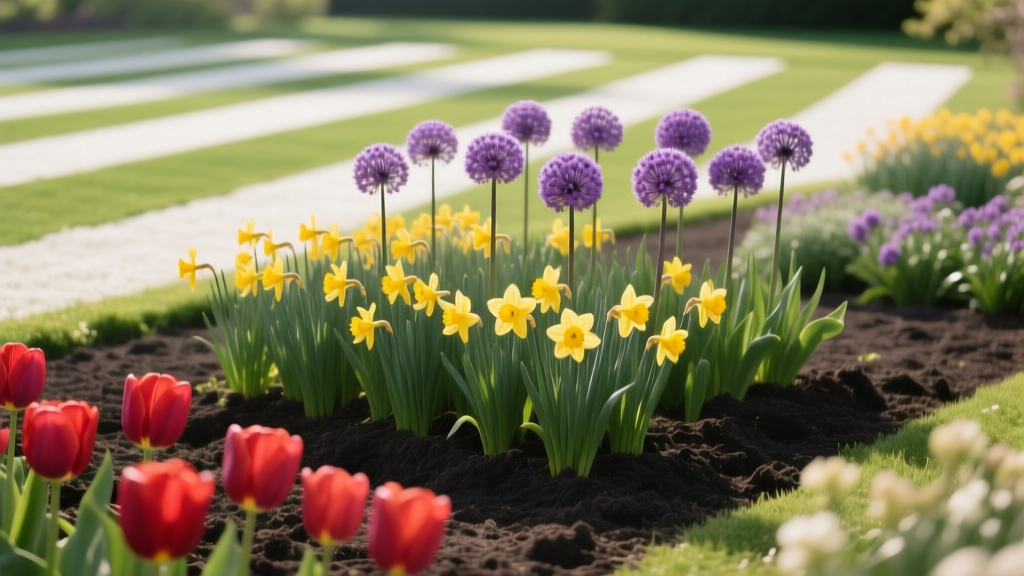
Spring Bulb Planting Depth Guide 2026: Tulips, Daffodils & Alliums
Mike RodriguezPublished
The Intersection of Lawn Striping and Bulb Aesthetics
When you spend hours perfecting the crisp, alternating light and dark bands of a freshly striped lawn, the surrounding garden beds cannot be an afterthought. In 2026, landscape design heavily emphasizes the seamless transition from highly structured turf to intentional, patterned softscapes. A beautifully striped lawn draws the eye along specific geometric lines, creating a sense of depth, order, and manicured elegance. To complement this aesthetic, your spring bulb plantings must be equally deliberate. Randomly scattered bulbs will clash with the disciplined lines of your turf, but strategically planted tulips, daffodils, and alliums can extend your lawn's visual geometry into the garden beds.
This comprehensive guide explores the precise planting depths, spacing requirements, and aesthetic applications for tulips, daffodils, and alliums. By treating your bulb beds as an extension of your lawn's striped patterns, you can create a cohesive, high-end landscape that captivates from the first thaw of spring well into early summer.
Understanding Bulb Architecture: Tulips, Daffodils, and Alliums
Each of these three spring staples offers a distinct architectural form that interacts differently with the linear patterns of a striped lawn. Understanding their growth habits is the first step in designing a cohesive aesthetic layout.
Tulips: The Structured Border Accent
Tulips (Tulipa) are the epitome of formal garden structure. Their rigid, upright stems and cup-shaped blooms make them the perfect candidate for planting in strict, linear formations. When aligning your garden beds with a striped lawn, tulips should be planted in parallel rows that mimic or intersect the primary lines of your turf stripes. Because they bloom uniformly and maintain a tidy silhouette, they act as a visual bridge between the hardscape of a patio, the manicured edge of the lawn, and the softer perennial borders behind them.
Daffodils: The Naturalized Sweep
Daffodils (Narcissus) offer a slightly more relaxed, yet highly impactful, aesthetic. While they can be planted in grids, their true beauty shines when planted in sweeping, crescent-shaped drifts. In the context of a striped lawn, daffodil drifts are best used to create curved intersections that gently break the rigid lines of the turf, softening the landscape without creating visual chaos. Their tendency to naturalize and multiply over the years means that a carefully planned 2026 planting will yield an even more expansive, flowing pattern by 2028.
Alliums: The Architectural Focal Point
Alliums, particularly towering varieties like Allium giganteum or the widely beloved 'Purple Sensation', provide dramatic, spherical focal points. Their tall, leafless stalks topped with globe-like clusters of star-shaped flowers create a sense of verticality and modern artistry. In a patterned landscape, alliums should be placed at the "vanishing points" of your lawn stripes—the areas where the perspective lines of your mowing pattern converge. This draws the viewer's eye down the length of the lawn and rewards them with a striking, architectural bloom.
The 2026 Depth and Spacing Master Chart
Proper depth is non-negotiable for bulb health, bloom size, and winter survival. Planting too shallow exposes bulbs to frost heave and foraging animals, while planting too deep can delay emergence and rot the bulb in heavy soils. Below is the definitive 2026 depth and spacing chart tailored for aesthetic pattern planting.
| Bulb Type | Planting Depth (Base of Bulb) | Spacing (Center to Center) | Aesthetic Pattern Application | Bloom Time |
|---|---|---|---|---|
| Tulips (Standard) | 6 to 8 inches | 4 to 6 inches | Parallel lines, formal borders, geometric grids | Mid to Late Spring |
| Daffodils (Standard) | 6 to 9 inches | 6 to 8 inches | Sweeping drifts, curved bed edges, naturalized clusters | Early to Mid Spring |
| Alliums (Giant) | 8 to 10 inches | 10 to 12 inches | Focal points, vanishing points, staggered triangular groups | Early Summer |
Note: In regions with exceptionally harsh winters or sandy soils, add an additional 2 inches of depth and apply a 3-inch layer of organic mulch after the ground freezes to prevent frost heave.
Designing Geometric and Patterned Bulb Layouts
To achieve a professional, estate-level look that complements your lawn striping, you must move beyond simply digging holes and dropping bulbs. Precision is key.
Aligning Bulb Drifts with Lawn Stripes
Before you dig, map out your lawn's primary mowing lines. Use landscaping marking paint to extend these lines into your garden beds. For tulips, use a string line and wooden stakes to mark out perfectly straight trenches that run parallel to your turf stripes. For daffodils, use a flexible garden hose to lay out sweeping curves that intersect the lawn's edge at a 45-degree angle, creating a dynamic flow that contrasts beautifully with the straight lines of the grass. According to the Penn State Extension, mapping your beds beforehand not only improves aesthetic outcomes but also prevents accidental overcrowding, which leads to competition for nutrients and diminished bloom sizes.
Soil Preparation for High-Visibility Aesthetic Beds
Bulbs require well-draining soil to prevent basal rot. If your garden beds consist of heavy clay, amend the top 12 inches of soil with a 50/50 mix of native soil and premium compost. In 2026, the trend has shifted away from traditional bone meal—which can attract digging wildlife like raccoons and skunks—toward slow-release, organic bulb fertilizers rich in phosphorus and potassium. Work a granular, wildlife-safe bulb fertilizer into the base of the planting trench before placing the bulbs. The University of Minnesota Extension recommends ensuring the soil pH is between 6.0 and 7.0 for optimal nutrient uptake in spring-flowering bulbs.
Step-by-Step Planting for Aesthetic Precision
Follow this meticulous planting process to ensure your above-ground patterns are supported by healthy, properly placed below-ground architecture.
- Step 1: Trenching over Individual Holes. For patterned tulip and daffodil plantings, dig a wide, continuous trench to the required depth rather than individual holes. This ensures a perfectly level base, allowing you to space the bulbs with mathematical precision and ensuring they all emerge at the exact same height.
- Step 2: Base Dressing. Add a one-inch layer of coarse sand or fine gravel to the bottom of the trench to guarantee drainage, followed by your organic bulb fertilizer.
- Step 3: Bulb Placement. Place the bulbs firmly into the soil, pointed side up. For alliums, which are often larger and more rounded, look for the subtle point or the dried remnants of the previous year's stem. If planting in a triangular pattern for focal points, use a measuring tape to ensure equidistant spacing.
- Step 4: Backfilling and Watering. Gently backfill the trench with the amended soil, tamping it down lightly with the flat back of a rake to eliminate large air pockets. Water the bed deeply immediately after planting to initiate root growth before the winter freeze.
- Step 5: Winter Protection. Once the ground has frozen solid in late autumn, apply a 2-to-3-inch layer of shredded hardwood mulch. This maintains consistent soil temperature and prevents the frost heave that can ruin your carefully calculated geometric alignments.
Authoritative Sources & Further Reading
Creating a landscape where the manicured precision of a striped lawn meets the vibrant, structured beauty of spring bulbs requires both horticultural knowledge and an eye for design. By adhering to the precise depth guidelines and spacing charts outlined above, your 2026 spring garden will serve as a stunning, natural extension of your turf's aesthetic patterns. For further reading on regional planting times and specific cultivar recommendations, consult the Royal Horticultural Society (RHS) bulb planting guides, which offer invaluable insights into maximizing bloom longevity and structural integrity in formal garden designs.
