Gardening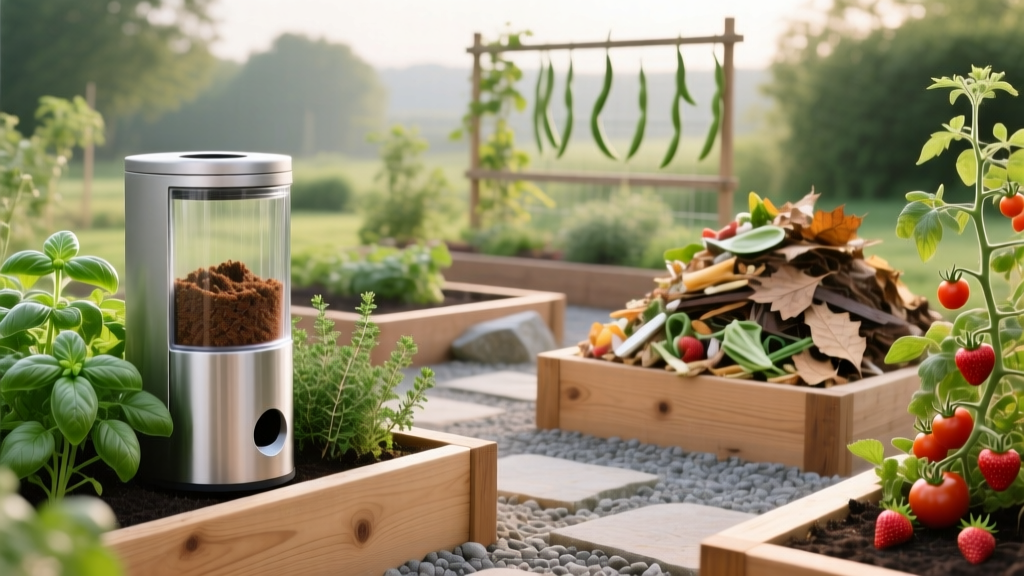
Tumbling vs Stationary Compost Bins: 2026 Foodscaping Guide
Robert HayesPublished
The Evolution of Foodscaping and Compost Integration in 2026
As we move through 2026, the concept of foodscaping has matured from a niche gardening trend into a mainstream landscape design philosophy. Homeowners and urban farmers alike are no longer satisfied with hiding their vegetable patches behind tall fences. Instead, modern edible landscaping seamlessly integrates food-producing plants, functional infrastructure, and ecological waste management into a cohesive, beautiful outdoor living space. At the very heart of this closed-loop system is the compost bin. Choosing between a tumbling compost bin and a stationary pile method is no longer just a question of decomposition speed; it is a critical design decision that impacts the aesthetics, spatial flow, and soil health of your entire edible landscape.
According to the Environmental Protection Agency (EPA), composting organic waste not only reduces methane emissions from landfills but also creates a nutrient-rich soil amendment that reduces the need for chemical fertilizers. In a foodscaping context, this means your compost setup must be both highly efficient and visually harmonious with your surrounding edible ornamentals, espaliered fruit trees, and raised bed layouts. Let us break down the tumbling versus stationary compost debate to help you select the perfect system for your 2026 garden.
Tumbling Compost Bins: The Space-Saver’s Dream
Tumbling compost bins have seen significant design upgrades in 2026, featuring UV-stabilized recycled polypropylene, ergonomic crank handles, and integrated smart moisture sensors. These elevated, rotating drums are designed to make turning compost effortless, which introduces oxygen into the mix and accelerates the breakdown of organic matter. For the foodscaper working with limited square footage or a highly manicured formal garden design, tumblers offer a distinct advantage.
Pros of Tumblers in Edible Landscapes
- Pest Resistance: Because they are fully enclosed and elevated off the ground, tumblers are virtually impenetrable to rodents, raccoons, and neighborhood pets. This is crucial when composting fruit scraps near your edible borders.
- Speed of Decomposition: With regular turning, a dual-chamber tumbler can produce finished compost in as little as four to six weeks during the warm summer months.
- Aesthetic Flexibility: Modern tumblers have a sleek, geometric profile. They can be flanked by tall, edible ornamental grasses like Karl Foerster or hidden behind a living screen of Jerusalem artichokes without looking like an eyesore.
- Ergonomics: The elevated height and rotating mechanism save your back, making it easier to harvest finished compost directly into a wheelbarrow.
Cons to Consider
The primary drawback of tumblers is their limited capacity. Most residential models max out at 70 to 80 gallons. If you have a large food forest or generate significant yard waste from pruning perennials and fruit trees, a single tumbler will not suffice. Furthermore, because they are suspended in the air, tumblers can dry out quickly and lack the beneficial soil microbe inoculation that ground-level piles receive naturally.
Stationary Compost Piles: The Traditionalist’s Powerhouse
Stationary compost setups—ranging from modular cedar three-bin systems to simple wire-mesh Geobins—remain the gold standard for high-volume composting. In 2026, permaculture-inspired foodscaping heavily favors stationary piles because they integrate directly with the soil food web. Ground-level composting allows earthworms, beneficial nematodes, and mycorrhizal fungi to migrate freely into the pile, resulting in a biologically superior end product.
Pros of Stationary Piles in Edible Landscapes
- Massive Capacity: A standard three-bin system can process hundreds of gallons of autumn leaves, spent vegetable crops, and pruned bramble canes.
- Hot Composting Potential: Stationary piles can easily achieve the critical mass (at least one cubic meter) required for hot composting, which kills weed seeds and plant pathogens.
- Cost-Effective: Building a stationary bin from upcycled wooden pallets or purchasing a basic wire enclosure is significantly cheaper than investing in a premium tumbler.
- Moisture Retention: Direct ground contact and open tops allow the pile to absorb natural rainfall, maintaining the ideal moisture levels for decomposition.
Cons to Consider
Stationary piles require more physical labor to turn using a pitchfork. They are also more susceptible to pest intrusion if not managed correctly. From a foodscaping perspective, a large, sprawling compost pile can look messy and disrupt the visual flow of a formal edible garden unless it is intentionally screened or integrated into a wilder, rustic permaculture zone.
Head-to-Head Comparison: Tumbler vs. Stationary
| Feature | Tumbling Bin (2026 Models) | Stationary Pile / Bin System |
|---|---|---|
| Processing Time | 4 to 8 weeks (with daily turning) | 3 to 6 months (passive) or 2 months (active hot composting) |
| Capacity | Low to Medium (40 - 80 gallons) | High (100 - 300+ gallons) |
| Pest Resistance | Excellent (fully enclosed & elevated) | Moderate (requires wire mesh base & proper browns/greens ratio) |
| Physical Effort | Low (crank or spin mechanism) | High (manual pitchfork turning required) |
| Aesthetic Integration | High (sleek, compact, easy to screen) | Moderate (requires living walls or rustic garden zoning) |
| Estimated Cost | $150 - $450 | $0 (DIY) - $250 (Premium Cedar Bins) |
Designing Your Compost Zone for Foodscaping
The secret to successful foodscaping is ensuring that every functional element serves a dual purpose as an aesthetic feature. Research from Penn State Extension highlights that proper compost bin placement can also influence microclimates in your garden. Here is how to integrate your chosen method into your 2026 landscape design:
Screening Stationary Piles with Edible Plants
If you opt for a high-volume stationary system, do not banish it to a forgotten corner of the yard. Instead, use it as an anchor for a living screen. Plant a dense, edible hedge of hazelnut shrubs, blueberry bushes, or hardy kiwi vines on a trellis around the composting zone. Not only does this hide the bins from the primary viewing angles of your patio, but the thermal mass generated by a hot composting pile can actually extend the growing season for these surrounding plants in early spring and late autumn.
Flanking Pathways with Tumblers
For smaller urban lots where a dual-chamber tumbler is the most practical choice, treat the bin like a piece of functional garden art. Position it near the entrance to your vegetable garden or flanking a greenhouse. Surround the base of the tumbler with low-growing, edible ground covers like creeping thyme, alpine strawberries, or nasturtiums. These plants will catch any stray leachate (compost tea) that drips from the bin's drainage ports, turning a potential mess into a nutrient boost for your ornamental edibles.
2026 Setup Guide for Maximum Efficiency
Regardless of whether you choose a tumbler or a stationary pile, the biological rules of composting remain unchanged. To ensure your foodscaping thrives, follow these actionable setup steps:
- Master the C:N Ratio: Aim for a carbon-to-nitrogen ratio of roughly 30:1. In practical terms, this means mixing three parts 'browns' (shredded autumn leaves, cardboard, wood chips from pruned fruit trees) to one part 'greens' (vegetable kitchen scraps, coffee grounds, fresh grass clippings).
- Incorporate Biochar: A major trend in 2026 soil science is the addition of biochar to the compost pile. Adding a thin layer of horticultural biochar every few inches acts as a sponge, retaining water and capturing volatile nutrients that would otherwise off-gas into the atmosphere. The resulting compost is incredibly potent for top-dressing your raised beds.
- Monitor Moisture Levels: Your compost should feel like a wrung-out sponge. Tumblers often require a quick spray with a hose during dry summer weeks, while stationary piles may need a tarp cover during heavy spring rains to prevent anaerobic conditions.
- Inoculate with Finished Compost: When starting a new batch in either system, add a few shovelfuls of finished compost or native garden soil to introduce the necessary microbial biology. As noted by experts at the Cornell Waste Management Institute, this microbial inoculation is the catalyst that drives the entire decomposition process.
"In a true foodscape, there is no such thing as waste. The spent stalks of your asparagus, the fallen leaves of your apple tree, and your daily kitchen scraps are simply the raw materials for next year's harvest. The compost bin is not a garbage can; it is the engine of your garden's fertility."
Final Thoughts on Choosing Your System
Ultimately, the choice between a tumbling bin and a stationary pile in 2026 comes down to your specific spatial constraints, physical capabilities, and design vision. If you have a compact, formal edible landscape and prioritize convenience and pest control, a modern dual-chamber tumbler is your best investment. If you are cultivating a sprawling permaculture food forest, generating heavy yard waste, and want to foster deep soil biology on a budget, a stationary three-bin system is the undisputed champion. By thoughtfully integrating your chosen compost setup into your edible landscape, you close the loop on your garden's ecosystem, ensuring vibrant, productive, and beautiful harvests for years to come.
