Gardening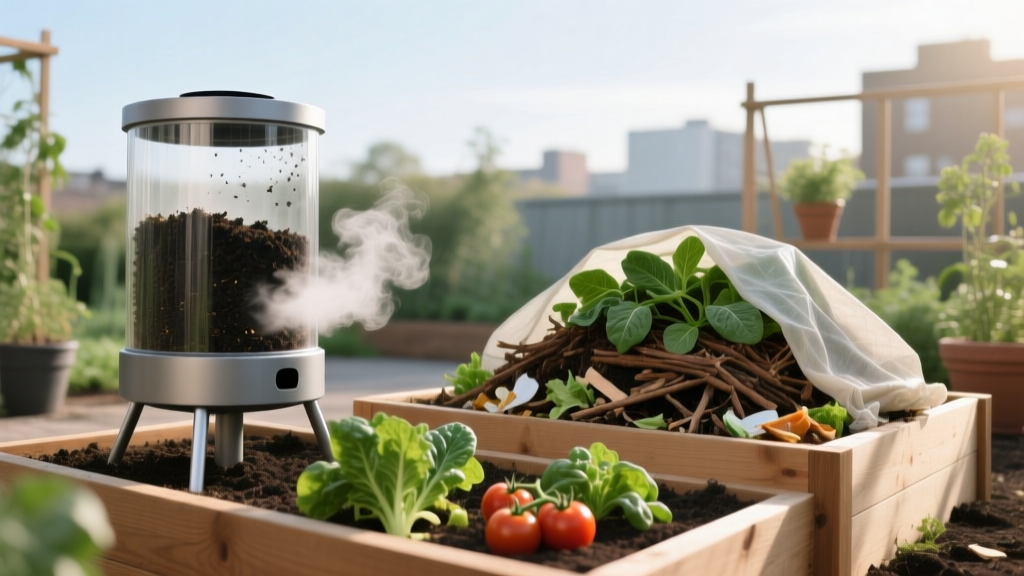
Best Compost Bins for Raised Beds 2026: Tumbler vs Stationary
Anna KowalskiPublished
The Foundation of Raised Bed Gardening: Why Compost Matters in 2026
As we navigate the 2026 growing season, raised bed vegetable gardening continues to dominate home landscapes. The appeal is undeniable: superior drainage, reduced weed pressure, and the ability to customize your soil profile. However, this intensive growing method comes with a hidden cost. Because raised beds drain more efficiently than in-ground gardens, they are highly susceptible to nutrient leaching and soil compaction over time. The lifeblood of any thriving raised bed is a steady, reliable supply of high-quality compost. But with limited space around your garden boxes and a constant demand for organic matter, choosing the right composting system is critical. The great debate for modern gardeners remains: should you invest in a tumbling compost bin or commit to a traditional stationary pile? In this comprehensive guide, we break down the tumbling versus stationary compost bin setup specifically through the lens of raised bed vegetable gardening, helping you maximize your harvest this year.
The Raised Bed Dilemma: High Output Requires High Input
When you grow heavy feeders like indeterminate tomatoes, bell peppers, and squash in raised beds, you are essentially managing a series of large, shallow containers. The soil biology in a raised bed works in overdrive. According to the Environmental Protection Agency (EPA), composting not only reduces household waste but also introduces vital microorganisms that help soil retain moisture and suppress plant diseases. For a raised bed, which can dry out rapidly during peak summer heat, the moisture-retention properties of finished compost are non-negotiable. To keep a standard 4x8-foot raised bed productive, you will need to top-dress it with at least 2 to 3 cubic feet of compost every spring, and potentially again in the fall for overwintering crops. This means your composting system must produce a high volume of finished material, or you must supplement with store-bought bags, which have seen significant price increases in 2026.
Tumbling Compost Bins: The Speedy, Space-Saving Option
Tumbling compost bins have evolved significantly over the last few years. The 2026 models feature advanced aeration spikes, dual-chamber designs, and UV-resistant recycled plastics that withstand extreme weather. A tumbler is essentially a sealed barrel mounted on a stand with a crank or handle that allows you to rotate the drum, mixing the contents without the need for a pitchfork.
Pros for Raised Bed Gardeners
- Speed of Decomposition: Because tumblers are easy to turn, gardeners are more likely to aerate them frequently. This introduces oxygen to the aerobic bacteria, speeding up the composting process. You can expect finished compost in as little as 6 to 8 weeks during the warm months, allowing you to amend your raised beds mid-season.
- Pest Resistance: Elevated off the ground and fully enclosed, tumblers are virtually impenetrable to rodents, raccoons, and neighborhood pets. If your raised beds are located in an urban or suburban setting where pests are a concern, a tumbler is a massive advantage.
- Ergonomics: Turning a stationary pile requires bending and heavy lifting. Tumblers are elevated to waist height, making them accessible for gardeners with mobility issues or bad backs.
Cons and Considerations
The primary drawback of a tumbling bin is its limited volume. Most residential dual-chamber tumblers max out at 65 to 80 gallons. If you have multiple large raised beds and generate a massive amount of garden waste (like spent corn stalks or sunflower heads) in the autumn, a tumbler will quickly reach capacity. Furthermore, tumblers can dry out easily. Because they are elevated and exposed to the wind, you must actively monitor their moisture levels, occasionally adding water to maintain the consistency of a wrung-out sponge.
Stationary Compost Bins and Piles: The High-Volume Workhorse
Stationary compost setups range from simple open-air wire rings and cedar three-bin systems to enclosed, slatted plastic cones that sit directly on the soil. This is the traditional method of composting, relying on either hot composting techniques (frequent turning with a pitchfork) or cold composting (letting nature take its course over 12 to 18 months).
Pros for Raised Bed Gardeners
- Massive Capacity: If you are managing four or more raised beds and want to compost all your autumn leaves, grass clippings, and vegetable scraps, a stationary pile or a multi-bin cedar system is mandatory. You can scale a stationary pile to virtually any size.
- Beneficial Soil Inoculation: Because stationary bins sit directly on the earth, native earthworms, beneficial nematodes, and fungi can freely migrate into the pile. When you harvest this compost and add it to your raised beds, you are transferring a highly diverse, locally adapted microbiome.
- Cost-Effective: A basic stationary setup, such as a heavy-duty compost ring or a DIY pallet bin, can be built or purchased for a fraction of the cost of a premium tumbler. Even high-end cedar three-bin systems, while an investment, offer a lower cost-per-cubic-foot of compost than plastic tumblers.
Cons and Considerations
The physical labor required to turn a large stationary pile is significant. To achieve the hot composting temperatures required to kill weed seeds and pathogens, you must turn a heavy, dense pile every few days. Additionally, open or poorly secured stationary piles can attract pests if kitchen scraps are not buried deeply enough beneath a layer of carbon-rich 'browns'.
Head-to-Head Comparison: Tumbler vs. Stationary for Raised Beds
To help you decide which system best suits your raised bed vegetable garden in 2026, review the comparison chart below.
| Feature | Tumbling Compost Bin | Stationary Pile / Bin |
|---|---|---|
| Processing Speed | Fast (6-10 weeks) | Slow to Moderate (3-12 months) |
| Volume Capacity | Low to Medium (30-80 gallons) | High (100+ gallons to unlimited) |
| Physical Effort | Low (Crank or spin) | High (Pitchfork turning) |
| Pest Resistance | Excellent (Fully enclosed) | Poor to Fair (Depends on design) |
| Moisture Control | Requires frequent watering | Retains moisture naturally |
| Best For | Small urban raised beds, quick top-dressing | Large raised bed farms, heavy autumn waste |
| 2026 Avg. Cost | $130 - $280 | $40 (DIY) - $350 (Cedar System) |
Integrating Your Compost into Raised Vegetable Beds
Once your chosen system has produced dark, crumbly, earthy-smelling compost, the next step is integration. How you apply it depends on the time of year and the state of your raised beds.
Spring Preparation
In early spring, about two weeks before your last frost date, apply a 1-to-2-inch layer of finished compost directly over the surface of your raised beds. Avoid deep tilling, which can disrupt the soil structure and fungal networks you have worked hard to build. Instead, use a broadfork or a hand cultivator to gently incorporate the top few inches. This provides a slow-release nutrient buffet for your spring transplants.
Mid-Season Side Dressing
Heavy feeders like tomatoes and eggplants will exhaust the initial nutrient charge by mid-summer. Use the continuous harvest from your dual-chamber tumbler to 'side dress' these plants. Simply pull back the mulch, apply a handful of compost around the base of the stem, and replace the mulch. The Royal Horticultural Society (RHS) notes that regular mulching with compost not only feeds the plant but also regulates soil temperature and conserves vital moisture during dry spells.
Autumn Bed Put-to-Bed
If you utilize a stationary hot-compost system, you will likely have a massive batch of finished compost ready in the fall. After clearing out spent summer crops, lay down a thick 3-inch layer of compost over the empty raised beds and cover it with a layer of shredded leaves or straw. Over the winter, earthworms and freeze-thaw cycles will work the organic matter deep into the soil profile, leaving you with a perfectly primed seedbed for early spring peas and radishes.
Pro Tips for 2026 Compost Success
Regardless of whether you choose a tumbler or a stationary bin, the biology of composting remains the same. Keep these expert tips in mind to ensure your raised beds receive the best possible amendments this year.
- Master the C:N Ratio: Aim for a carbon-to-nitrogen ratio of roughly 30:1. For every bucket of nitrogen-rich kitchen scraps (greens) you add to your tumbler, add two to three buckets of carbon-rich materials like shredded cardboard, dry autumn leaves, or untreated wood shavings (browns). This prevents the anaerobic, foul-smelling conditions that can ruin a batch.
- Incorporate Biochar: A major trend in 2026 raised bed gardening is the addition of biochar to the compost pile. Biochar is highly porous and acts like a sponge, holding onto water and nutrients that would otherwise leach out of your raised beds. Charge the biochar by letting it sit in your compost bin for a few weeks before applying it to your garden.
- Monitor the Squeeze Test: Your compost pile should feel like a wrung-out sponge. Grab a handful (wearing gloves) and squeeze it. If water drips out freely, it is too wet—add dry browns. If it crumbles and falls apart immediately, it is too dry—add water or wet greens.
Final Verdict: Which Setup Wins for Raised Beds?
The choice between a tumbling compost bin and a stationary pile ultimately depends on the scale of your raised bed garden and your physical capabilities. If you manage one or two 4x8 raised beds in a suburban backyard, value speed, and want to keep pests at bay, a modern dual-chamber tumbler is the undisputed champion. It provides a steady, manageable trickle of premium compost perfect for seasonal top-dressing. However, if you are running a sprawling homestead with multiple raised beds, generating massive amounts of yard waste, and want to foster deep soil biology on a budget, a stationary three-bin system is the superior workhorse. Many serious gardeners in 2026 are adopting a hybrid approach: using a tumbler for daily kitchen scraps and quick batches, alongside a stationary pile for heavy autumn yard waste. By understanding the unique demands of your raised beds, you can select the perfect composting engine to fuel your vegetable harvests for years to come.
