
Landscaping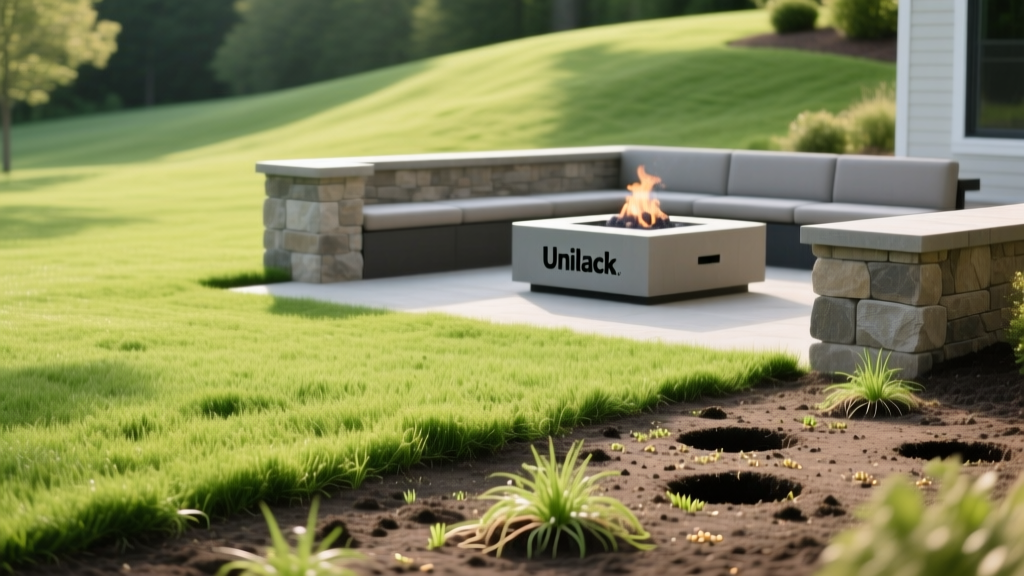
Restoring Lawns Around Unilock Fire Pits: 2026 Aeration Guide
Emily WatsonPublished
The Hidden Cost of Hardscape Construction: Soil Compaction
Installing a premium outdoor living space, such as a custom fire pit area surrounded by Unilock pavers and a matching Brussels Dimensional Stone seating wall, dramatically elevates your backyard's functionality and aesthetic. However, the construction process required to build a durable, level hardscape takes a severe toll on the adjacent lawn. To ensure the longevity of Unilock products like Richcliff or Thornbury pavers, contractors must excavate the existing topsoil and lay down a geotextile fabric followed by six to eight inches of crushed aggregate base. This base is repeatedly compacted using heavy vibratory plate compactors to prevent future settling.
While this rigorous base preparation is essential for your hardscape, the intense vibrations and heavy equipment traffic severely compact the soil in the surrounding turf zones. According to the University of Minnesota Extension, soil compaction increases bulk density and destroys soil macroporosity, effectively choking off oxygen and water to grassroots. Furthermore, the area immediately surrounding a fire pit and seating wall becomes a high-traffic entertainment zone, compounding the construction-era compaction with ongoing foot traffic. If left untreated, the turf bordering your beautiful Unilock patio will thin out, become vulnerable to weeds, and suffer from severe drought stress. Core aeration combined with strategic overseeding is the only scientifically proven method to reverse this damage and restore a lush, durable lawn perimeter.
Protecting Your Unilock Investment During Aeration
When aerating the lawn immediately adjacent to a paver surround, extreme caution is required to protect your hardscape investment. Unilock paver installations rely on two critical edge components: a physical edge restraint (such as SnapEdge) and polymeric sand swept into the paver joints. Polymeric sand is activated by water and cures into a rigid, flexible bond that prevents weed growth and insect infiltration while locking the pavers in place.
Standard walk-behind or stand-on core aerators utilize heavy, hollow metal tines that plunge up to three inches into the soil. If an aerator is driven too close to the paver edge, the tines can catch the lip of the edge restraint, pulling it up and compromising the structural integrity of the patio border. Worse, the tines can fracture the cured polymeric sand joints, leading to joint erosion, paver shifting, and costly hardscape repairs. As a strict rule for 2026 lawn care, you must maintain a minimum four-inch buffer zone between the aerator tines and the paver edge. To relieve compaction in this critical buffer zone, use a manual garden fork or a specialized handheld core aerator. This allows you to manually extract soil plugs right up to the Unilock border without applying lateral torque that could damage the polymeric joints or the seating wall foundation.
The 2026 Aeration and Seeding Timeline
Timing is everything when coordinating turf restoration around an outdoor entertainment space. For cool-season grasses commonly found in northern and transition zones, early fall remains the undisputed champion for aeration and overseeding. In 2026, turfgrass experts recommend targeting the window when soil temperatures drop to between 50°F and 65°F, which typically aligns with late August through mid-October depending on your hardiness zone. During this period, the air is cool enough to prevent heat stress on tender seedlings, yet the soil retains enough residual summer warmth to accelerate germination.
If you are hosting late-summer gatherings around your fire pit, schedule your aeration and seeding project immediately after your final major outdoor event of the season. Spring aeration is generally discouraged for these high-traffic perimeters because it opens the soil profile right before the peak weed germination season, allowing crabgrass to infiltrate the turf bordering your seating wall. Furthermore, fall seeding allows the root system to establish deeply before the freeze-thaw cycles of winter and the heavy foot traffic of the following summer.
Choosing the Right Seed for High-Traffic Entertainment Zones
The lawn surrounding a fire pit and seating wall is not a delicate, ornamental display area; it is a high-wear utility zone. Guests will constantly pivot, drag chairs, and walk across this turf to access the patio. Therefore, your seed selection must prioritize wear tolerance, rapid recovery, and deep rooting. In 2026, the turf industry has heavily adopted endophyte-enhanced seeds and advanced drought-resistant polymer coatings, which significantly improve survival rates in the challenging microclimates created by hardscape heat radiation.
According to research from Penn State Turfgrass Science, blending multiple cultivars provides the best defense against disease and environmental stress. Below is a comparison of the top grass types recommended for fire pit perimeters:
| Grass Type | Wear Tolerance | Germination Time | Shade Tolerance | 2026 Avg Cost/lb |
|---|---|---|---|---|
| Turf-Type Tall Fescue (TTTF) | Excellent | 7-12 Days | Moderate to High | $6.50 - $8.00 |
| Kentucky Bluegrass (KBG) | Good (Recovers via Rhizomes) | 14-28 Days | Low to Moderate | $7.00 - $9.50 |
| Perennial Ryegrass | Excellent | 5-7 Days | Low | $5.00 - $7.00 |
For most Unilock fire pit surrounds, a blend consisting of 80% Turf-Type Tall Fescue and 20% Kentucky Bluegrass is the gold standard. The TTTF provides deep, drought-tolerant roots and immense wear resistance, while the KBG spreads via underground rhizomes to naturally repair divots and bare spots caused by shifting patio furniture or stray firewood.
Step-by-Step Restoration Process
To achieve a seamless transition between your manicured lawn and your hardscaped seating wall, follow this meticulous restoration protocol:
- Mow Low and Rake: Drop your mower blade to a height of 1.5 inches. Bag the clippings and use a stiff-tined leaf rake to aggressively scratch the soil surface near the paver edge. This removes thatch and ensures the seed will make direct soil contact.
- Core Aerate: Run your mechanical core aerator over the lawn in two perpendicular directions to maximize plug extraction. Remember to respect the four-inch buffer zone near the Unilock pavers and seating wall, switching to manual aeration in that perimeter.
- Overseed Generously: Apply your premium seed blend using a broadcast spreader. For a lawn recovering from construction compaction, apply seed at a rate of 6 to 8 pounds per 1,000 square feet—slightly heavier than a standard maintenance overseeding.
- Topdress with Compost: Spread a quarter-inch layer of finely screened, aged compost over the seeded area. This topdressing retains moisture, protects the seed from birds, and introduces vital microbial life to the compacted soil. Take care to sweep any stray compost off your Unilock pavers immediately to prevent staining or organic buildup in the joints.
- Starter Fertilizer: Apply a high-phosphorus starter fertilizer (where local 2026 environmental regulations permit) to fuel rapid root development.
Post-Seeding Care and Irrigation Strategies
The most critical phase of lawn restoration is the first 21 days of irrigation. Newly germinated seed requires constant surface moisture. You must water the lawn lightly two to three times a day for 10-minute intervals. However, when watering the perimeter adjacent to your fire pit and seating wall, you must manage runoff carefully. High-volume sprinkler heads that blast water directly against the seating wall or paver joints can erode the base materials or degrade the polymeric sand over time.
Utilize low-volume oscillating sprinklers or precision rotary nozzles that provide a gentle, rain-like application. Adjust the spray radius so that it stops just short of the hardscape edge. If you have an automated irrigation system, ensure the heads bordering the Unilock patio are fitted with check valves and matched-precipitation nozzles to prevent low-head drainage from pooling against the paver edge restraint. For more detailed guidance on hardscape and landscape integration, homeowners can consult the Unilock North America resource center for best practices on maintaining the transition zones between their premium pavers and softscapes.
By treating the soil compaction caused by hardscape construction and selecting the right wear-tolerant seed, you can ensure that the lawn framing your Unilock fire pit and seating wall remains as stunning and resilient as the stonework itself for years to come.

