
Landscaping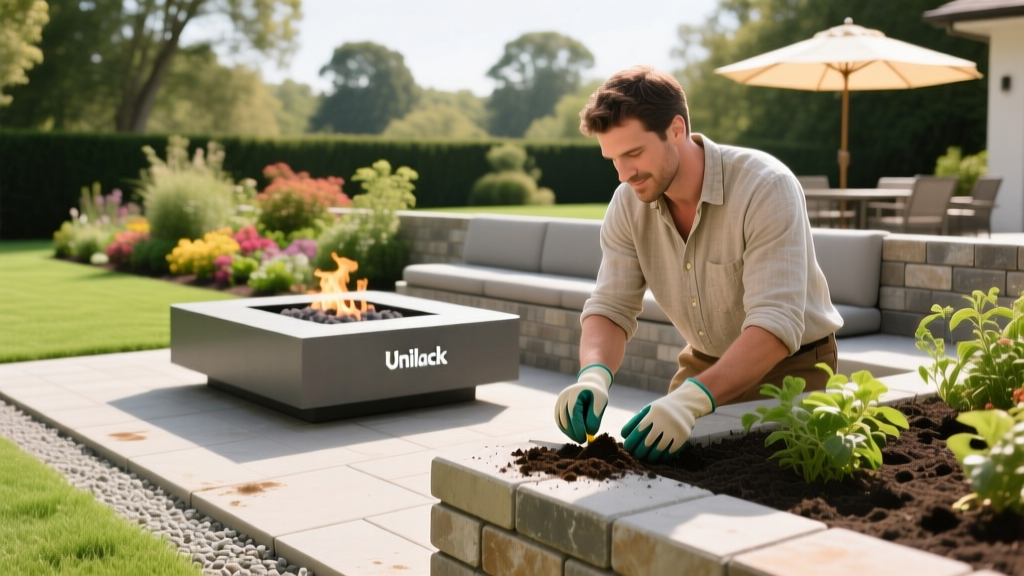
Fertilizing Near Unilock Fire Pits: 2026 Safe Schedule
Emily WatsonPublished
The Intersection of Hardscaping and Lawn Nutrition
Designing an outdoor living space with a premium Unilock paver surround and a matching seating wall around a fire pit instantly elevates your landscaping. Products like Unilock Umbriano or Beacon Hill Flagstone provide a luxurious, durable surface for gathering. However, maintaining the lush turf and vibrant garden beds that border these hardscaped areas requires a highly specialized approach to nutrient management. In 2026, with advanced paver sealers and next-generation polymeric sand technologies, the rules of fertilization near hardscapes have evolved. Applying the wrong fertilizer can lead to catastrophic aesthetic damage, turning a multi-thousand-dollar investment into an eyesore plagued by rust stains and white efflorescence.
This comprehensive 2026 guide bridges the gap between hardscape preservation and agronomic science, ensuring your fire pit landscape remains both structurally pristine and botanically thriving.
The Hidden Threat: How Fertilizers Damage Unilock Pavers
Concrete pavers are incredibly durable, but they are also inherently porous. When granular fertilizers land on a paver surface and are exposed to moisture, a chemical reaction can occur that permanently alters the appearance of the stone.
Iron Oxide Staining
The most notorious enemy of concrete pavers is iron-based fertilizer, commonly sold as Ironite or standard iron sulfate. When these granules rest on a paver and dissolve, they oxidize, creating deep, rust-colored spots that are nearly impossible to remove without harsh, acid-based cleaners. According to the Interlocking Concrete Pavement Institute (ICPI), metallic staining is one of the most common and difficult maintenance issues faced by homeowners with interlocking concrete landscapes.
Salt Efflorescence
High-nitrogen, quick-release synthetic fertilizers possess a high salt index. When these salts accumulate in the paver joints and are drawn to the surface by evaporating moisture, they leave behind a white, powdery residue known as efflorescence. While efflorescence can occur naturally in new concrete, fertilizer-induced efflorescence is relentless and will quickly ruin the dark, rich tones of a Unilock Lineo Dimensional Stone seating wall.
Polymeric Sand Degradation
Modern fire pit surrounds rely on polymeric sand to lock joints and prevent weed growth. Highly acidic fertilizers can degrade the binding agents in older sand formulations. While 2026 formulations of next-gen sands are more resilient, repeated exposure to acidic nutrient spills will eventually compromise the joint integrity, leading to washouts and ant infestations.
The Microclimate Effect: Seating Walls and Plant Nutrition
When planning your 2026 fertilizer schedule, you must account for the microclimate created by the fire pit and seating wall. Hardscapes absorb and radiate heat. A Unilock seating wall acts as a thermal mass, warming the soil immediately behind it. This extended warmth encourages earlier root activity in the spring but increases moisture evaporation in the summer.
Furthermore, the seating wall creates a 'rain shadow,' blocking natural precipitation from reaching the soil directly beneath it. Plants in this zone require more frequent irrigation and a modified fertilization strategy. Because the soil is warmer and drier, granular fertilizers may not break down efficiently. Instead, liquid fertilizers or water-soluble amendments applied directly to the root zone are highly recommended for beds situated in the wall's rain shadow.
Paver-Safe Fertilizer Types for 2026
To protect your investment, transition away from traditional synthetic granular blends near hardscaped zones. The University of Minnesota Turfgrass Science program continually emphasizes the importance of matching nutrient delivery methods to the specific environmental constraints of the landscape.
- Chelated Iron (Fe-EDDHA): If your surrounding garden beds suffer from iron chlorosis (yellowing leaves with green veins), avoid granular iron sulfate. Instead, use a liquid chelated iron applied directly to the foliage or injected into the soil. Chelated iron remains bioavailable to the plant without oxidizing and staining concrete surfaces.
- Amino Acid Biostimulants: For turfgrass borders immediately adjacent to the fire pit, amino acid and kelp-based biostimulants provide stress relief and deep greening without the high salt index of synthetic nitrogen. These are 100% paver-safe and will not cause efflorescence.
- Organic Slow-Release Blends: Plant-based or feather-meal-based organic fertilizers (such as those from Espoma or Jonathan Green) have a naturally low salt index. They break down slowly via microbial activity, drastically reducing the risk of salt buildup in the paver joints.
Comparison Chart: Paver-Safe vs. Hazardous Fertilizers
| Fertilizer Type | Paver Safety Rating | Best Use Case Near Fire Pits | Application Method |
|---|---|---|---|
| Granular Iron Sulfate | Hazardous | Avoid completely near hardscapes | N/A |
| Synthetic Quick-Release (High Salt) | Moderate Risk | Open lawn areas >10 feet from pavers | Drop spreader with deflector |
| Liquid Chelated Iron | Safe | Treating chlorosis in border garden beds | Foliar spray or soil drench |
| Organic Slow-Release (Low Salt) | Safe | General turf and bed nutrition | Rotary spreader (with sweeping) |
| Kelp / Seaweed Extract | Safe | Summer heat stress mitigation | Hose-end or pump sprayer |
The 2026 Fertilizer Schedule for Fire Pit Landscapes
Timing is everything. By aligning your nutrient applications with the seasonal use of your fire pit and the natural growth cycles of your landscape, you minimize the risk of hardscape damage.
Early Spring (April): Soil Testing and Organic Base
Begin the 2026 season with a comprehensive soil test. Apply an organic, slow-release granular fertilizer to the surrounding garden beds and turf borders. Critical Step: Immediately after application, use a stiff-bristled push broom or a commercial leaf blower to remove every single granule from the Unilock paver surface and the seating wall cap. Never water the landscape until the hardscape is completely clear of debris.
Late Spring (May): Liquid Biostimulants
As the turfgrass enters its peak growth phase, switch to liquid amino acid biostimulants for the grass abutting the paver edges. Liquid applications eliminate the risk of stray granules lodging in the polymeric sand joints. This is also the time to apply a pre-emergent herbicide to the beds, ensuring weeds do not compromise the clean lines of the fire pit surround.
Summer (July - August): Heat Stress Management
The thermal mass of the seating wall will intensify summer heat. Avoid high-nitrogen fertilizers, which force tender, vulnerable growth during heatwaves. Instead, apply liquid kelp and seaweed extracts in the early evening. These biostimulants build cellular resistance to heat and drought without leaving behind staining residues. Pay special attention to the 'rain shadow' zone behind the seating wall, providing deep, infrequent watering alongside your liquid nutrient applications.
Autumn (September - October): Winterization
Prepare the landscape for winter and the upcoming heavy-use fire pit season. Apply a potassium-rich, low-nitrogen winterizer to the turf to promote deep root growth. As fallen leaves begin to drop, ensure that leaf litter does not trap fertilizer moisture against the pavers, which can cause organic tannin staining. According to the Environmental Protection Agency (EPA), proper autumn nutrient management also prevents winter runoff from carrying excess phosphorus into local waterways.
Best Practices for Application and Cleanup
Even with paver-safe products, physical application techniques must be adapted to protect your hardscape.
- Use a Deflector Shield: When using a rotary spreader near the fire pit, always attach a deflector shield to direct granules away from the Unilock pavers and seating wall.
- Edge with a Drop Spreader: For the exact perimeter where turf meets the paver border, use a drop spreader to ensure precise, controlled placement of nutrients.
- The 'Blow-Then-Water' Rule: Never use a hose or sprinkler to wash stray fertilizer off the pavers into the joints. This drives the chemicals directly into the polymeric sand and the porous concrete. Always blow or sweep the pavers dry first, then water the landscape.
- Sealant Maintenance: If your Unilock pavers were sealed upon installation, ensure the sealant is reapplied according to the manufacturer's 2026 guidelines (typically every 3-5 years). A high-quality penetrating sealer acts as a secondary barrier against accidental chemical spills.
Conclusion
A Unilock fire pit and seating wall represent a significant investment in your home's outdoor living experience. By understanding the chemical interactions between concrete, polymeric sand, and modern fertilizers, you can maintain a vibrant, healthy landscape without sacrificing the pristine beauty of your hardscape. Embrace paver-safe organic alternatives, leverage liquid biostimulants, and adhere to a meticulous cleanup routine to ensure your outdoor oasis remains flawless throughout 2026 and beyond.

