
Landscaping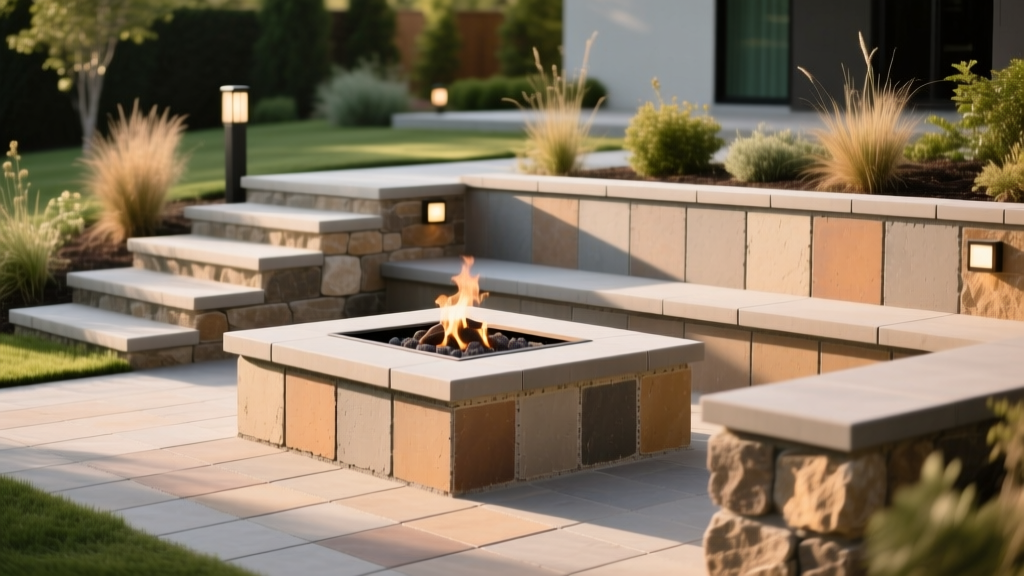
Capturing Unilock Fire Pit & Seating Wall Designs in 2026
Robert HayesPublished
The Intersection of Hardscaping and Visual Storytelling
In the modern era of landscape architecture, the creation of an outdoor living space is only half the journey; the other half is capturing its essence through meticulous garden photography and documentation. As we move through 2026, the trend of documenting landscape transformations has evolved from simple smartphone snapshots to comprehensive visual portfolios. According to the National Association of Landscape Professionals (NALP), outdoor living spaces—particularly custom fire features and integrated seating—remain at the absolute top of homeowner investment priorities. For landscape designers, contractors, and passionate homeowners, mastering the photography of these spaces is essential for marketing, portfolio building, and personal landscape journaling.
One of the most iconic and highly photographed hardscape combinations is the fire pit area featuring a Unilock paver surround paired with a matching or contrasting seating wall. The tactile surfaces, rich color blends, and structural geometry of Unilock products provide a phenomenal canvas for photographers. However, capturing the true depth, texture, and ambiance of a Unilock fire pit area requires a strategic approach to lighting, composition, and post-processing. This guide will walk you through the precise techniques needed to document and photograph these stunning hardscape features in 2026.
Why Document Your Unilock Fire Pit and Seating Wall?
Documentation serves multiple critical purposes. For landscape professionals, high-quality imagery is the primary driver of new client acquisition. Showcasing the intricate jointing patterns of a paver surround or the rugged, naturalistic cleft of a Brussels Dimensional Stone seating wall proves your craftsmanship. For homeowners, creating a visual journal of the landscape's evolution—from the initial excavation and base prep to the final polymeric sand application and the first fire lit—creates a lasting legacy of the property's transformation.
When you choose premium materials, the visual payoff is significant. The Unilock catalog offers exceptional options like the Umbriano paver, known for its EnduraColor facade that resists fading and provides a rich, mottled texture that camera sensors love. Documenting these specific material choices helps justify the investment and provides a reference for future maintenance, sealing, or expansion projects.
Choosing the Right Gear for Hardscape Photography in 2026
To properly capture the scale and detail of a fire pit and seating wall area, you need gear that can handle wide angles without distorting the straight lines of the hardscape. In 2026, high-resolution full-frame mirrorless cameras are the industry standard. A 45-megapixel or higher sensor allows you to crop into the image later to highlight specific details, such as the texture of the paver surface or the custom metalwork of the fire pit burner.
The most crucial lens in your kit for this specific subtopic is a tilt-shift lens (such as a 24mm or 50mm tilt-shift). Hardscape photography often involves shooting from a standing or elevated position, which causes vertical lines—like the corners of a seating wall or the pillars of a pergola—to converge and appear skewed. A tilt-shift lens corrects this perspective distortion in-camera, ensuring that your Unilock seating wall looks perfectly plumb and structurally sound.
Additionally, a high-quality circular polarizer (CPL) filter is non-negotiable. Pavers, especially those with a subtle sheen or those that have been recently sealed, can reflect the sky and surrounding foliage, washing out their true colors. A CPL cuts through this glare, revealing the deep, saturated tones of the Unilock pavers and the natural stone veneer of the seating wall.
Mastering Light: Golden Hour, Blue Hour, and Firelight
Lighting is the single most important variable in garden photography. For a fire pit area with a seating wall, you are dealing with a unique lighting challenge: balancing the ambient natural light with the intense, warm, artificial light of the fire.
The Golden Hour Approach
Shooting during the golden hour (the hour just before sunset) provides soft, directional light that rakes across the paver surround. This side-lighting accentuates the texture of the pavers and the dimensional profile of the seating wall blocks. The warm sunlight complements the earthy tones of materials like Unilock's Senzo or Richcliff pavers, making the hardscape look inviting and luxurious.
The Blue Hour and Firelight Balance
The most dramatic and highly sought-after images of fire pit areas are captured during the "blue hour"—the twilight period just after the sun has dipped below the horizon. During this time, the sky takes on a deep, cool blue hue. When you ignite the fire pit, you create a stunning color contrast: the 3000K warm orange glow of the flames against the 10000K cool blue sky. To achieve this, you must use a tripod and a long exposure. The camera's sensor will gather the dim ambient twilight while simultaneously capturing the bright, dancing flames. Ensure your white balance is set to "Daylight" or "Flash" (around 5500K) rather than "Auto," which might try to neutralize the beautiful warm glow of the fire.
Composition Strategies for Paver Surrounds and Seating Walls
How you frame the Unilock elements dictates the impact of the photograph. Here are the most effective compositional techniques for this specific hardscape setup:
- Leading Lines: Use the joints of the Unilock paver surround to lead the viewer's eye directly to the fire pit. If the pavers are laid in a herringbone or basketweave pattern, position your camera low to the ground to emphasize the geometric lines pointing toward the fire feature.
- Framing with the Seating Wall: Instead of shooting the fire pit dead-on, position yourself at the end of the curved or L-shaped seating wall. Use the wall itself as a leading line and a framing device. The rugged texture of the wall blocks in the foreground adds depth and context to the image.
- Overhead Drone Perspectives: In 2026, lightweight, high-resolution drones are standard tools for landscape documentation. An overhead "bird's-eye" shot perfectly captures the circular or square geometry of the fire pit, the concentric rings of the paver surround, and how the seating wall integrates with the surrounding lawn or garden beds. Always ensure you are compliant with local FAA regulations and fly during the blue hour for dramatic shadow and light interplay.
- Detail and Macro Shots: Do not forget the close-ups. Document the edge restraints, the precision of the cut pavers around the fire pit ring, and the capstone details on the seating wall. These macro shots are invaluable for portfolio presentations and build documentation.
Camera Settings Cheat Sheet for Hardscape Photography
To help you navigate the varying lighting conditions of a fire pit area, refer to this structured settings guide. These are baseline settings for a full-frame mirrorless camera shooting in RAW format.
| Lighting Scenario | Aperture (f-stop) | Shutter Speed | ISO | White Balance | Notes |
|---|---|---|---|---|---|
| Midday Detail Shots | f/8 - f/11 | 1/250s | 100 | Auto / Daylight | Use a CPL filter to eliminate glare on sealed pavers. Keep ISO low for maximum dynamic range. |
| Golden Hour Wide | f/8 | 1/125s | 200 | Shade / Cloudy | Enhances the warm, golden tones of the Unilock pavers and surrounding foliage. |
| Blue Hour + Firelit | f/5.6 - f/8 | 2s - 10s | 100 | Daylight (5500K) | Tripod mandatory. Use a 2-second timer or remote shutter to prevent camera shake. Captures fire trails and twilight sky. |
| Interior / Under Pergola | f/4 | 1/60s | 800 - 1600 | Custom / Kelvin | If the seating wall is under a pergola with integrated low-voltage LED lighting, balance the ambient exposure with the LED color temperature. |
Post-Processing and AI Enhancements
In 2026, post-processing software like Adobe Lightroom and Capture One feature advanced AI masking tools that are revolutionary for landscape photography. When editing your Unilock fire pit images, you can use AI to automatically select the "Fire" or "Warm Light" and independently adjust the exposure, temperature, and saturation of the flames without affecting the cool tones of the twilight sky or the neutral tones of the paver surround.
Another critical step in post-processing is lens correction and geometry adjustment. Even if you do not use a tilt-shift lens, modern software can analyze the embedded lens profile and correct barrel distortion, ensuring the straight edges of your seating wall and the precise angles of your paver cuts remain true to life. When editing the pavers, be careful not to over-sharpen or over-saturate. The goal of documentation is accuracy; you want the Unilock colors to look exactly as they do in person, ensuring that potential clients or future homeowners have a realistic expectation of the materials.
Building a Comprehensive Landscape Journal
Beyond single, beautiful photographs, consider compiling your work into a comprehensive landscape journal or digital case study. Start by documenting the site before any excavation begins. Capture the layout and string lines during the base preparation phase, highlighting the crushed stone base and geotextile fabrics that ensure the longevity of the Unilock pavers. Photograph the installation of the edge restraints and the sweeping in of the polymeric sand. Finally, conclude the journal with the twilight lifestyle shots of the completed fire pit and seating wall in use.
This chronological documentation not only serves as a powerful marketing tool but also acts as a vital maintenance record. By thoroughly photographing the drainage gradients, the base materials, and the exact product lines used (such as noting the specific Unilock color blend and wall block series), you create an invaluable resource for any future repairs, sealing applications, or landscape expansions. In the world of high-end hardscaping, meticulous documentation is just as important as the craftsmanship itself, ensuring your outdoor living space is celebrated and preserved for decades to come.

