Home & Garden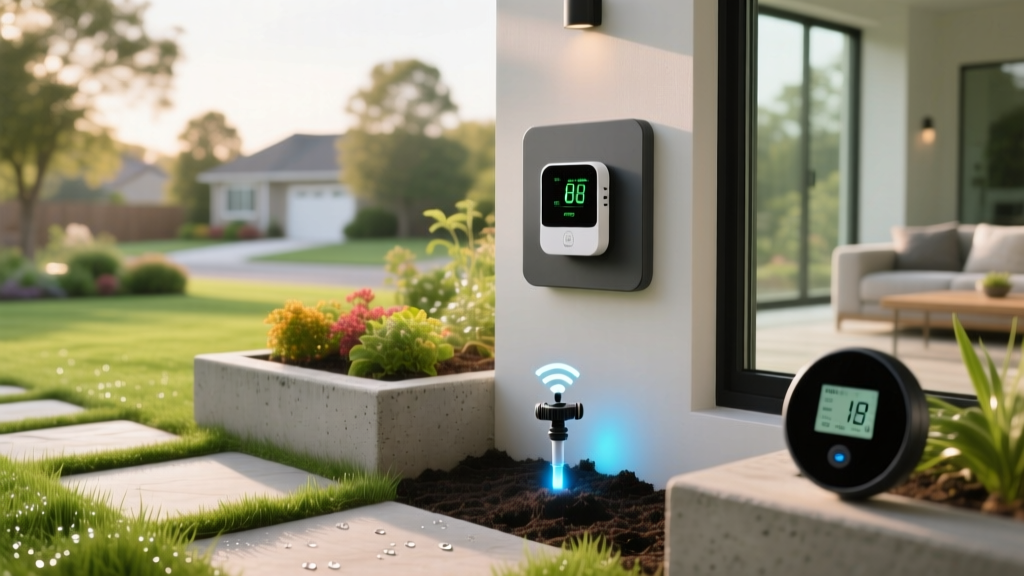
Upgrade Your Lawn With Smart Irrigation Controllers
Emily WatsonPublished
The Evolution of Smart Lawn Care
The transition from manual hose watering to automated sprinkler systems was a massive leap forward for homeowners. However, traditional mechanical timers are fundamentally flawed. They operate on rigid, pre-set schedules that completely ignore the dynamic environmental conditions of your yard. Today, the integration of smart home technology into outdoor landscaping has introduced a new era of precision agriculture right in your backyard. Smart irrigation controllers bridge the gap between indoor home automation and outdoor garden care, ensuring your lawn receives exactly what it needs, precisely when it needs it, without wasting a single drop of water.
The Hidden Cost of Traditional Sprinkler Timers
According to the Environmental Protection Agency (EPA), the average American family uses more than 300 gallons of water per day, with roughly 30 percent dedicated to outdoor uses. In arid climates or during peak summer months, this outdoor water usage can spike to 60 percent or more. Traditional timers are notorious for running sprinklers during rainstorms, immediately after heavy precipitation, or during high-wind events, leading to massive water waste, nutrient runoff, and increased utility bills.
Furthermore, overwatering is a primary catalyst for turf diseases such as brown patch and root rot. By blindly dumping water on a schedule, mechanical timers create shallow root systems that are highly susceptible to drought stress and heat damage. Upgrading to a smart irrigation controller is not just an environmental choice; it is a critical investment in the long-term health and resilience of your landscape.
Weather-Based vs. Soil Moisture-Based Controllers
When shopping for a smart irrigation system, you will generally encounter two distinct technologies. Understanding the difference is crucial for selecting the right tool for your specific soil type and climate.
Weather-Based (ET) Controllers
Weather-based controllers rely on Evapotranspiration (ET) data. ET is the sum of evaporation from the soil and transpiration from the plants. These smart timers connect to your home Wi-Fi network and pull real-time meteorological data from local weather stations or national databases. They calculate daily water loss based on solar radiation, wind speed, humidity, and temperature, automatically adjusting your watering schedule to replace only the exact amount of moisture lost. The EPA WaterSense program heavily endorses weather-based controllers, noting that they can save the average home nearly 7,600 gallons of water annually.
Soil Moisture Sensor Controllers
Soil moisture sensors (SMS) bypass weather forecasts entirely and measure the actual volumetric water content (VWC) in your yard's root zone. A probe is buried directly in the soil and wired to the controller. If the soil retains adequate moisture from a recent rain shower or high water table, the sensor overrides the scheduled watering cycle. This method is highly recommended for areas with microclimates, heavy shade, or soils with poor drainage where weather-based ET calculations might fall short.
Comparison Chart: Top Smart Irrigation Controllers
Choosing the right hardware depends on your zone count, budget, and desired smart home ecosystem integration. Below is a comparison of the top-rated smart controllers currently dominating the market.
| Feature | Rachio 3 Smart Sprinkler | Orbit B-hyve XR | Rain Bird ARC8 |
|---|---|---|---|
| Max Zones | 8 or 16 | 8 or 16 | 8 |
| EPA WaterSense Certified | Yes | Yes | No |
| Connectivity | Wi-Fi (2.4GHz) | Wi-Fi & Bluetooth | Wi-Fi (via LNK2 Module) |
| Smart Home Integration | Alexa, Google, Apple, IFTTT | Alexa, Google | Alexa, Google |
| Approx. Cost | $229 - $279 | $119 - $169 | $100 + $40 (Module) |
Strategic Placement of Soil Moisture Sensors
If you opt to integrate a soil moisture sensor into your smart setup, placement is everything. The Irrigation Association recommends installing the sensor in the "driest" or most representative zone of your landscape—typically an area that receives full sun and has average soil composition. Avoid placing sensors near downspouts, in heavy shade, or at the lowest elevation of your yard, as these areas will artificially inflate moisture readings and starve the rest of your lawn.
- Sandy Soils: Bury the sensor probe at a depth of 4 to 6 inches. Sandy soils drain rapidly, and the active root zone for turfgrass tends to be shallower.
- Clay Soils: Bury the probe at a depth of 6 to 9 inches. Clay retains water tightly, and you need to measure deeper where the grass roots are actively pulling moisture.
- Shrub and Garden Beds: Place the probe at 10 to 12 inches to accommodate the deeper root structures of ornamental shrubs and perennials.
Step-by-Step Installation and Wi-Fi Considerations
Replacing a legacy controller with a smart unit is a straightforward DIY project, provided you take the necessary precautions. First, turn off the circuit breaker supplying power to your irrigation system. Before disconnecting any wires from your old terminal block, take a high-resolution, well-lit photograph of the existing wiring configuration. This is your master blueprint.
Most smart controllers require a standard 24V AC transformer and a common wire (usually white or black) that connects to the "C" terminal. If your system utilizes a master valve or a pump start relay, ensure your chosen smart controller supports these specific terminals. Use waterproof wire nuts and dielectric grease when making splices, as basements and garages are prone to humidity fluctuations.
Pro Tip: Sprinkler controllers are often installed in garages, basements, or exterior utility closets where Wi-Fi signals are notoriously weak. Before mounting your new smart controller, use your smartphone to test the Wi-Fi signal strength at the exact mounting location. If the signal drops below -70 dBm, install a Wi-Fi extender or mesh node nearby to ensure your controller maintains a stable connection to the cloud for real-time weather updates.
Advanced Automation: Cycle and Soak Routines
One of the most powerful features of smart irrigation controllers is the automated "Cycle and Soak" function. This is vital for homeowners with heavy clay soils or sloped landscapes. When traditional systems run for 30 continuous minutes on clay soil, the water infiltration rate is quickly exceeded, resulting in massive surface runoff that carries fertilizers into storm drains.
Smart controllers solve this by breaking a 30-minute runtime into three separate 10-minute cycles, spaced an hour apart. This allows the water to slowly percolate deep into the soil profile, encouraging deep root growth and eliminating wasteful runoff. By enabling this feature in your smart app, you automate water conservation without ever having to manually adjust your schedule.
Smart Home Integration and Geofencing
To truly bridge indoor and outdoor living, integrate your irrigation controller with your broader smart home ecosystem. Using platforms like IFTTT (If This Then That), you can create highly customized automation routines. For example, you can link a smart rain gauge to your controller to instantly halt all watering if localized rainfall exceeds 0.25 inches, overriding even the most optimistic weather forecasts.
Additionally, smart controllers support freeze-skip and wind-skip thresholds. You can program the system to automatically bypass scheduled runs if wind speeds exceed 15 mph (which causes severe water drift and evaporation) or if temperatures drop below 35°F, protecting your above-ground valves and sprinkler heads from catastrophic freeze damage.
Seasonal Adjustments and Winterization
While smart controllers handle daily micro-adjustments flawlessly, they cannot replace essential seasonal maintenance. As autumn approaches and turfgrass enters dormancy, your smart controller will naturally reduce watering frequency based on dropping ET rates. However, you must still perform a manual or professional "blowout" using an air compressor to purge residual water from your PVC or polyethylene pipes before the first hard freeze.
Once the system is winterized, use your smart app's "Seasonal Off" or "Winter Sleep" feature. This safely shuts down all automated schedules without erasing your meticulously calibrated zone data, soil types, and sun/shade exposure settings, ensuring a seamless reactivation when spring arrives.
Conclusion
Upgrading to a smart irrigation controller is one of the highest-ROI home and garden improvements you can make. By leveraging real-time weather data, precise soil moisture monitoring, and advanced cycle-and-soak algorithms, you eliminate the guesswork from lawn care. Not only will you see a significant reduction in your monthly water bills, but your turf will also develop the deep, resilient root systems necessary to withstand summer heat and resist disease. Embrace the automation revolution, and let smart technology do the heavy lifting for your landscape.
