Gardening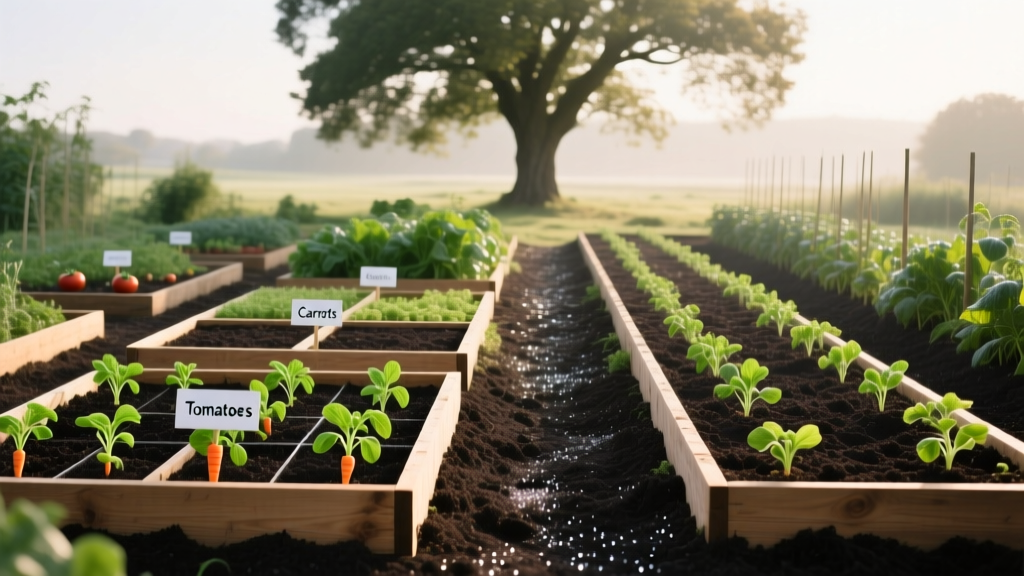
Square Foot vs Row Planting: 2026 Garden Layouts Near Trees
David ParkPublished
Integrating Tree Selection with Vegetable Garden Layouts in 2026
As home growers adapt to the shifting climate patterns of 2026, integrating perennial tree crops with annual vegetable gardens has become a cornerstone of resilient homestead design. Selecting the right fruit or nut tree is only half the battle; the true challenge lies in designing the vegetable garden layout around the tree's expanding canopy and root system. When planning your 2026 garden, you are likely debating the two dominant vegetable garden layouts: the intensive Square Foot Gardening (SFG) method versus the Traditional Row Planting method. Both approaches offer distinct advantages, but their effectiveness changes dramatically when introduced to the microclimates, shade patterns, and root competition created by trees. According to the University of Minnesota Extension, maximizing spatial efficiency is critical in modern garden planning, especially when incorporating perennial food forests. This guide will break down how to choose between square foot and row planting methods specifically for tree-integrated vegetable gardens this year.
The Challenge: Tree Canopies and Root Competition
Before selecting a layout, we must understand the environmental impact of your tree selections. Trees dictate the garden's light availability, water distribution, and soil nutrient profile. In 2026, with summer temperatures consistently trending higher, the dappled shade provided by a well-pruned fruit tree canopy can actually protect delicate leafy greens and brassicas from bolting prematurely. However, tree roots are aggressive foragers. A mature apple or pear tree can extend its feeder roots well beyond its drip line, directly competing with shallow-rooted vegetables for water and nitrogen.
Furthermore, certain trees, like the black walnut, produce juglone—a chemical that induces allelopathy, effectively poisoning sensitive crops like tomatoes and peppers. Understanding these dynamics is essential. The guidelines for gardening under trees emphasize that root disturbance and moisture competition are the primary limiting factors for annual crops planted in proximity to woody perennials. Therefore, your choice between SFG and row planting must mitigate these specific challenges.
Square Foot Gardening (SFG) Near Trees
Square Foot Gardening, popularized by Mel Bartholomew and continually updated with modern soil science, involves growing crops in small, highly concentrated raised beds—typically 4x4 feet. In 2026, the SFG method has evolved to incorporate biochar and advanced moisture-retaining polymers to combat drought conditions. When integrating SFG near trees, raised beds are your greatest defense against tree root competition. By elevating the vegetable garden layout 12 to 18 inches above the native soil and installing a root barrier or heavy-duty landscape fabric at the base, you effectively isolate your vegetable soil from the foraging tree roots.
The SFG method excels in the partial shade zones created by tree canopies. Because SFG relies on a specific soil blend (often a 2026 variation of Mel's Mix utilizing sustainable peat alternatives like coco coir and composted pine bark), you have total control over the nutrient density. This is crucial because tree roots will rapidly deplete the native topsoil of nitrogen. In a 4x4 SFG bed situated near the drip line of a dwarf cherry tree, you can successfully grow shade-tolerant crops like Swiss chard, spinach, and radishes without worrying about the tree stealing the fertilizer. Furthermore, the Old Farmer's Almanac notes that SFG reduces water usage by up to 50% compared to traditional methods, a vital metric when your vegetable garden is sharing a water table with a thirsty, mature fruit tree.
Traditional Row Planting in Tree-Integrated Zones
Traditional row planting involves tilling long, linear trenches directly into the native soil, spacing crops according to their mature width and tractor or tiller clearance. While this method is highly efficient for large-scale, open-field agriculture, it presents severe complications when integrated into a tree-selection landscape plan. Tilling the soil within or near a tree's drip line severs critical feeder roots, stressing the tree and making it susceptible to 2026's prevalent fungal pathogens and boring insects.
However, row planting does have a place in tree-integrated gardens if you are planting alley crops or utilizing the wide, sunny corridors between widely spaced orchard trees. If your tree selection includes standard-sized nut trees or widely planted deciduous shade trees, the open, sun-drenched rows between them are perfect for heavy-feeding, deep-rooted crops like corn, winter squash, and pole beans. Row planting allows for easier implementation of drip irrigation lines that can be zoned separately from the tree's deep-watering schedule. Yet, you must accept that row planting near trees requires rigorous, ongoing weed and root management. Without the physical barrier of a raised bed, tree roots will inevitably infiltrate your vegetable rows, requiring you to sever them with a sharp spade at the beginning of every planting season.
Head-to-Head Comparison: SFG vs. Row Planting Under Tree Canopies
To help you finalize your 2026 vegetable garden layout, review this comparison chart detailing how each method performs when integrated with tree selections.
| Feature | Square Foot Gardening (Raised Beds) | Traditional Row Planting (In-Ground) |
|---|---|---|
| Root Competition Defense | Excellent (with physical root barriers) | Poor (requires annual root severing) |
| Shade Adaptability | High (easily positioned in dappled light) | Moderate (fixed orientation limits flexibility) |
| Soil Nutrient Control | Complete control (imported soil blends) | Low (tree roots deplete native soil) |
| Watering Efficiency | High (targeted, less evaporation) | Moderate (higher evaporation, shared soil) |
| Best Crop Types Near Trees | Leafy greens, root veggies, herbs | Heavy feeders, sprawling vines (in sunny alleys) |
| Impact on Tree Health | Minimal (no soil compaction or tilling) | Negative (tilling damages feeder roots) |
Top Tree Selections for Vegetable Garden Integration
Your vegetable layout is only as successful as the trees you select to anchor the space. For 2026, we recommend selecting trees grafted onto dwarfing or semi-dwarfing rootstocks, such as the Geneva 30 for apples or Krymsk for plums. These rootstocks restrict the tree's overall size and, more importantly, confine the root system, leaving more native soil available for row planting or SFG bed placement.
Additionally, consider the canopy density. Trees with open, airy canopies, like the persimmon or the fig, allow valuable morning sunlight to penetrate the vegetable garden layout while providing necessary afternoon shade during the peak heat of August. Employing open-center pruning techniques ensures that the tree's architecture actively directs light down to the vegetable beds below. Avoid planting dense, shallow-rooted trees like the silver maple or the willow near any vegetable zone, as their aggressive surface roots will make both SFG and row planting nearly impossible without extreme infrastructure.
Step-by-Step 2026 Implementation Guide
- Map the Drip Line: Identify the exact drip line of your selected trees. Keep all vegetable layouts at least 2 feet outside this line to avoid the highest concentration of feeder roots.
- Track the Sun: Use a digital sun-mapping tool or simple observation to track how the tree's shadow moves across your yard from June to September. Place SFG beds in areas that receive morning sun and afternoon tree shade.
- Install Barriers: If using SFG, dig a shallow trench and line the bottom of your raised beds with galvanized hardware cloth to stop tree roots from pushing upward into your vegetable soil.
- Amend and Plant: Fill your SFG beds with a 2026 biochar-enriched compost mix. For row planting in the sunny alleys, apply a thick layer of arborist wood chips between the rows to suppress tree root surfacing and retain moisture.
- Implement Smart Irrigation: In 2026, utilizing soil moisture sensors is non-negotiable when planting near trees. Trees will unpredictably draw down soil moisture, so automated drip lines linked to localized soil probes will ensure your vegetables do not wilt during peak summer heat.
By carefully matching your vegetable garden layout to the specific traits of your tree selections, you can cultivate a thriving, multi-layered edible landscape that maximizes every square inch of your property in 2026.
