
Landscaping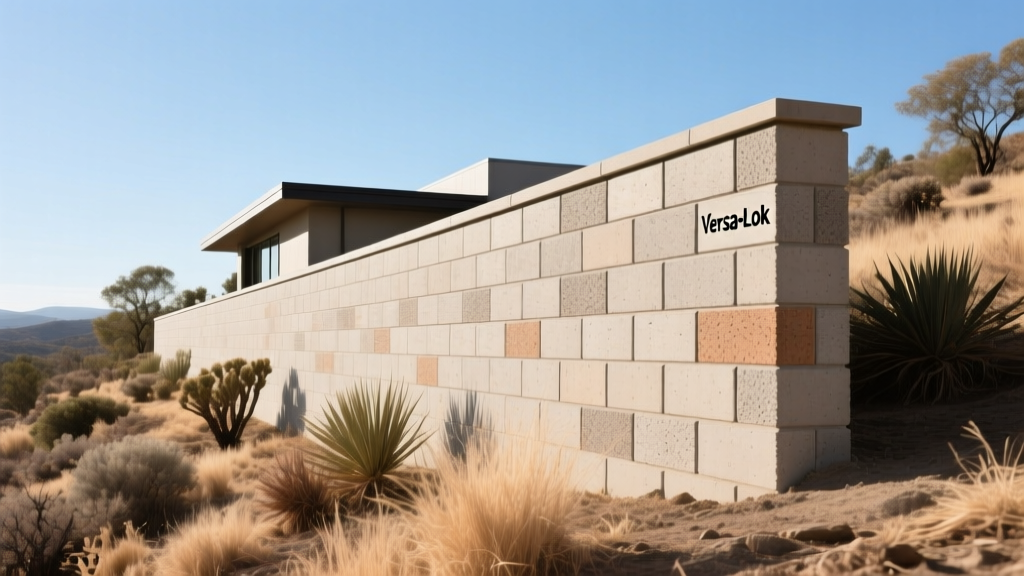
Fire-Resistant Versa-Lok Retaining Walls: 2026 Guide
Robert HayesPublished
The Escalating Wildfire Threat and Hardscape Defense in 2026
As we navigate the 2026 wildfire season, homeowners in the Wildland-Urban Interface (WUI) are increasingly recognizing that traditional landscaping is no longer sufficient. With climate shifts leading to longer, more intense fire seasons, creating a defensible space around your property is not just a recommendation—it is a critical survival strategy. While much of the focus in fire-resistant landscaping centers on plant selection and vegetation management, hardscaping plays an equally vital, yet frequently overlooked, role. Specifically, retaining wall construction using non-combustible materials like concrete can dramatically alter how a fire behaves on your property.
For sloped landscapes, fire behaves with terrifying efficiency. The "chimney effect" causes heat and flames to pre-heat vegetation uphill, allowing wildfires to race up inclines at exponential speeds. By terracing a slope with a robust retaining wall, you physically break the continuous fuel ladder, slowing the fire's advance and providing crucial defensible space for firefighters to operate. Among the myriad of retaining wall systems available in 2026, Versa-Lok modular block systems stand out as a premier choice for fire-resistant landscape design.
Why Versa-Lok Modular Blocks Excel in Fire Zones
Versa-Lok retaining wall systems are manufactured from high-density, low-slump concrete. Unlike timber retaining walls, gabion cages filled with organic debris, or composite materials that can melt or ignite under extreme radiant heat, solid concrete is inherently non-combustible. It will not catch fire, emit toxic smoke, or lose its structural integrity when exposed to the intense radiant heat of a passing wildfire front.
Furthermore, the Versa-Lok system utilizes a unique mortarless, interlocking pin design. Traditional mortared walls can crack and spall under rapid temperature fluctuations caused by a nearby fire. The flexible, dry-stacked nature of Versa-Lok allows the wall to absorb minor ground shifts and thermal expansion without catastrophic failure. The system uses solid concrete or high-strength fiberglass pins to lock the courses together. Because the blocks are massive (the Versa-Lok Standard unit weighs approximately 78 pounds and measures 6 inches high, 18 inches wide, and 12 inches deep), they provide a substantial thermal mass barrier that shields the soil and root systems of fire-resistant plants located behind the wall.
Strategic Placement: Integrating Walls into Defensible Space Zones
To maximize the fire-stopping potential of your Versa-Lok wall, it must be placed strategically within your property's defensible space zones. According to the latest guidelines from Cal Fire and the National Fire Protection Association (NFPA), defensible space is divided into specific zones:
- Zone 0 (0-5 feet from the home): The ember-resistant zone. Retaining walls should not be placed immediately against the house unless they are part of the foundation. If a wall is in this zone, it must be kept entirely free of combustible mulch and debris.
- Zone 1 (5-30 feet from the home): The lean, clean, and green zone. This is the ideal location for a Versa-Lok retaining wall. By terracing a slope in Zone 1, you create a flat, hardscaped pathway that acts as a firebreak, stopping ground fires from climbing toward the structure.
- Zone 2 (30-100 feet from the home): The fuel reduction zone. Walls here can be used to create access roads or secondary firebreaks on steep, heavily wooded lots.
When planning your 2026 landscaping project, use the retaining wall to create flat terraces. Flat ground slows fire spread significantly compared to sloped ground, as the flames cannot easily pre-heat the fuel source directly in front of them.
Step-by-Step Construction Guide for Versa-Lok Walls
Building a fire-resistant retaining wall requires strict adherence to engineering and safety protocols. Here is how to construct a Versa-Lok wall optimized for wildfire defense.
1. Excavation and Base Preparation
Excavate a trench that is at least 24 inches wide and deep enough to bury 10% of the total wall height, plus a 6-inch base of compacted gravel. For a 4-foot wall, you will bury approximately 6 inches of the first course. Use 3/4-inch crushed angular gravel for the base. Fire-safety note: Never use organic soil, recycled asphalt, or combustible base materials in a fire zone. Crushed stone is completely non-combustible and provides excellent drainage. Compact the base to 95% Proctor density using a mechanical plate compactor.
2. Laying the First Course
Place the first row of Versa-Lok Standard blocks directly onto the compacted gravel. Use a torpedo level and a 4-foot mason's level to ensure the blocks are perfectly level from front to back and side to side. The first course is the most critical; any errors here will compound as the wall rises. Because this course is partially buried, it is protected from direct radiant heat and flying embers.
3. Pinning and Stacking
Versa-Lok blocks feature integrated pin holes. Insert the provided fiberglass or concrete pins into the front holes of the base course to set the setback (batter) of the wall. Stack the next course of blocks, ensuring the pins lock securely into the bottom of the upper blocks. This mechanical connection ensures the wall acts as a single, cohesive mass, capable of withstanding the pressure of the earth behind it and the thermal shock of a fire event.
4. Geogrid Reinforcement and Backfill
For walls exceeding 3 to 4 feet in height, geogrid reinforcement is required. Lay layers of synthetic geogrid between the block courses, extending it back into the slope. Backfill the area immediately behind the Versa-Lok blocks with at least 12 inches of 3/4-inch clean crushed drainage rock. Critical Fire-Resistant Detail: Do not backfill with native, organic-rich soil. In a severe fire, organic soil can smolder and retain heat, potentially damaging the wall's structural integrity or allowing roots to burn out, causing subsidence. Clean crushed rock eliminates this hidden fuel source.
5. Capping the Wall
Finish the wall with Versa-Lok cap units. While some landscapers use polyurethane construction adhesives to secure caps, in high-risk WUI zones, it is preferable to use mechanical fasteners or high-temperature, fire-rated silicone adhesives to ensure the caps do not melt or detach during extreme heat exposure.
2026 Cost Breakdown and Material Specifications
Planning a hardscape project requires an accurate understanding of current market rates. Below is a structured estimate for a Versa-Lok retaining wall project in 2026, tailored for fire-resistant specifications. Costs are estimated per square foot of wall face and linear foot of drainage.
| Material / Component | 2026 Estimated Cost | Fire-Resistance Notes |
|---|---|---|
| Versa-Lok Standard Blocks | $8.50 - $11.00 per sq. ft. | Non-combustible concrete core. |
| Versa-Lok Weathered Face | $10.00 - $13.50 per sq. ft. | Textured face; same fire rating. |
| 3/4" Crushed Angular Gravel | $65.00 - $85.00 per ton | Inorganic, zero fuel value. |
| Biaxial Geogrid (Tensar equivalent) | $1.20 - $1.80 per sq. ft. | Buried deep; protected from heat. |
| Concrete/Fiberglass Pins | Included with blocks | Will not melt or off-gas. |
| Professional Installation Labor | $35.00 - $55.00 per sq. ft. | Varies by site access/slope. |
Selecting Fire-Resistant Flora for Terraced Beds
The retaining wall itself is only half the equation; the vegetation planted in the terraced beds behind the wall must also align with your fire-resistant strategy. The flat terraces created by your Versa-Lok wall are perfect environments for low-growing, high-moisture ground covers that act as a green firebreak.
In 2026, landscape architects heavily recommend the following fire-resistant plants for WUI retaining wall beds:
- Sedum spurium (Dragon's Blood): A succulent ground cover with high water content that resists ignition and spreads densely over the terrace, choking out dry, combustible weeds.
- Agave attenuata (Foxtail Agave): Lacks the sharp spines of other agaves and features thick, water-filled leaves that do not produce flammable resins or oils.
- Dudleya species (Liveforever): Native to coastal and foothill regions, these succulents thrive in the excellent drainage provided by the crushed rock backfill of the retaining wall.
- Creeping Rosemary (Salvia rosmarinus prostratus): While some herbs contain oils, creeping rosemary is widely accepted in defensible space plans when kept irrigated and pruned, providing excellent soil stabilization on the newly terraced slopes.
Maintenance Warning: Never use wood chips, bark mulch, or pine straw in the beds immediately behind a retaining wall in a fire zone. Instead, mulch the terraced beds with 2 to 3 inches of decomposed granite (DG) or crushed river rock. This inorganic mulch retains soil moisture, prevents weed growth, and offers zero fuel to passing embers.
Conclusion
Constructing a retaining wall with Versa-Lok modular blocks is a powerful investment in your property's resilience. By combining the non-combustible, structural mass of concrete with strategic terracing, you disrupt the chimney effect of sloped terrain and create vital defensible space. As wildfire behaviors continue to evolve in 2026, integrating intelligent hardscaping with fire-resistant planting ensures your landscape remains a beautiful, safe sanctuary rather than a hidden liability.

