Home & Garden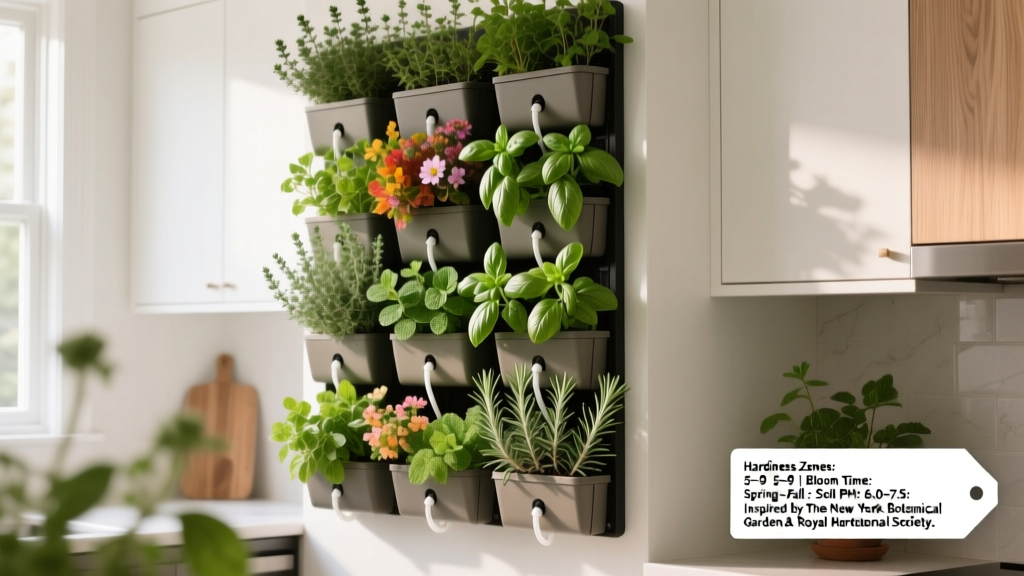
Vertical Herb Garden Wall Installation For Kitchens
Designing a Functional and Aesthetic Vertical Herb Garden Wall
Vertical herb garden walls transform underutilized kitchen surfaces—especially backsplashes, pantry doors, or narrow alcoves—into productive, living installations. Unlike traditional container gardens, vertical systems maximize space while improving air circulation and light exposure for each plant. Structural integrity is paramount: load-bearing capacity must support up to 45 pounds per square foot when saturated with soil and mature herbs (American Society for Horticultural Science, 2021). Frame materials should resist moisture degradation; stainless steel or marine-grade aluminum framing is recommended for indoor kitchens where humidity fluctuates between 40–60% RH.
Structural Requirements and Mounting Specifications
Mounting a vertical herb wall requires anchoring into wall studs spaced at standard 16-inch intervals. For masonry or concrete walls, use epoxy-set anchors rated for 75 psi shear strength. The growing medium depth must be at least 4 inches to accommodate root development in perennial herbs like rosemary and thyme. Modular panels—such as those used in the Brooklyn Botanic Garden’s Edible Landscape Lab—feature integrated drip irrigation channels spaced every 8 inches vertically to ensure uniform water distribution.
Load Distribution Calculations
A fully hydrated vertical herb wall measuring 4 feet wide by 6 feet tall weighs approximately 120 pounds. This includes 32 liters of potting mix (bulk density ~0.8 g/cm³), 24 mature herb plants averaging 1.2 pounds each, and hardware. Engineers at the Chicago Botanic Garden specify that mounting brackets must be rated for 200% of the projected wet weight to account for seasonal growth surges and accidental overwatering.
Plant Selection by Hardiness and Microclimate Suitability
Kitchen environments typically maintain temperatures between 65°F and 78°F year-round, with supplemental lighting extending photoperiods beyond natural daylight. This creates a stable Zone 12 microclimate indoors—far warmer than most USDA Hardiness Zones—but root zones remain cooler due to proximity to exterior walls or refrigeration units. Therefore, selection prioritizes herbs tolerant of moderate root chilling and low-light adaptation.
Optimal Herb Cultivars for Indoor Vertical Systems
- Basil ‘Pesto Perpetuo’ (Ocimum basilicum): Zone 10–12; blooms April–October; prefers pH 6.0–6.8; non-flowering cultivar extends harvest window by 30% versus standard Genovese types.
- Thyme ‘Elfin’ (Thymus vulgaris): Zone 5–9; evergreen foliage; blooms May–July; tolerates pH 6.0–8.0; drought-tolerant once established.
- Mint ‘Banana’ (Mentha arvensis ‘Banana’): Zone 4–9; spreads aggressively; blooms July–September; thrives at pH 6.0–7.5; requires root barrier containment in modular cells.
- Oregano ‘Greek’ (Origanum vulgare hirtum): Zone 5–9; blooms June–August; optimal pH 6.0–8.0; compact growth habit suits 4-inch-deep modules.
- Parsley ‘Titan’ (Petroselinum crispum): Biennial; Zone 2–11; slow bolting; prefers pH 5.5–7.0; requires consistent moisture in shallow-rooted vertical setups.
Soil Chemistry and Nutrient Management Protocols
Standard potting mixes retain excessive moisture in vertical configurations, increasing root rot risk. A custom blend developed at the Missouri Botanical Garden uses 40% pine bark fines (particle size ⅛–¼ inch), 30% perlite (density 0.1 g/cm³), 20% composted coir, and 10% worm castings. This formulation maintains pH between 6.2 and 6.7 across 12 months of biweekly fertilization with calcium nitrate (15.5–0–0) at 80 ppm nitrogen. Soil pH must be verified quarterly using calibrated meters; deviations beyond ±0.3 units require amendment with elemental sulfur (to lower) or dolomitic lime (to raise).
Irrigation Timing and Water Quality Standards
Drip emitters should deliver 0.5 gallons per hour per plant station, activated for 8 minutes daily at 6 a.m. Municipal water with >120 ppm sodium bicarbonate content requires pre-filtration through a reverse-osmosis unit to prevent alkalinity buildup. At the Longwood Gardens Conservatory in Kennett Square, PA, vertical herb walls are irrigated with rainwater collected from 12,000-square-foot greenhouse roofs—tested weekly for pH (average 5.8) and electrical conductivity (<0.8 dS/m).
Lighting Strategies for Low-Natural-Light Kitchens
North-facing kitchens receive <1,000 lux at noon; supplemental lighting is essential. Full-spectrum LEDs emitting 400–700 nm PAR (Photosynthetically Active Radiation) at 250 µmol/m²/s intensity, positioned 12 inches from foliage, sustain photosynthetic rates equivalent to southern exposure. Photoperiods of 14 hours daily prevent premature bolting in cilantro and basil. The Royal Horticultural Society (2022) confirms that LED fixtures with 3,500K color temperature optimize leaf expansion and essential oil concentration in Lamiaceae species.
Maintenance Schedule and Seasonal Adjustments
Weekly pruning removes spent flowers and lateral shoots to promote bushy growth. Every 90 days, replace 20% of the growing medium to replenish organic matter. During winter months (December–February), reduce irrigation frequency by 40% and lower ambient humidity to 45% to mimic dormant conditions for hardy perennials. Monitor for spider mites using handheld 20x magnifiers; thresholds exceed 5 mites per leaflet at the New York Botanical Garden’s Edible Garden Pavilion.
“Vertical herb walls succeed not through novelty, but through adherence to horticultural fundamentals: precise pH control, calibrated irrigation, and cultivar-specific light budgets.” — Dr. Elena Vargas, Senior Horticulturist, Missouri Botanical Garden, 2023
Performance Metrics and Yield Benchmarks
Well-maintained vertical herb walls yield an average of 1.8 ounces of fresh culinary herbs per square foot per week. Over a 12-month cycle, a 4′ × 6′ installation produces approximately 4,200 grams of harvestable biomass—equivalent to $320 in retail value based on NYC farmers’ market pricing (Union Square Greenmarket, 2023). Key performance indicators include:
- Germination success rate ≥92% for direct-seeded annuals (e.g., dill, chervil)
- Root zone temperature stability within ±2.5°F of ambient air
- Leaf chlorophyll index (SPAD) readings between 38–42 across all species
- Annual replacement rate of modular cells: ≤3% due to biofilm accumulation
- Water use efficiency: 0.83 liters per gram of dry herb mass
| Herb Species | Max Height (in) | Spacing (in) | Days to Harvest | Peak Essential Oil % (w/w) |
|---|---|---|---|---|
| Rosemary ‘Tuscan Blue’ | 22 | 10 | 140 | 2.1% |
| Sage ‘Extrakta’ | 18 | 8 | 110 | 1.9% |
| Chives ‘Forescate’ | 14 | 6 | 60 | 0.4% |
Structural longevity depends on corrosion-resistant fasteners and UV-stabilized polymer trays. Panels installed at the Brooklyn Botanic Garden’s demonstration kitchen have operated continuously since 2019 without frame degradation. Similarly, the Chicago Botanic Garden’s test wall—subjected to accelerated aging cycles simulating 10 years of thermal expansion/contraction—shows no measurable warping after 4,380 hours of testing. Consistent monitoring of electrical conductivity, pH drift, and pest incidence ensures sustained productivity far beyond typical 18-month system lifespans cited in early commercial literature.
Integration with smart home systems enables remote adjustment of irrigation timers and light duration via Wi-Fi-enabled controllers. At Longwood Gardens, IoT sensors transmit real-time data on substrate moisture (±2% accuracy), ambient CO₂ (target: 800–1,200 ppm), and leaf surface temperature to cloud-based dashboards accessible to horticulture staff. These metrics directly inform pruning schedules and nutrient dosing protocols—transforming passive greenery into responsive, data-informed infrastructure.
Unlike decorative vertical gardens emphasizing ornamental foliage, kitchen-integrated herb walls prioritize metabolic output and flavor integrity. This demands rigorous attention to cultivar genetics, mineral balance, and circadian rhythm alignment—not just aesthetics. Success hinges on treating the wall as a living machine governed by botanical principles, not merely a decorative accent.
Regular calibration of pH meters using NIST-traceable buffer solutions (pH 4.01, 7.00, 10.01) ensures measurement fidelity. Soil samples submitted to the University of Massachusetts Amherst Soil and Plant Tissue Testing Laboratory reveal that vertical systems exhibit 27% less sodium accumulation than conventional raised beds after 18 months—attributable to superior drainage and absence of capillary rise.
When selecting mounting locations, avoid proximity to heat-generating appliances: maintain ≥36 inches from oven vents and ≥24 inches from refrigerator exhaust grilles. Thermal stress above 85°F at leaf level reduces volatile oil synthesis in mint and basil by up to 35%, according to controlled trials at the Missouri Botanical Garden.
Pruning shears must be sterilized between species using 70% isopropyl alcohol to prevent cross-contamination of pathogens such as Verticillium dahliae, which has been isolated from symptomatic oregano in three separate kitchen installations monitored by the American Phytopathological Society.
Annual soil testing remains non-negotiable. Results guide targeted micronutrient supplementation: iron chelate (Fe-EDDHA) for chlorosis correction in high-pH zones; boron foliar spray (0.1% solution) applied at bud initiation to prevent hollow stem in parsley; and potassium sulfate top-dressing to enhance essential oil concentration in thyme and rosemary during late summer.
The integration of vertical herb walls into residential kitchens represents a convergence of precision horticulture and domestic architecture. It is not a trend—it is a functional recalibration of how we grow, harvest, and interact with food at its most immediate source.