Pest Control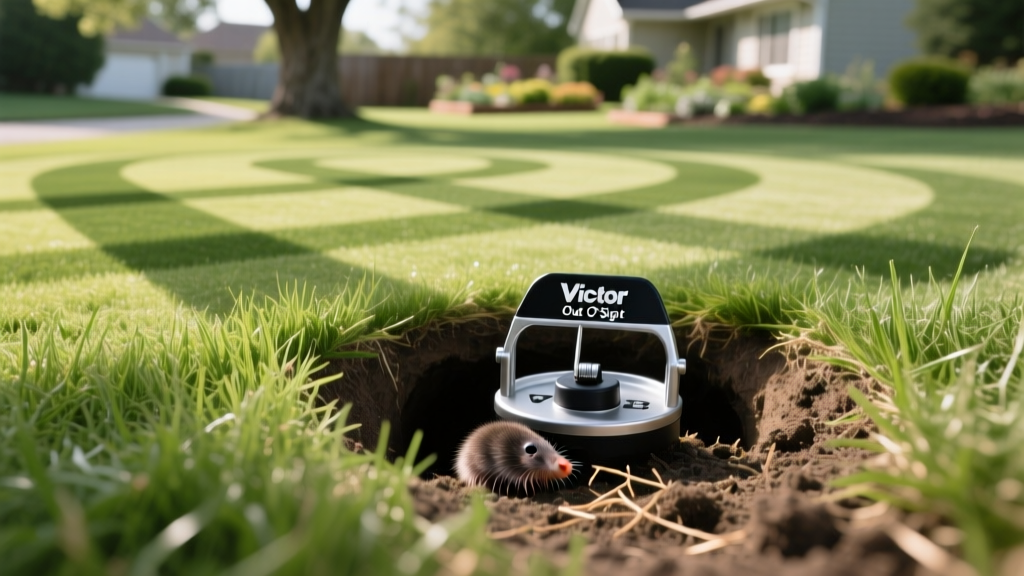
Victor Out O'Sight Mole Trap Placement & Mowing Hacks 2026
James MillerPublished
The Intersection of Mowing Patterns and Mole Control in 2026
As we navigate the 2026 growing season, integrated pest management (IPM) has evolved far beyond simply applying repellents or setting traps blindly in the dirt. For homeowners battling turf-destroying moles (Scalopus aquaticus and related species), success hinges on understanding the hidden subterranean world beneath your lawn. The Victor Out O'Sight Mole Trap remains the undisputed gold standard for mechanical removal this year, favored by wildlife experts for its lethal scissor-jaw design and underground placement. However, the trap is only as effective as its placement. If you set it in an abandoned foraging tunnel, you will catch nothing.
This is where the often-overlooked discipline of mowing techniques and patterns becomes your greatest pest control asset. By manipulating your mowing height and utilizing specific wheel-track patterns, you can force moles to reveal their active main runways. In this comprehensive guide, we will explore how to merge precision lawn care with targeted Victor Out O'Sight trap placement to reclaim your yard in 2026.
Strategic Mowing Heights to Expose Active Tunnels
Moles construct two primary types of tunnels: deep, permanent main runways used for travel and nesting, and shallow, erratic surface tunnels used for foraging for earthworms and grubs. Surface tunnels are frequently abandoned after a few days, making them useless for trapping. To locate the active main runway, you must first eliminate the visual noise of the surface tunnels.
The 'Reveal Cut' Technique
In early spring or late fall 2026, when mole activity peaks, perform a 'Reveal Cut' on suspected areas of your lawn. Lower your mower deck to a height of 1.5 to 2.0 inches. This aggressive cut removes the thick thatch canopy and tall grass blades that hide fresh soil plugs (molehills) and raised surface ridges.
According to turfgrass researchers at Penn State Extension, maintaining proper mowing heights is crucial for lawn health, but temporarily dropping the height by half an inch in targeted pest zones compresses the upper soil profile. This compression makes fresh, active soil heaves immediately visible the next morning, as the contrast between the short-cut grass and the dark, moist excavated soil is stark.
The Cross-Hatch Compression Mowing Pattern
Simply mowing low is not enough; the pattern in which you mow dictates how the soil and tunnels react. Moles are highly sensitive to changes in air pressure and soil compaction within their tunnel networks. When a tunnel collapses, the mole will instinctively send out workers to repair the breach, pushing fresh soil upward to seal the draft.
We utilize the Cross-Hatch Compression Pattern to exploit this biological trigger. Here is how to execute it:
- Day 1 (North-South Pass): Mow the suspected lawn zone in straight, overlapping North-South lines. Use a heavy mower if possible. The wheels will press down on the soft soil, collapsing shallow, inactive foraging tunnels.
- Day 2 (East-West Pass): Mow the exact same zone in perpendicular East-West lines. This creates a grid of heavy wheel compaction.
- Day 3 (The Reveal): Inspect the lawn at dawn. The shallow tunnels will remain collapsed and flattened by your mower wheels. However, the active main runway will be visibly pushed back up, breaking the smooth cross-hatch pattern you created. The mole has repaired its critical highway, and this exact spot is your prime target for the Victor Out O'Sight trap.
Mowing Pattern Efficacy Chart
| Mowing Pattern | Best Mower Type (2026) | Compression Weight | Tunnel Detection Efficacy |
|---|---|---|---|
| Linear Striping | Heavy Zero-Turn | 600-900 lbs | Moderate (Surface only) |
| Cross-Hatch Grid | Self-Propelled Electric | 60-80 lbs | High (Exposes main runways) |
| Perimeter Scalping | Push Reel Mower | 20-30 lbs | Low (Misses deep runs) |
Victor Out O'Sight Trap Placement: Step-by-Step
Once your cross-hatch mowing pattern has revealed the active main runway, it is time to deploy the Victor Out O'Sight trap. This trap is designed to be placed entirely underground, eliminating the risk of pets or children triggering the scissor jaws above ground. According to wildlife damage management protocols outlined by the University of Minnesota Extension, subterranean traps yield the highest success rates for permanent mole removal.
Step 1: Excavate the Trap Site
Using a narrow trowel or a specialized mole probe, carefully dig out a small section of the active runway you identified. Remove just enough soil so that the trap can sit flush within the tunnel. The bottom of the trap must align perfectly with the tunnel floor; if it sits too high, the mole will simply burrow under it.
Step 2: Set the Scissor Jaws
Pull the spring-loaded scissor jaws apart until they lock into the trigger mechanism. Ensure the safety catch is engaged while handling the trap. The Victor Out O'Sight features a highly sensitive trigger pan that hangs directly in the center of the tunnel. When the mole pushes through the soil to repair the tunnel, it will strike the trigger pan, releasing the jaws.
Step 3: Position and Cover
Slide the set trap into the excavated cavity. The jaws should straddle the tunnel. Once placed, carefully remove the safety catch. To prevent sunlight from entering the tunnel (which will cause the mole to avoid the area), cover the excavation hole with a 5-gallon bucket or a piece of dark turf-compatible landscaping fabric. Weigh the bucket down with a brick to prevent wind from dislodging it.
Pro Tip for 2026: Always wear thick leather gloves when setting the Victor Out O'Sight trap. Not only does this protect your fingers from the powerful springs, but it also masks human scent, which can deter cautious moles.
Why the Victor Out O'Sight Outperforms Harpoon Traps
While harpoon-style traps (which pierce downward into the tunnel) were popular in the past, the 2026 consensus among pest control professionals heavily favors the Out O'Sight scissor design. Harpoon traps are often triggered by loose soil falling from the tunnel ceiling, resulting in false positives. The Victor Out O'Sight requires lateral forward movement from the mole to trip the pan, ensuring that when the trap fires, the target is squarely between the jaws. Furthermore, because the Out O'Sight is buried, it is entirely immune to weather disruptions, heavy spring rains, and accidental tripping by foraging birds or neighborhood cats.
Post-Placement Mowing and Lawn Recovery
After setting your traps, you must adjust your mowing routine to accommodate the pest control operation. Flag the perimeter of your trap zones with bright, high-visibility landscaping flags. When mowing the rest of the lawn, maintain a minimum 3-foot buffer zone around any active trap sites. The vibration from heavy mower decks can prematurely trigger the sensitive pans of the Victor Out O'Sight or collapse the tunnel walls before the mole arrives.
Turf Repair After Removal
Once you have successfully trapped the mole, the final step is lawn recovery. The cross-hatch compression and trap excavation will leave your turf looking patchy. In 2026, the best practice for repairing mole damage is to core-aerate the compacted wheel tracks left by your mower, followed by a light top-dressing of compost and overseeding with a drought-resistant, mole-resistant grass blend like Tall Fescue. Moles prefer the soft, loamy soil required for Kentucky Bluegrass; transitioning to deeper-rooted fescues naturally deters future tunneling by creating a denser, harder soil matrix.
By combining the mechanical precision of the Victor Out O'Sight trap with the strategic turf manipulation of cross-hatch mowing patterns, you transform your lawn care routine into a highly effective, chemical-free pest management system. For more detailed guidance on mechanical trapping ethics and local wildlife regulations, always consult the official Victor Pest trapping resources before beginning your removal campaign.