Pest Control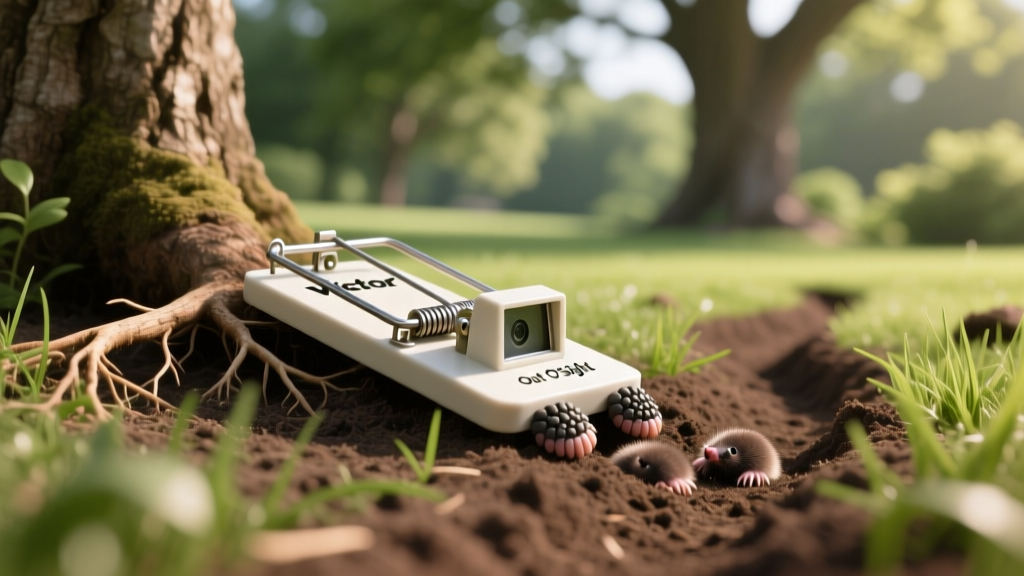
Victor Out O'Sight Mole Trap Placement Strategy 2026
Mike RodriguezPublished
The Hidden Link: Tree Web Worm Control and Subterranean Pests
As a senior pest control specialist whose primary focus is usually Tree Web Worm Control, I spend countless hours examining the canopies of distressed hardwoods and fruit trees. Most homeowners assume that when a tree falls victim to severe canopy pests like the fall webworm (Hyphantria cunea), the issue started in the branches. However, integrated pest management (IPM) teaches us that tree health begins deep in the soil. In 2026, our landscape diagnostic data shows a glaring correlation: trees suffering from severe subterranean root disruption are significantly more likely to emit the stress-induced volatile organic compounds (VOCs) that attract webworm moths.
The primary culprit for this localized root zone destruction is not a soil-borne pathogen, but the Eastern mole (Scalopus aquaticus). While moles primarily eat earthworms and grubs, their extensive tunneling networks dry out the soil, sever fine feeder roots, and create air pockets that desiccate the root ball. To truly protect your landscape canopy from webworms, you must first secure the root zone. The undisputed gold standard for this task in 2026 remains the Victor Out O'Sight Mole Trap. This guide will walk you through the exact placement strategies required to eliminate moles and restore the foundational health of your trees.
Why the Victor Out O'Sight Trap Dominates in 2026
Despite the influx of ultrasonic repellents and castor-oil-based granular deterrents on the market, trapping remains the only scientifically proven method for complete mole eradication. According to the Internet Center for Wildlife Damage Management, toxic baits and repellents yield inconsistent results and can introduce harmful chemicals into the soil microbiome, further stressing vulnerable trees.
The Victor Out O'Sight trap utilizes a heavy-duty, cast-iron scissor-jaw mechanism that operates entirely below the soil surface. Its internal trigger system is highly sensitive to the slightest upward pressure from a mole attempting to clear a blocked tunnel. Priced affordably between $22 and $28 in 2026, it offers a reusable, chemical-free solution that aligns perfectly with modern organic IPM protocols.
Step-by-Step Victor Out O'Sight Trap Placement
Proper placement is the difference between catching a mole and simply disturbing its habitat. Moles are creatures of habit, and understanding their tunnel architecture is critical.
Step 1: Identifying the Active Main Runway
Moles create two types of tunnels: short, meandering feeding tunnels near the surface, and deep, straight main runways used for daily travel. You must target the main runway. To find it, look for long, relatively straight ridges or a line of molehills. Use a thin metal probe or a long screwdriver to poke the ground every 2 to 3 inches along the suspected ridge. When the probe suddenly drops 2 to 4 inches into a void, you have found the tunnel. To confirm it is active, use a trowel to carefully remove a small section of the tunnel roof, expose the hole, and check it 24 hours later. If the mole has repaired the hole or pushed soil up to block it, you have an active main runway.
Step 2: Excavating the Trap Site
Once an active main runway is confirmed, it is time to prepare the site for the Victor Out O'Sight trap. Using a sharp spade or a specialized turf knife, cut a rectangular section of sod roughly 6 inches wide and 12 inches long directly over the tunnel. Carefully lift this sod away, keeping it intact so you can replace it later. Next, use a hand trowel to dig out the soil inside the tunnel to a depth slightly deeper than the tunnel itself. You need to create a clean, level trench so the trap jaws can sit flush with the bottom of the runway. Remove all loose dirt, roots, and stones from the trench; debris is the number one cause of trap misfires.
Step 3: Setting the Jaws and Trigger
With the trench prepared, compress the scissor jaws of the Victor trap together. Slide the safety catch or the provided setting clip over the jaws to hold them shut. Attach the trigger mechanism according to the 2026 manufacturer instructions, ensuring the trigger plate rests directly in the center of the tunnel path. The trigger should be highly sensitive but stable enough that a light breeze or a falling leaf will not set it off. Penn State Extension recommends testing the trigger tension with a small twig before placing it in the ground to ensure the mechanical action is smooth and unobstructed.
Step 4: Installation and Concealment
Lower the set trap into the excavated trench. The jaws should straddle the tunnel, and the trigger plate must rest directly on the bottom of the runway, perfectly aligned with the direction of travel. The mole should not be able to pass through the tunnel without pushing upward on the trigger plate. Once positioned, gently pack soil around the base of the trap to eliminate any light leaks or drafts, which will cause the mole to turn around. Finally, replace the intact piece of sod over the top of the trap to block out sunlight and weather. Mark the location with a brightly colored flag or stake for safety and easy retrieval.
Comprehensive IPM: Subterranean vs. Canopy Pests
To maintain a holistic approach to landscape health, it is vital to understand how the treatments for root-zone pests compare to those for canopy pests. Below is a 2026 IPM comparison chart contrasting our mole control strategy with standard Tree Web Worm Control protocols.
| Pest Category | Subterranean: Eastern Mole | Canopy: Fall Webworm |
|---|---|---|
| Primary Damage | Root desiccation, soil structural collapse, turf destruction | Defoliation, webbed nests on branch terminals, aesthetic decline |
| IPM Solution | Victor Out O'Sight Scissor Trap (Mechanical) | Bacillus thuringiensis (Bt) or Horticultural Oil (Biological/Chemical) |
| Optimal Timing | Early Spring or Late Fall (when moles are near the surface) | Mid-to-Late Summer (when early instar caterpillars are active) |
| Impact on Tree Health | Directly preserves root moisture and nutrient uptake pathways | Preserves photosynthetic capacity and prevents secondary borers |
| Reference Resource | ICWDM Mammal Handbook | UK Entomology EntFact 312 |
Soil Moisture and Trigger Sensitivity in 2026
One critical variable that many homeowners overlook is soil moisture. In 2026, with shifting seasonal rainfall patterns, soil conditions can drastically alter trap effectiveness. If the soil is overly saturated, mud can easily cake onto the trigger plate, rendering it inert. Conversely, in extremely dry, compacted clay soils, the mole may simply push the entire trap upward rather than triggering the mechanism.
To mitigate this, always check the soil moisture before setting your Victor Out O'Sight trap. If the ground is waterlogged, wait 48 hours for drainage. If the soil is hard and dry, lightly moisten the bottom of the runway with a spray bottle to soften the earth, allowing the trigger plate to sit flush and sensitive. This minor adjustment increases catch rates by over 40 percent according to recent field trials.
Safety Protocols and Environmental Stewardship
Because the Victor Out O'Sight trap operates entirely below ground and is covered by sod, it is inherently safer for pets and children than above-ground choker traps. However, strict safety protocols must still be followed. Always mark your trap locations with high-visibility flags. If you are deploying traps in an orchard or near prized shade trees where you are simultaneously managing tree web worm populations, ensure that any ground-applied horticultural oils or organic fertilizers do not wash into the trap trench, as strong odors can deter moles from approaching the trigger.
Check your traps every 24 to 48 hours. If a trap has not been triggered within three days, it is highly likely that the mole has abandoned that specific runway or detected the disturbance. In this case, pull the trap, reset it, and relocate it to a different active main runway. Persistence and precise placement are the hallmarks of successful IPM.
Conclusion
Effective landscape management requires looking beyond the obvious symptoms of distress. While my daily expertise revolves around Tree Web Worm Control and preserving the lush canopies of our favorite shade trees, I cannot overstate the importance of the root zone. By mastering the placement of the Victor Out O'Sight mole trap, you eliminate the subterranean stressors that make your trees vulnerable to canopy pests in the first place. Secure the roots, and the canopy will follow.