Pest Control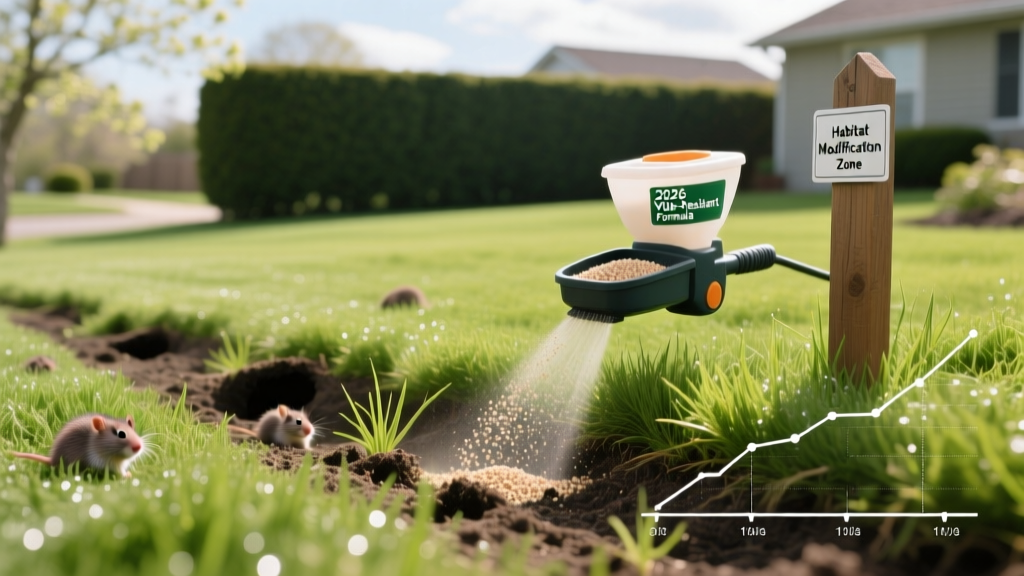
Vole Damage Control & Fertilizer Schedules: 2026 Guide
Emily WatsonPublished
Identifying Vole Damage in Your Lawn
Before you can implement an effective Integrated Pest Management (IPM) strategy, you must accurately identify the culprit. Voles, often mistakenly called meadow mice, are small, stocky rodents with short tails and small ears. Unlike moles, which are insectivores that dig deep, raised tunnels and primarily eat grubs, voles are herbivores that feed on grass roots, bulbs, and the bark of trees and shrubs.
According to the UC Statewide Integrated Pest Management Program, vole damage is most noticeable in early spring after the snow melts. Look for these distinct signs:
- Surface Runways: Voles create 1-to-2-inch wide pathways through the grass, often lined with clipped grass blades and feces.
- Gnawed Bark: Check the base of trees and shrubs. Voles gnaw on the cambium layer under the bark, leaving irregular, non-uniform chew marks.
- Missing Bulbs and Roots: Voles will burrow into garden beds to eat tulip bulbs, hostas, and root systems, causing plants to suddenly collapse.
- Grass Clippings in Tunnels: Unlike moles, voles frequently line their nests and runways with finely clipped grass.
The Fertilizer Connection: How Nutrients Attract Voles
Most homeowners are unaware that their lawn care routines—specifically their fertilizer types and schedules—can inadvertently create the perfect winter habitat for voles. Voles thrive in environments that offer dense cover and abundant food. When lawns are over-fertilized, particularly with high-nitrogen synthetic blends late in the season, the grass continues to grow lush and thick well into autumn.
This late-season growth leads to two major problems that invite vole infestations:
1. Excessive Thatch Buildup
Heavy nitrogen applications accelerate turf growth, which in turn accelerates thatch accumulation if not managed. A thick layer of thatch provides an insulated, hidden microclimate just above the soil surface. Under a blanket of winter snow, this thatch layer keeps the soil surface relatively warm, allowing voles to remain active, feed on grass roots, and reproduce throughout the winter months.
2. Tall, Lodged Grass Canopies
If a lawn is pushed with fast-release fertilizers in late September or October, the grass blades grow long and eventually lodge (fall over) as winter approaches. This matted canopy provides aerial protection from predators like hawks and owls, giving voles the confidence to forage openly across your lawn.
2026 Fertilizer Schedules for Vole Deterrence
To modify the habitat and make your lawn less hospitable to voles, you must align your 2026 fertilizer schedule with the natural dormancy cycles of your turfgrass. The goal is to promote deep root health without encouraging excessive top-growth late in the year.
Expert Insight: Transitioning to slow-release, organic-based fertilizers in the late summer and completely halting nitrogen applications 4 to 6 weeks before your region's first hard freeze is critical for winter pest deterrence.
Recommended 2026 Fertilizer Schedule for Vole-Prone Lawns
| Season | Fertilizer Type (NPK Ratio) | Application Goal | Vole Habitat Risk |
|---|---|---|---|
| Early Spring (April) | Slow-Release Synthetic (20-5-10) | Jumpstart recovery from winter vole damage without causing a massive flush of weak top-growth. | Low |
| Late Spring (May/June) | Organic Blend (e.g., Milorganite 6-4-0) | Provide steady, microbe-driven nutrition. Organic fertilizers do not force rapid thatch-producing growth spikes. | Very Low |
| Early Fall (September) | Potassium-Rich Winterizer (10-0-14) | Strengthen cell walls and root systems for winter hardiness. Low nitrogen prevents late-season canopy overgrowth. | Low |
| Late Fall (November) | NO APPLICATION | Allow turf to enter natural dormancy. Prevents matting and thatch insulation that harbors winter voles. | None |
By utilizing a potassium-heavy winterizer in early fall rather than a high-nitrogen weed and feed product, you fortify the grass against the physical stress of vole chewing while denying them the dense canopy they need for cover. For more detailed regional timing, consult the University of Minnesota Extension's lawn fertilization guidelines, which emphasize the dangers of late-season nitrogen spikes.
Habitat Modification Beyond Fertilizer
While adjusting your fertilizer types and schedules is a foundational step in long-term vole control, comprehensive habitat modification requires a multi-pronged approach. Voles are creatures of habit and comfort; if you remove their comfort zones, they will move to neighboring properties.
Strategic Mowing and Thatch Management
Your final mow of the 2026 season is crucial. Gradually lower your mower deck so that the grass enters the winter at a height of 1.5 to 2 inches. Short grass eliminates the protective canopy voles rely on to hide from aerial predators. Additionally, perform core aeration and deep dethatching in the early fall. Removing the thatch layer eliminates the physical insulation voles use to survive freezing temperatures.
Perimeter and Hardscape Clearance
Voles often nest in mulch beds, woodpiles, and dense groundcovers like ivy or pachysandra. The University of Maryland Extension recommends maintaining a 3-foot bare or gravel buffer zone around the base of valuable trees and shrubs. Avoid piling mulch against tree trunks (volcano mulching), as this provides a warm, hidden winter feeding ground for voles to girdle and kill your landscape trees.
Integrated Pest Management (IPM) Strategies
If habitat modification and fertilizer adjustments are not enough to curb an active infestation, incorporate these targeted IPM tactics into your 2026 pest control regimen:
- Snap Trapping: Place standard wooden mouse traps baited with peanut butter or apple slices directly inside active vole runways. Cover the trap with a small cardboard box or PVC pipe to protect birds and pets. Check traps daily during the peak fall and early spring windows.
- Castor Oil Repellents: For an organic approach, apply castor oil-based liquid repellents using a hose-end sprayer. These products penetrate the soil and coat the root zone, making the grass and roots taste foul to voles. Reapply every 3 to 4 weeks during active seasons.
- Gravel Barriers: When planting new bulbs or shrubs in 2026, line the planting holes with a layer of sharp, crushed gravel (not smooth river rock). Voles dislike burrowing through abrasive materials, creating a physical deterrent around vulnerable root systems.
- Encourage Natural Predators: Install raptor perches or owl boxes to attract barn owls and hawks. A single barn owl family can consume thousands of rodents in a season, providing free, natural pest control.
Conclusion
Controlling vole damage requires looking beyond the immediate symptoms and addressing the underlying environmental factors that invite them into your yard. By rethinking your fertilizer types and strictly adhering to a schedule that prevents late-season thatch and canopy overgrowth, you can naturally modify the habitat to make your lawn highly unappealing to these destructive rodents. Combine these 2026 cultural practices with strategic mowing, thatch removal, and targeted IPM trapping to protect your turf and landscape investments year-round.