Pest Control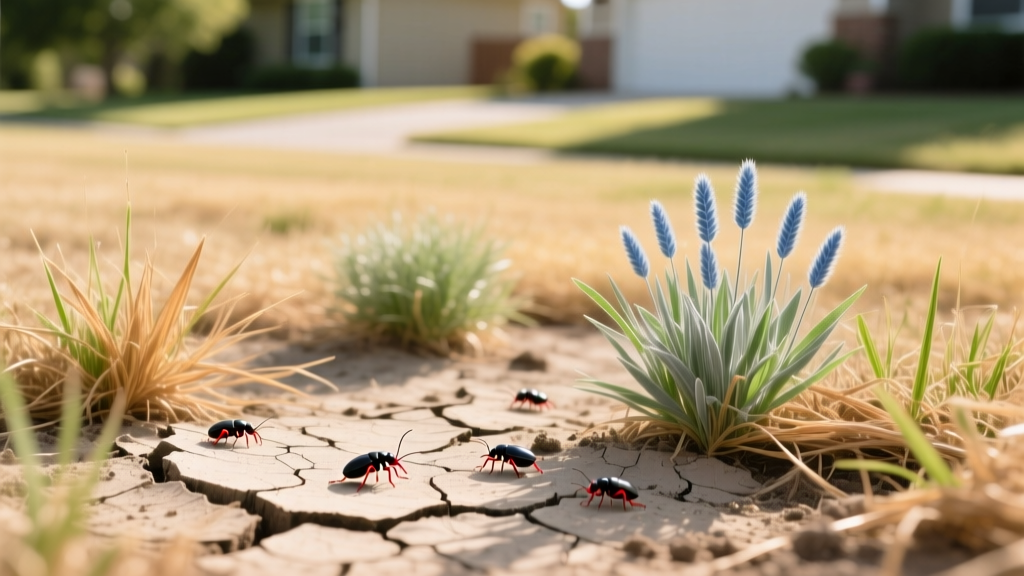
Water-Wise Pest Control: Managing Chinch Bugs in Drought
Robert HayesPublished
The Hidden Link Between Drought Stress and Chinch Bugs
Drought conditions present a unique paradox for lawn care enthusiasts: the very act of restricting water to conserve resources can inadvertently roll out the welcome mat for destructive lawn pests. Among the most opportunistic of these pests is the chinch bug (Blissus species), a tiny but devastating insect that thrives in hot, dry, and sun-baked environments. When lawns are subjected to water restrictions or prolonged dry spells, the grass becomes stressed, its natural defenses drop, and its sap becomes easier for these sap-sucking insects to extract.
Chinch bugs damage turf in two ways: by piercing the grass blades to suck out the sap, and by injecting a toxic saliva that blocks the plant's vascular system. In a well-watered lawn, grass can sometimes outgrow this damage. However, in a drought-stressed landscape, the grass lacks the turgor pressure and cellular energy to recover, leading to rapid, irreversible browning. According to the EPA's Integrated Pest Management (IPM) principles, effective pest control must balance environmental health with pest suppression. In water-scarce regions, traditional pest control methods—which often rely on heavy irrigation to activate chemical granules—are no longer viable. Instead, homeowners must adopt a water-wise IPM approach that focuses on cultural resilience, targeted biological controls, and moisture conservation.
Diagnosing the Damage: Drought vs. Pests
One of the greatest challenges in water-wise landscaping is distinguishing between drought stress and chinch bug damage. Both present as irregular, yellowing patches that eventually turn crispy brown, typically in the sunniest, hottest areas of the yard near driveways, sidewalks, or southern exposures. Because water is a precious commodity during a drought, you cannot afford to waste it by turning on the sprinklers to see if the grass "greens up."
Instead, utilize the Flotation Test to confirm the presence of chinch bugs without wasting water:
- Take an empty metal coffee can or a large PVC pipe section and push it about two inches deep into the soil at the edge of a damaged patch (the "green" side of the browning border).
- Fill the can with a mixture of water and a few drops of eco-friendly dish soap. The soap breaks the water's surface tension, forcing hidden insects to the top.
- Wait 5 to 10 minutes. If chinch bugs are present, they will float to the surface. Finding more than 15 to 20 bugs per square foot indicates an active infestation requiring treatment.
This targeted diagnostic method ensures you only deploy treatments where absolutely necessary, adhering to the core tenets of UC IPM's lawn management guidelines, which emphasize monitoring before acting.
Water-Wise Cultural Controls (Prevention)
The foundation of any water-wise pest management strategy is creating an environment where pests struggle to survive, even when water is scarce. Chinch bugs prefer hot, dry thatch layers and direct sunlight. By manipulating the lawn's microclimate, you can deter them naturally.
1. Mow High to Shade the Soil
During drought conditions, lower your mower blades and leave the grass taller. Aim for a mowing height of 3.5 to 4 inches for cool-season grasses and 2.5 to 3 inches for warm-season varieties. Taller grass blades cast shadows over the soil and the thatch layer, significantly reducing soil moisture evaporation. Furthermore, chinch bugs are highly susceptible to desiccation; the shaded, slightly more humid microclimate created by a tall turf canopy can cause chinch bug nymphs to dry out and die before reaching maturity.
2. Thatch Management and Core Aeration
Thatch—a layer of dead and living organic matter between the grass blades and the soil—is the primary habitat for chinch bugs. A thatch layer thicker than 0.5 inches acts like a sponge, intercepting light rainfall and preventing it from reaching the root zone, while simultaneously providing a dry, safe haven for pests. Schedule core aeration during the grass's peak growing season (early fall for cool-season grasses, late spring for warm-season). Aeration relieves soil compaction, allowing whatever limited water you do apply to penetrate deeply into the root zone, encouraging deeper, more drought-resistant root systems.
3. Endophyte-Enhanced Grass Varieties
If you are overseeding bare patches or renovating a drought-stricken lawn, select grass species that possess natural pest resistance and drought tolerance. Perennial ryegrass, tall fescue, and creeping red fescue varieties enhanced with endophytes (beneficial symbiotic fungi) are excellent choices. The Penn State Extension notes that endophytes produce alkaloids that are toxic to sap-sucking insects like chinch bugs, providing a built-in, zero-water pest defense mechanism.
Targeted Treatments That Conserve Water
When cultural controls are not enough and the flotation test confirms a severe infestation, intervention is necessary. However, traditional synthetic granular insecticides (like those containing bifenthrin or carbaryl) typically require 0.25 to 0.5 inches of irrigation immediately after application to wash the chemical off the grass blades and into the thatch layer. During a drought or strict watering ban, this is both illegal and environmentally irresponsible.
Water-Smart Liquid Applications
Opt for liquid concentrate sprays rather than granular products. Liquid applications can be targeted directly at the base of the grass plant and the thatch layer using a hose-end or pump sprayer, eliminating the need for post-application watering. To maximize the efficiency of liquid treatments, mix your chosen organic or biological insecticide with a non-ionic surfactant or wetting agent. Surfactants reduce the surface tension of the spray droplets, ensuring the solution spreads evenly across the waxy grass blades and penetrates the hydrophobic thatch layer without requiring heavy volumes of water.
Biological and Botanical Controls
- Beauveria bassiana: This naturally occurring entomopathogenic fungus infects and kills chinch bugs. It is available as a liquid biological insecticide and requires no water activation, making it perfect for drought-restricted areas.
- Neem Oil (Azadirachtin): A botanical insecticide that disrupts the insect's life cycle. Mix 2 tablespoons of cold-pressed neem oil and 1 teaspoon of mild liquid soap per gallon of water. Apply in the early morning or late evening to prevent rapid evaporation and avoid leaf burn on drought-stressed grass.
- Insecticidal Soaps: These work on contact by breaking down the waxy outer shell of soft-bodied nymphs. They leave no toxic residue and require zero irrigation to activate.
Comparison Chart: Traditional vs. Water-Wise Pest Control
| Feature | Traditional Granular Control | Water-Wise IPM Control |
|---|---|---|
| Active Ingredients | Synthetic Pyrethroids (e.g., Bifenthrin) | Botanical Oils, Soaps, B. bassiana |
| Water Requirement | High (0.25 - 0.5 inches to activate) | None to Minimal (Liquid spray application) |
| Drought Suitability | Poor (Violates watering restrictions) | Excellent (Complies with water bans) |
| Impact on Beneficials | High (Kills predatory big-eyed bugs) | Low (Targeted and biodegradable) |
| Prevention Focus | Reactive chemical application | Proactive (Mowing, aeration, endophytes) |
Implementing a Water-Wise IPM Schedule
To maintain a resilient lawn that can withstand both drought and pests, follow this seasonal water-wise IPM schedule:
Spring: Preparation and Monitoring
- April - May: Begin mowing at the highest recommended setting for your grass type. Leave clippings on the lawn to act as natural mulch, retaining soil moisture.
- Late May: Inspect sunny, south-facing slopes and edges of driveways for early signs of chinch bug activity using the flotation test.
Summer: Conservation and Targeted Action
- June - August: If watering restrictions are in place, allow cool-season grasses to go dormant. Dormant grass is less attractive to chinch bugs than struggling, partially-watered grass.
- As Needed: If an infestation is confirmed, apply liquid Beauveria bassiana or insecticidal soap mixed with a wetting agent during the coolest part of the day.
- Ongoing: Keep foot traffic to a minimum on drought-stressed turf to prevent soil compaction and crown damage.
Fall: Recovery and Renovation
- September - October: Core aerate the lawn to break up thatch and improve water infiltration for the winter months.
- Overseeding: Spot-treat bare areas left by summer chinch bug damage with endophyte-enhanced, drought-tolerant grass seed. Top-dress with a thin layer of compost to hold seed moisture without requiring heavy irrigation.
Conclusion
Managing lawn pests during a drought requires a shift in perspective. Rather than relying on water-intensive chemical interventions, a water-wise IPM approach leverages the natural biology of the turf and the pests against each other. By maintaining taller mowing heights, managing thatch, utilizing biological liquid controls, and selecting endophyte-enhanced grasses, you can protect your lawn from chinch bugs while honoring local water conservation mandates. A resilient, deeply rooted lawn is your best defense against both the scorching sun and the insects that seek to exploit it.