
Landscaping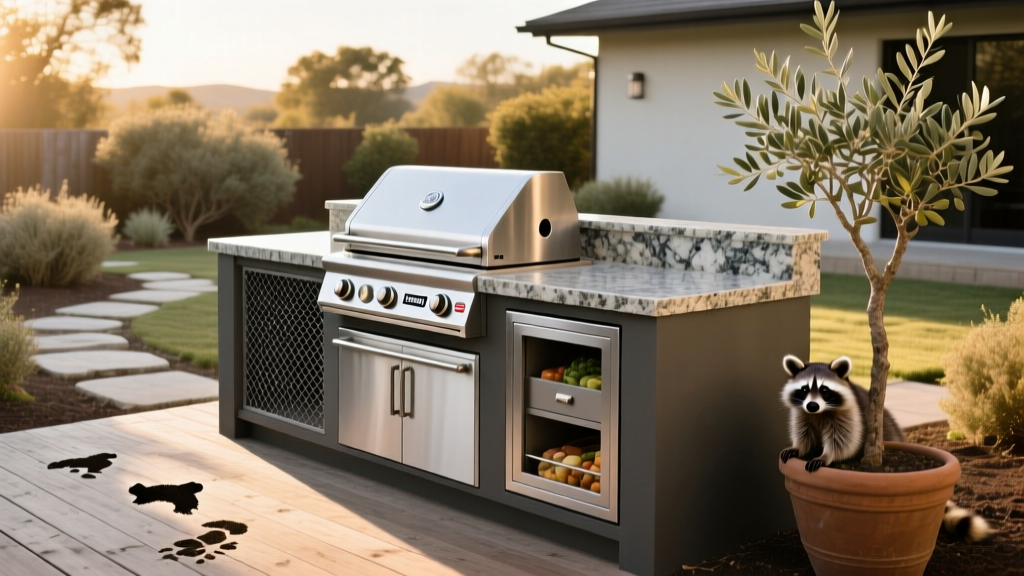
Wildlife-Proof Outdoor Kitchens: Weber Summit & Granite 2026
Lisa ThompsonPublished
Designing a Wildlife-Resistant Outdoor Kitchen in 2026
Building an outdoor kitchen is one of the most rewarding landscaping and hardscaping investments you can make for your home. In 2026, the gold standard for luxury outdoor cooking spaces often includes a premium built-in appliance like the Weber Summit series paired with durable, elegant granite countertops. However, as outdoor living spaces become more sophisticated, they also become highly attractive to local wildlife. From curious raccoons and foraging rodents to powerful black bears, yard animals are constantly on the lookout for high-calorie food sources, grease residues, and warm shelter.
Integrating wildlife management into your landscape design is no longer optional; it is a critical component of protecting your investment. According to the National Park Service, eliminating food odors and securing attractants is the most effective way to prevent wildlife conflicts in residential areas. When you combine the rich aromas of a Weber Summit grill with the natural crevices of stone and wood, you inadvertently create a beacon for scavengers. This comprehensive guide will walk you through the exact strategies, materials, and maintenance routines required to wildlife-proof your outdoor kitchen, ensuring your culinary oasis remains pristine and pest-free throughout 2026 and beyond.
Why Wildlife Targets Outdoor Kitchens
To effectively manage yard animals, you must first understand what draws them to your hardscaping projects. Wildlife relies on highly developed senses to locate food. A grill that has recently cooked marinated meats or fatty cuts leaves behind microscopic grease particles and lingering odors that can be detected by a black bear from miles away, or by a raccoon from the neighboring woodline.
Furthermore, outdoor kitchens provide three primary attractants:
- Food and Grease Residue: Drip trays, grill grates, and porous countertop surfaces harbor organic matter.
- Shelter and Warmth: The enclosed cabinetry beneath countertops offers a dry, wind-blocked environment that is highly appealing to rodents and feral cats during colder months.
- Water Sources: Built-in sinks, ice makers, and nearby drainage basins provide reliable hydration for birds, deer, and mammals.
By addressing these three pillars through smart material selection and rigorous maintenance, you can drastically reduce the ecological footprint of your outdoor kitchen.
Granite Countertops: Sealing Out Odors and Pests
Granite remains a top choice for outdoor kitchen countertops in 2026 due to its incredible durability, heat resistance, and aesthetic appeal. However, granite is a naturally porous stone. If left untreated, it can absorb meat juices, marinades, and spilled oils. While these stains might be invisible to the human eye after a quick wipe-down, the residual odors act as a dinner bell for wildlife with acute olfactory senses.
Advanced Nano-Sealant Technologies
To prevent odor penetration, it is imperative to treat your granite countertops with a high-quality, outdoor-rated impregnating sealer. In 2026, fluoropolymer-based nano-sealants are the industry standard. Unlike topical sealers that sit on the surface and degrade under UV light, nano-sealants penetrate deep into the microscopic fissures of the granite, creating a hydrophobic and oleophobic barrier. This ensures that grease and liquids bead up on the surface rather than soaking in, making cleanup effortless and eliminating the trapped odors that attract scavengers.
Edge Profiles and Climbing Deterrents
The physical shape of your granite also plays a role in wildlife management. Avoid intricate, deeply grooved edge profiles like the traditional ogee, which can trap food debris and provide tiny grip points for climbing insects and small rodents. Instead, opt for a smooth, rounded bullnose or a simple eased edge. These profiles are easier to sanitize and offer fewer footholds for animals attempting to scale the cabinetry to reach the cooking surfaces.
Securing the Weber Summit Grill Against Scavengers
The Weber Summit built-in gas grill is a masterpiece of culinary engineering, featuring high-BTU burners, a Tuck-Away rotisserie, and a dedicated smoker box. However, its complex grease management system and heavy lid require specific wildlife-proofing protocols.
Managing the Grease Catch Pan
The most significant wildlife attractant on any grill is the grease catch pan. The Weber Summit utilizes a sloped grease management system that funnels drippings away from the burners and into a disposable drip tray. In 2026, best practices dictate that this tray must be emptied and replaced after every single cooking session, especially if you are cooking high-fat meats like brisket or sausages. Leaving a half-full grease tray overnight is practically guaranteed to invite raccoons, opossums, and bears into your yard.
Lid Security and Smart Connectivity
Raccoons are notorious for their dexterity and have been documented opening standard grill lids to access leftover food. While the heavy stainless steel lid of a Weber Summit is more difficult to lift, a determined animal can still pry it open. Utilize a heavy-duty, wildlife-proof grill strap or a stainless steel carabiner lock to secure the lid to the side handles when not in use. Additionally, the 2026 Weber Connect smart grilling ecosystem features lid-ajar sensors. If a raccoon manages to bump the lid open, the system will send an immediate push notification to your smartphone, allowing you to intervene before the animal can access the cooking grates or nest inside the firebox.
Wildlife Threat Matrix for Outdoor Kitchens
Different animals pose unique threats to your landscaping and hardscaping investments. The table below outlines the primary offenders and the specific mitigation strategies required to protect your Weber Summit and granite setup.
| Wildlife Species | Primary Threat to Kitchen | 2026 Mitigation Strategy |
|---|---|---|
| Raccoons | Opening lids, raiding trash, manipulating latches | Install carabiner lid locks; use gravity-latch cabinetry hardware. |
| Black Bears | Tipping grills, destroying cabinetry for grease | Bolt Weber Summit to masonry base; remove grease trays nightly. |
| Rodents (Mice/Rats) | Chewing gas lines, nesting in warm cabinets | Use stainless steel mesh backing; avoid wood cabinetry. |
| Birds | Nesting in rotisserie cavities, droppings on granite | Install custom-fit stainless steel grill covers when not in use. |
Cabinetry and Structural Deterrents
The base cabinetry supporting your granite countertops and Weber Summit grill is a major vulnerability. Traditional wood cabinetry, while beautiful, is highly susceptible to moisture rot, termite damage, and rodent chewing. Mice and rats can easily gnaw through softwoods and plywood to access the dark, warm interior of the kitchen island.
For a truly wildlife-resistant outdoor kitchen, marine-grade polymer (MGP) or powder-coated 304 stainless steel cabinetry is the superior choice. These materials are entirely impervious to chewing and do not emit the organic scents that attract foraging animals. Furthermore, ensure that all cabinet doors are equipped with heavy-duty, self-closing hinges and magnetic or positive-latch catches. Standard friction latches are easily defeated by the nimble paws of raccoons and the brute force of larger mammals.
The USDA APHIS Wildlife Services emphasizes that habitat modification and exclusion are the most humane and effective long-term solutions for wildlife damage control. By physically excluding animals from the interior of your outdoor kitchen through robust material choices, you eliminate the need for reactive pest control measures.
Landscaping the Perimeter: A Natural Buffer
Wildlife management extends beyond the physical structure of the outdoor kitchen; it encompasses the surrounding landscape design. Creating a defensive perimeter through strategic planting and hardscaping can deter animals from approaching the cooking area in the first place.
Defensive Plantings
Avoid planting fruit-bearing trees, berry bushes, or highly fragrant flowering shrubs immediately adjacent to your outdoor kitchen. These plants act as natural bait, drawing wildlife directly to your hardscaped living space. Instead, border the perimeter of your patio with dense, thorny, or highly aromatic plants that animals naturally avoid. Barberry, holly, and rosemary are excellent choices. The sharp thorns of the holly and barberry create a physical barrier, while the strong essential oils in rosemary can help mask the scent of cooking meats.
Lighting and Hardscaping Moats
Scavengers prefer to forage under the cover of darkness. Illuminate the perimeter of your outdoor kitchen with motion-activated, high-lumen LED floodlights. When a raccoon or opossum triggers the sensor, the sudden burst of light will typically startle them into retreating. Additionally, consider installing a gravel or crushed stone moat around the base of the outdoor kitchen island. Animals dislike walking on loose, noisy, or sharp substrates, making a two-foot-wide border of jagged gravel an excellent psychological and physical deterrent for approaching pests.
Conclusion
An outdoor kitchen featuring a Weber Summit grill and granite countertops is a magnificent addition to any home landscape, but it requires proactive wildlife management to maintain its beauty and functionality. By utilizing advanced granite sealants, enforcing strict grease management protocols, upgrading to stainless steel cabinetry, and designing a defensive landscape perimeter, you can enjoy your outdoor culinary space without inviting the local fauna to the feast. Implementing these 2026 best practices ensures your investment remains secure, sanitary, and exclusively for human enjoyment for years to come.

