
Landscaping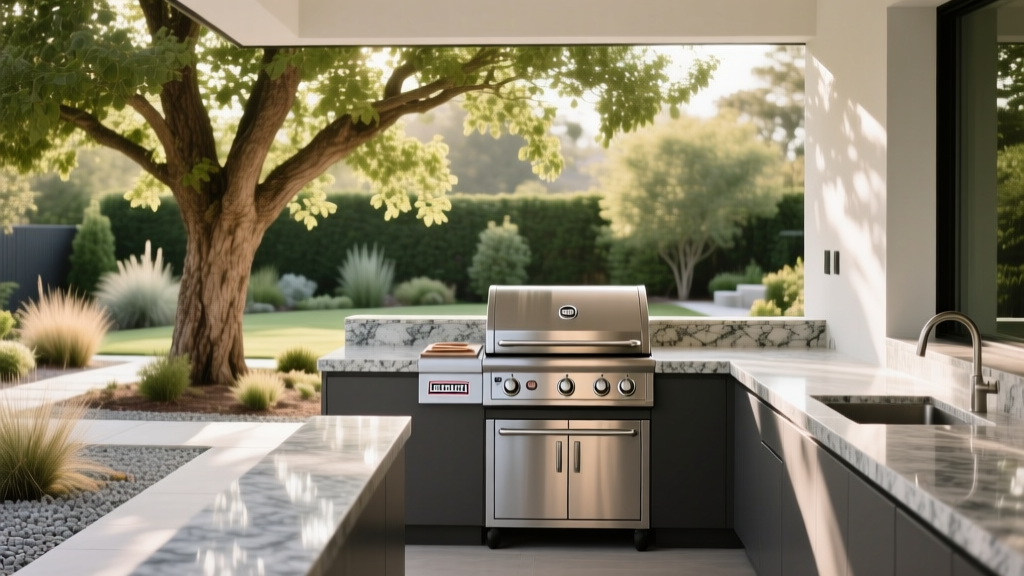
Best Shade Trees For Weber Summit Outdoor Kitchens 2026
James MillerPublished
Designing the 2026 Outdoor Kitchen Microclimate
As we navigate the landscaping trends of 2026, the luxury outdoor kitchen has evolved from a simple patio grill station into a fully integrated architectural extension of the home. At the pinnacle of this trend is the custom outdoor kitchen featuring a Weber Summit built-in grill and premium granite countertops. While the hardscaping elements of these kitchens are designed to withstand the elements, the intense UV exposure, extreme temperature fluctuations, and high winds can still degrade granite sealants and force your Weber Summit to work harder to maintain cooking temperatures. This is where strategic tree selection and planting become critical.
Integrating the right shade trees into your landscape design does more than just provide a comfortable dining area; it creates a controlled microclimate that protects your significant hardscaping investment. However, planting trees near heavy stone countertops and complex gas lines requires meticulous planning. You must balance the need for a broad, cooling canopy with the imperative to keep invasive root systems away from your patio sub-base. According to the University of Minnesota Extension, selecting trees based on their mature size and root behavior is the single most important factor in preventing structural damage to adjacent hardscaping.
Top Shade Trees for Weber Summit and Granite Setups
When planting around an outdoor kitchen, the ideal tree must possess a high branching structure (to allow smoke from the Weber Summit grill to dissipate without being trapped in the foliage), a low debris drop rate (to keep ash, sap, and leaves off your granite counters), and a non-aggressive root system. In 2026, landscape architects heavily favor the following species for high-end outdoor living spaces:
1. Japanese Zelkova (Zelkova serrata)
The Japanese Zelkova is a premier choice for outdoor kitchens due to its distinctive vase-shaped canopy. This growth habit provides expansive overhead shade while naturally keeping the lower trunk clear of branches, ensuring plenty of headroom for the chef and unobstructed airflow for grill ventilation. Its roots are relatively well-behaved compared to other large shade trees, making it safer for planting near the reinforced concrete slabs required to support granite countertops.
2. Ginkgo Biloba (Male Cultivars Only)
Ginkgo trees offer brilliant, dappled shade and striking fall color. It is absolutely vital to select a certified male cultivar, such as 'Autumn Gold', to avoid the messy, foul-smelling fruit produced by female trees. Ginkgos are highly resistant to urban heat islands and reflect heat beautifully, keeping the ambient temperature around your Weber Summit grill manageable during peak summer afternoons.
3. Live Oak (Quercus virginiana - Southern Zones)
For homeowners in warmer climates (USDA Zones 7-10), the Live Oak provides an unparalleled, massive canopy. Because Live Oaks grow exceptionally wide, they must be planted further from the kitchen structure, but their sweeping branches can be limbed up to create a majestic, shaded pavilion effect over the entire cooking and dining zone.
Tree Selection Comparison Chart for Outdoor Kitchens
| Tree Species | Canopy Shape | Root Aggression | Debris / Mess Factor | Best Hardiness Zones |
|---|---|---|---|---|
| Japanese Zelkova | Vase / Upright | Low to Moderate | Low (Small leaves) | 5 - 8 |
| Ginkgo Biloba (Male) | Oval / Spreading | Low | Very Low | 4 - 9 |
| Live Oak | Massive / Spreading | Moderate to High | Moderate (Acorns) | 7 - 10 |
| Paperbark Maple | Rounded / Small | Low | Very Low | 4 - 8 |
Hardscaping Hazards: Trees to Avoid
Just as important as knowing what to plant is knowing what to exclude from your landscape design. The area immediately surrounding a Weber Summit outdoor kitchen is a high-traffic, high-heat zone that demands pristine conditions. Certain trees are notorious for destroying hardscaping and creating endless maintenance nightmares for outdoor chefs.
Silver Maple (Acer saccharinum): While fast-growing, Silver Maples possess notoriously shallow, aggressive root systems that will easily heave and crack the concrete footings beneath your granite countertops. Furthermore, their brittle branches are prone to snapping during summer storms, posing a severe hazard to expensive grill lids and stone surfaces.
Sweetgum (Liquidambar styraciflua): The spiky seed pods (gumballs) dropped by Sweetgum trees are a menace to outdoor kitchens. They roll across granite counters, fall into the grill grates of your Weber Summit, and create a slipping hazard on smooth stone flooring.
Bradford Pear (Pyrus calleryana): Famous for their weak crotch angles, Bradford Pears are highly susceptible to splitting under the weight of wind or ice. A falling limb can easily shatter a custom granite island or dent the stainless steel exterior of a built-in grill.
Planting Distances and Root Barrier Installation
Proper planting distance is non-negotiable when working near heavy masonry and stone. A mature shade tree can draw hundreds of gallons of water from the soil weekly, causing soil subsidence that shifts patio slabs. The Arbor Day Foundation recommends planting large shade trees at least 15 to 20 feet away from permanent structures, patios, and underground utilities.
However, in smaller residential lots, achieving a 20-foot setback might mean the tree fails to provide shade over the kitchen. In these scenarios, you must install a mechanical root barrier during the planting process in 2026. A high-density polyethylene (HDPE) root barrier, buried to a depth of 36 inches between the tree's root ball and the outdoor kitchen's foundation, forces roots to grow deep rather than laterally beneath your granite counters.
Step-by-Step Root Barrier Installation:
- Trenching: Dig a trench 36 inches deep and 2 inches wide along the side of the tree facing the outdoor kitchen.
- Barrier Placement: Insert the HDPE panels, ensuring they interlock tightly. Leave at least 2 inches of the barrier exposed above the soil line to prevent roots from growing over the top.
- Backfilling: Backfill the trench with native soil, tamping it down firmly to eliminate air pockets that could invite root exploration.
Protecting Your Investment: Sap, Debris, and Grill Care
Even the cleanest trees will drop some organic matter. In 2026, maintaining the pristine look of a granite countertop and the functionality of a Weber Summit grill requires an understanding of tree biology and seasonal maintenance. Aphids and scale insects often feed on the canopy of shade trees, excreting a sticky substance known as honeydew. When this honeydew lands on granite, it can degrade the stone's sealant over time and attract sooty mold.
To mitigate this, incorporate dormant horticultural oil sprays into your late-winter landscaping maintenance schedule. This environmentally friendly treatment, endorsed by experts at the Morton Arboretum, significantly reduces aphid populations before the spring canopy emerges. Additionally, ensure your granite countertops are resealed annually with a high-quality, UV-resistant fluorocarbon sealant designed specifically for exterior stone.
Finally, consider the placement of your Weber Summit grill relative to the tree's trunk. Never place the grill directly under the primary trunk line where heavy branches converge. Instead, position the cooking zone under the outer third of the canopy, known as the drip line. This area provides excellent dappled shade while minimizing the risk of heavy limbs dropping directly onto the grill hood. By thoughtfully selecting the right tree species, managing root growth with modern barriers, and maintaining the canopy, your outdoor kitchen will remain a stunning, functional, and protected centerpiece of your landscape for decades to come.

