Pest Control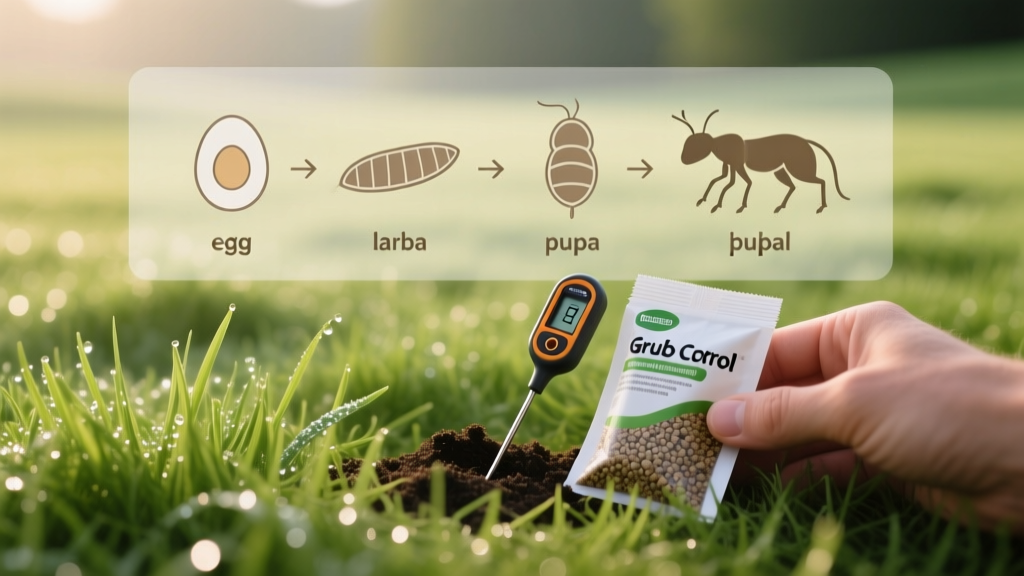
When to Apply Grub Control: The Ultimate Lawn Timing Guide
Emily WatsonPublished
The White Grub Life Cycle: Why Timing is Everything
White grubs, the larval stage of scarab beetles like the Japanese beetle, June bug, and European chafer, are among the most destructive lawn pests in North America. They feed aggressively on turfgrass roots, causing brown, dead patches that can be rolled back like a carpet. However, the secret to effective grub control is not just the product you choose, but precisely when you apply it. Applying the wrong chemical at the wrong time wastes money, harms beneficial soil organisms, and leaves your lawn vulnerable.
To master timing, you must understand the enemy. According to the University of Minnesota Extension, most turf-destroying grubs follow a one-year life cycle. Adult beetles emerge in early summer (June to July), mate, and lay eggs in the top few inches of soil. These eggs hatch in late July through August, releasing tiny, voracious grubs. These young grubs feed heavily on grassroots throughout late summer and early fall, causing the most visible lawn damage. As soil temperatures drop in late autumn, grubs burrow deep below the frost line to overwinter. They return to the root zone in spring to feed briefly before pupating into adults, restarting the cycle.
Preventative vs. Curative Grub Control: Knowing the Difference
Before purchasing a product, you must decide whether your lawn needs a preventative or curative approach. This decision is entirely dependent on the time of year and the current life stage of the grubs in your soil.
Preventative Control
Preventative products are designed to kill grubs as they hatch or shortly after, before they can grow large enough to cause significant root damage. These chemicals have long residual activity, meaning they remain active in the soil for months. They are generally safer for the environment and non-target organisms when applied correctly, but they will not kill large, mature grubs that are already present in the fall or spring.
Curative Control
Curative products are fast-acting contact killers designed to eliminate large, actively feeding grubs that are currently destroying your lawn. They have a very short residual life, often breaking down within a few weeks. If you apply a curative product in the spring, it will kill the overwintered grubs, but it will offer zero protection against the new generation hatching in late summer.
When to Apply Preventative Grub Control (Spring to Early Summer)
Preventative treatments are the cornerstone of an effective Integrated Pest Management (IPM) strategy. The goal is to have the active ingredient in the root zone exactly when the eggs begin to hatch. However, not all preventative products share the same application window.
Chlorantraniliprole Products (e.g., Scotts GrubEx, Acelepryn)
Chlorantraniliprole is a highly effective, low-toxicity preventative ingredient. Because it takes longer to bind to soil organic matter and move into the root zone, it should be applied earlier in the season. The ideal application window is between early April and late May. Applying it during this timeframe ensures the chemical is fully integrated into the soil profile before the June and July beetle flights begin.
Imidacloprid Products (e.g., Merit, Bayer Advanced)
Imidacloprid moves through the soil much faster but degrades more quickly than Chlorantraniliprole. If applied too early in the spring, it may lose its efficacy by the time the eggs hatch in August. According to turf experts at Michigan State University Extension, Imidacloprid should be applied closer to the egg-hatch period, ideally between mid-June and mid-July. Monitoring soil temperatures is critical here; apply when soil temperatures at a two-inch depth consistently reach 65 to 70 degrees Fahrenheit.
When to Apply Curative Grub Control (Late Summer to Fall)
If you missed the preventative window, or if you notice sudden brown patches and increased animal activity (like skunks, raccoons, or crows tearing up your turf) in late summer, it is time for a curative approach.
The best time to apply curative treatments is from mid-August through early October. During this window, the newly hatched grubs are still relatively small and close to the soil surface, making them highly susceptible to contact insecticides. Active ingredients like Trichlorfon (found in Dylox) and Carbaryl (found in Sevin) are the industry standards for curative control. Trichlorfon is particularly effective, capable of killing up to 95 percent of grubs within 24 to 48 hours of application.
Curative products can also be applied in early spring (April) to kill overwintered grubs before they pupate. However, this is generally discouraged in IPM practices because the spring-feeding damage is usually minimal, and the curative chemical will provide no protection against the impending summer hatch.
Grub Control Timing and Product Chart
Use the following reference table to select the correct product and timing for your specific lawn care needs.
| Control Type | Best Application Window | Soil Temp Indicator | Common Active Ingredients | Residual Activity |
|---|---|---|---|---|
| Preventative (Slow) | April - May | 50F - 60F | Chlorantraniliprole | Long (3-4 Months) |
| Preventative (Fast) | Mid-June - Mid-July | 65F - 70F | Imidacloprid, Clothianidin | Medium (2-3 Months) |
| Curative | Mid-August - October | Above 60F | Trichlorfon, Carbaryl | Short (1-3 Weeks) |
| Biological | August - September | Moist Soil | Milky Spore, Beneficial Nematodes | Variable (Years for Spore) |
How to Monitor Your Lawn for Grub Activity
Before applying any curative treatment, you must verify that grubs are actually the cause of your lawn damage. Drought stress, fungal diseases, and dog urine can all mimic grub damage. To confirm an infestation, perform a simple turf survey.
Using a flat-edged shovel, cut a one-foot by one-foot square of turf on three sides, about two to four inches deep. Peel the sod back like a carpet and inspect the soil surface and the underside of the turf. Count the number of grubs you find. According to standard IPM thresholds, a healthy lawn can tolerate a few grubs without showing damage. Treatment is only recommended if you find an average of 5 to 10 or more grubs per square foot. Be sure to sample multiple areas of your lawn, particularly in sunny, south-facing slopes where beetles prefer to lay their eggs.
Application Best Practices and Pollinator Safety
Timing your application correctly is only half the battle; proper application technique ensures the product reaches the target zone and minimizes environmental impact. The Environmental Protection Agency (EPA) emphasizes that following label instructions is critical for protecting non-target organisms.
- Watering In: Grub control products must be watered into the soil to reach the root zone where the grubs feed. Apply 0.25 to 0.5 inches of irrigation immediately after spreading granular products. If you do not have an irrigation system, apply the treatment just before a steady, moderate rainfall.
- Mowing for Pollinator Safety: Many grub control products, particularly Imidacloprid, are systemic and can be taken up by flowering weeds like clover and dandelions, posing a severe risk to bees and other pollinators. Always mow your lawn and remove all weed flower heads immediately before applying any grub control product.
- Calibrating Your Spreader: Ensure your broadcast or drop spreader is properly calibrated to apply the exact pounds per 1,000 square feet listed on the product label. Over-applying wastes chemical and increases runoff risk, while under-applying will fail to control the pest.
Post-Application Care and Lawn Recovery
If you applied a curative treatment in the fall after significant damage had already occurred, killing the grubs is only the first step. The severed roots will not magically reattach. You must take immediate action to save the turf and prevent secondary weed invasions.
After a curative application, keep the soil consistently moist to encourage any surviving grassroots to re-establish. For areas where the turf has completely died and rolled back, use a garden rake to remove the dead thatch and loosen the topsoil. Overseed these bare patches immediately with a grass seed blend that matches your existing lawn. Apply a starter fertilizer to promote rapid germination, and keep the top inch of soil moist until the new seedlings reach mowing height. By combining precise chemical timing with proactive lawn recovery techniques, you can maintain a dense, vigorous turf that naturally resists future pest invasions.