Pest Control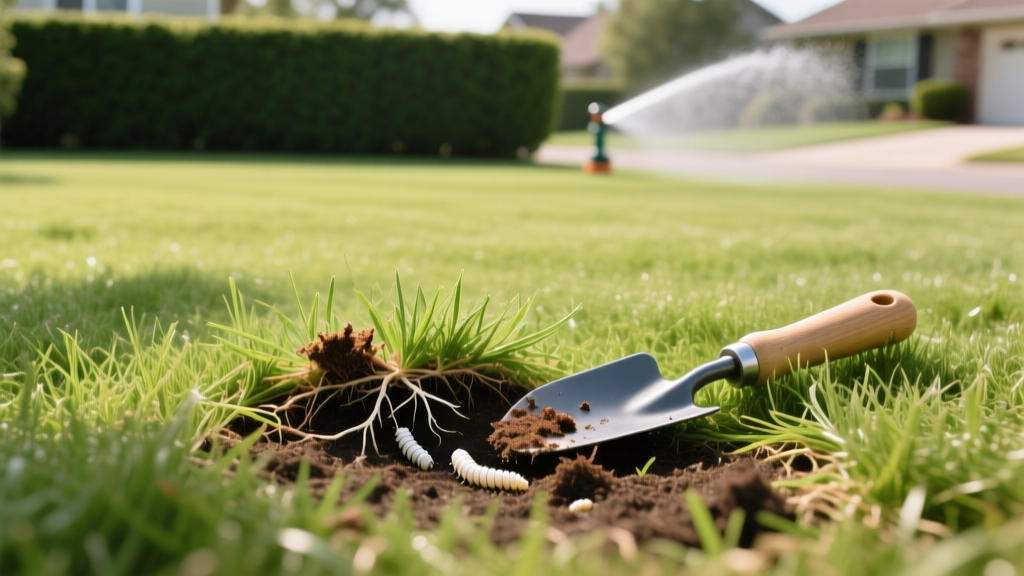
Common White Grub Control Mistakes and How to Fix Them
Robert HayesPublished
The Hidden Threat Beneath Your Turf
White grubs are the immature, larval stage of scarab beetles, including the notorious Japanese beetle, European chafer, and June bug. These C-shaped, cream-colored pests live just beneath the soil surface, feasting on the roots of your turfgrass. When left unchecked, a severe grub infestation can destroy an entire lawn in a matter of weeks, leaving behind spongy, detached turf that rolls up like a carpet. However, in the rush to save their lawns, many homeowners make critical errors in their pest management strategies. According to Penn State Extension, improper timing and product selection are the leading causes of failed grub control. In this guide, we will explore the most common white grub control mistakes and provide actionable, science-backed fixes to help you reclaim your lawn.
Top 3 Signs You Have a Grub Problem
Before diving into treatment mistakes, ensure you are actually dealing with grubs. Look for these telltale signs:
- Spongy Turf: The grass feels loose underfoot because the root system has been severed.
- Animal Digging: Skunks, raccoons, and crows will tear up your lawn to feast on the protein-rich grubs beneath.
- Irregular Brown Patches: Unlike fungal diseases, grub damage often appears as irregular, expanding brown patches that do not respond to watering.
Mistake 1: Treating at the Wrong Time of Year
The Mistake: Many homeowners notice brown patches and animal digging in early spring and immediately apply grub killers. Unfortunately, this is entirely ineffective. In the spring, grubs are mature (third-instar), barely feeding, and preparing to pupate into adult beetles. Applying insecticides at this stage wastes money and introduces unnecessary chemicals into the environment.
The Fix: You must align your treatment with the grub life cycle. The optimal time for preventative treatment is early summer (June to early July), just as eggs are hatching and young grubs begin feeding near the surface. If you missed the preventative window and notice damage in late summer or early fall (August to September), you must use a curative treatment designed to kill larger, actively feeding grubs before they burrow deep into the soil for winter dormancy. Research from Cornell University's Integrated Pest Management program emphasizes that targeting the first and second larval instars yields the highest mortality rates with the lowest chemical inputs.
Mistake 2: Using Preventative Insecticides for Curative Control
The Mistake: A homeowner discovers severe grub damage in late August and rushes to the garden center, picking up a product containing Imidacloprid (commonly sold as Merit). They apply it, but the lawn continues to die. Why? Because Imidacloprid is a slow-acting, preventative insecticide that only works on very young, newly hatched grubs. It will not penetrate the exoskeleton of or effectively kill large, mature grubs causing late-summer damage.
The Fix: Match the active ingredient to the life stage of the pest. For late-summer curative control, you need a fast-acting contact and stomach poison like Trichlorfon (commonly sold as Dylox). Trichlorfon breaks down quickly in the environment but delivers a rapid knockdown of large grubs within 24 to 48 hours. Conversely, for long-lasting preventative control applied in early summer, Chlorantraniliprole (Acelepryn) is highly effective, safe for pollinators, and provides residual control for months.
Mistake 3: Failing to Water In Granular Treatments
The Mistake: Applying a granular insecticide and leaving it to sit on the surface. Grubs live in the soil, not on the grass blades. If the product remains trapped in the thatch layer, it will degrade in the sunlight and never reach the target pests. Furthermore, a thick thatch layer (greater than 0.5 inches) can bind the chemical, rendering it useless.
The Fix: Always water your lawn immediately after applying a granular grub control product. You need to apply at least 0.25 to 0.5 inches of water to wash the active ingredient off the grass blades, through the thatch, and into the top two inches of soil where the grubs are feeding. If your lawn has a thatch layer thicker than 0.5 inches, you must core aerate or dethatch before applying the treatment to ensure proper soil penetration.
Mistake 4: Ignoring Organic and Biological Controls
The Mistake: Relying exclusively on synthetic neurotoxins, which can harm beneficial soil organisms, earthworms, and non-target insects. Over-reliance on chemicals also ignores the long-term ecological balance of your soil.
The Fix: Integrate biological controls into your IPM (Integrated Pest Management) strategy. Two highly effective organic options include:
- Beneficial Nematodes (Heterorhabditis bacteriophora): These microscopic worms seek out grubs, enter their bodies, and release bacteria that kill the host within 48 hours. They cost roughly $45 for 10 million nematodes (covering 2,000 sq ft). Crucial tip: Nematodes are living organisms. They must be applied in the late afternoon to avoid UV degradation, and the soil must be kept consistently moist for two weeks post-application.
- Milky Spore (Paenibacillus popilliae): A naturally occurring bacterium that specifically targets Japanese beetle grubs. It takes 2 to 3 years to fully establish in the soil, but once it does, it can provide control for up to 15 years. Cost is approximately $60 for a 40-ounce box treating 10,000 sq ft.
Mistake 5: Blindly Treating Without Scouting First
The Mistake: Treating the entire lawn prophylactically without confirming a grub presence or checking population thresholds. This violates the core principles of IPM and wastes resources.
The Fix: Perform the 'Tug Test' and a soil scout. If the turf pulls up easily like a carpet, roots have been severed. To confirm, use a spade to cut a 1-foot by 1-foot square of turf, about 3 inches deep, and roll it back. Count the C-shaped grubs in the soil and on the roots. The University of Massachusetts Amherst Extension notes that a healthy, well-irrigated lawn can tolerate up to 5 to 7 grubs per square foot without visible damage. Treatment is only economically and ecologically justified if you find 8 to 10+ grubs per square foot in multiple sample areas across your lawn.
Comparison Chart: Preventative vs. Curative Grub Control Products
| Product Type | Active Ingredient | Brand Examples | Target Life Stage | Application Timing | Est. Cost per 1,000 sq ft |
|---|---|---|---|---|---|
| Preventative | Chlorantraniliprole | Acelepryn, Scotts GrubEx | 1st & 2nd Instar | April - June | $12 - $18 |
| Preventative | Imidacloprid | Merit, Bayer Advanced | 1st & 2nd Instar | June - July | $8 - $12 |
| Curative | Trichlorfon | Dylox, Bayer 24-Hour | 2nd & 3rd Instar | August - September | $10 - $15 |
| Biological | Hb Nematodes | Bug Sales, Arbico | All Instars | August - September | $20 - $25 |
Repairing the Damage: Life After Grubs
If you have made mistakes in the past and your lawn is already damaged, killing the grubs is only half the battle. Dead, detached grass will not magically re-root. You must actively repair the turf.
- Remove Dead Turf: Use a thatch rake or a sod cutter to remove the dead, brown grass and exposed soil.
- Topdress and Seed: Apply a 1/4-inch layer of compost over the bare soil. Broadcast a high-quality, endophyte-enhanced grass seed (such as Tall Fescue or Kentucky Bluegrass, depending on your hardiness zone). Endophytes naturally deter surface-feeding insects.
- Keep it Moist: Water the newly seeded areas lightly 2 to 3 times a day for the first 14 days to ensure germination. Avoid applying pre-emergent herbicides during this time, as they will prevent your new grass seed from sprouting.
"Successful grub management is not about eradicating every single insect in the soil; it is about maintaining a healthy, deep-rooted turf that can tolerate minor feeding while utilizing targeted treatments only when economic thresholds are exceeded."
Conclusion
Effective white grub control requires a shift from reactive panic to proactive, science-based management. By scouting your lawn, respecting the insect's life cycle, choosing the correct active ingredient for the season, and properly watering in your applications, you can stop turf damage in its tracks. Integrate biological controls where possible, and remember that a thick, deeply watered lawn is your very first and best line of defense against subterranean pests.