Pest Control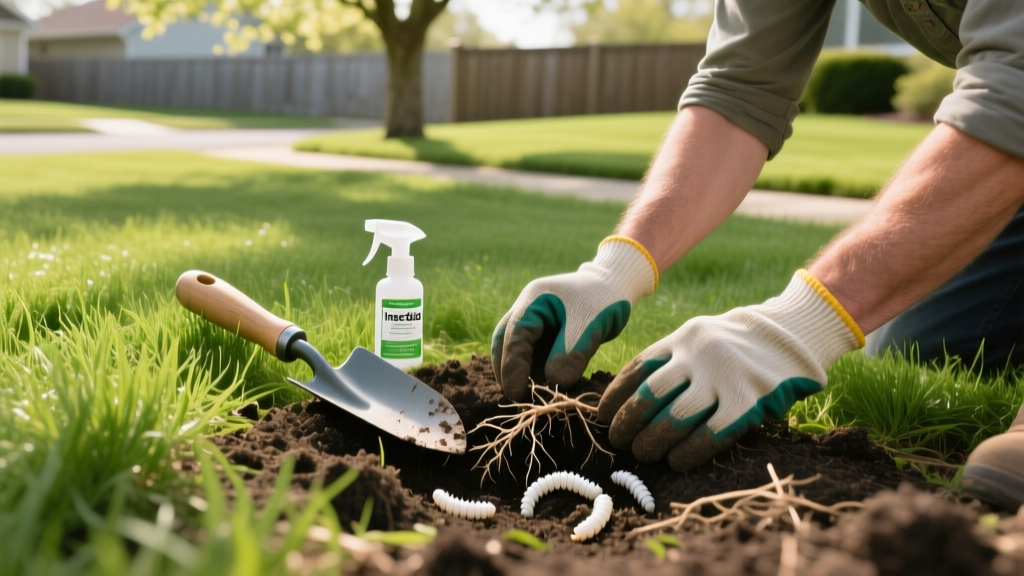
White Grub Control: Common Mistakes and Proven Fixes
Mike RodriguezPublished
Understanding the White Grub Threat
White grubs are the larval stage of various scarab beetles, including Japanese beetles, June bugs, and European chafers. These C-shaped, creamy-white pests live just beneath the soil surface, feasting on the roots of your turfgrass. When left unchecked, a severe infestation can destroy an entire lawn in a matter of weeks, leaving behind spongy, brown patches that roll back like a carpet. However, many homeowners inadvertently make their grub problems worse through improper identification, poor timing, and incorrect product application. In this guide, we will explore the most common lawn grub control mistakes and provide actionable, proven fixes to help you reclaim your turf using Integrated Pest Management (IPM) principles.
To effectively manage grubs, you must understand their lifecycle. Adult beetles lay eggs in early to mid-summer. These eggs hatch into young grubs in late summer, which is when they feed most aggressively. As temperatures drop in the fall, they burrow deep into the soil to overwinter, emerging again in the spring to feed briefly before pupating into adult beetles. This lifecycle dictates your treatment strategy, and ignoring it is the root cause of most failed control efforts.
Mistake 1: Misidentifying Drought Stress as Grub Damage
One of the most frequent errors homeowners make is assuming that brown, dying patches of grass are automatically caused by grubs. In reality, drought stress, fungal diseases like brown patch, or even dog urine spots can mimic grub damage. Applying expensive grub control products to a lawn suffering from drought is a waste of money and introduces unnecessary chemicals into the environment.
The Fix: Perform the Tug Test and Soil Inspection
Before purchasing any treatment, confirm the presence of grubs. Walk over the brown patches and perform the "tug test." If the turf feels spongy and pulls up easily with little to no root resistance, grubs are likely the culprit. To be absolutely certain, use a flat-edged spade to cut a one-foot square section of sod, about two to three inches deep, and peel it back. Count the grubs in the soil and root zone. According to Penn State Extension, a healthy lawn can tolerate up to five or six grubs per square foot. Treatment is generally only justified if you find ten or more grubs per square foot. If the roots are intact and the soil is dry, adjust your irrigation schedule instead of reaching for insecticides.
Mistake 2: Applying Preventative Insecticides at the Wrong Time
Many homeowners see adult Japanese beetles swarming in early May and immediately apply a preventative grub control product, assuming it will kill the hatching larvae. This is a massive mistake. Most preventative insecticides, such as those containing imidacloprid or clothianidin, have a limited window of residual activity. If applied too early in the spring, the active ingredient will degrade in the soil before the eggs even hatch in late July or August, leaving your lawn completely unprotected during the peak feeding period.
The Fix: Time Your Preventatives for Late Spring to Early Summer
For optimal results, preventative treatments should be applied between late May and early July, depending on your geographic location. Products containing chlorantraniliprole (such as Acelepryn or Scotts GrubEx) are excellent choices because they have a longer residual lifespan and are highly targeted, posing minimal risk to beneficial pollinators when applied correctly. By timing your application just before the eggs hatch, the insecticide will be actively present in the root zone when the vulnerable young grubs begin to feed. Always check your local university extension office for specific timing recommendations tailored to your region's climate.
Mistake 3: Using Preventatives for Curative Control
If you missed the preventative window and discover an active, damaging grub infestation in late August or September, using a standard preventative product will not save your lawn. Imidacloprid and similar chemicals are slow-acting and designed to target tiny, newly hatched grubs. They are largely ineffective against large, mature grubs that are aggressively destroying your root system in the fall.
The Fix: Switch to Fast-Acting Curative Insecticides
When immediate action is required to stop active feeding, you must use a curative insecticide. Products containing trichlorfon (such as Dylox) or carbaryl are fast-acting and can kill mature grubs within a few days. It is crucial to note that trichlorfon degrades rapidly in alkaline soils (pH above 7.0), so a soil test is highly recommended before application. Furthermore, curative treatments only address the current population and offer no residual protection for the following year, meaning you will still need to implement a preventative strategy the following summer.
Mistake 4: Failing to Water In Granular Applications
Applying granular grub control and simply walking away is a recipe for failure. The active ingredients in these products are bound to the granules. If they sit on the surface of the turf or thatch layer, they will break down under UV light and never reach the soil-dwelling grubs. Furthermore, if birds or pets consume the untreated granules on the surface, it poses an unnecessary environmental hazard.
The Fix: Irrigate Immediately After Application
To activate granular insecticides, you must water the lawn immediately after spreading the product. Experts at Michigan State University Extension recommend applying at least 0.5 inches of irrigation to wash the chemical off the grass blades and move it down into the top two inches of soil where the grubs are feeding. If you do not have an irrigation system, time your application to coincide with a steady, moderate rainfall. Avoid applying the product right before a torrential downpour, however, as heavy runoff can wash the chemical into storm drains and local waterways, violating environmental safety guidelines.
Mistake 5: Ignoring Thatch and Soil Compaction
Relying solely on chemical controls while ignoring the physical health of your soil is a major IPM oversight. A thick layer of thatch (more than half an inch) acts as a physical barrier, intercepting insecticides and preventing them from reaching the soil. Additionally, compacted soil creates poor drainage and weak root systems, making your turf significantly more susceptible to grub damage.
The Fix: Core Aeration and Dethatching
Integrate cultural practices into your pest management routine. Schedule core aeration in the early fall to relieve soil compaction and improve water infiltration. If your thatch layer exceeds half an inch, use a power dethatcher or rent a vertical mower to break it up. By maintaining a healthy, vigorous lawn with deep roots, your turf can naturally tolerate higher grub populations without showing visible damage. The University of California Statewide IPM Program emphasizes that promoting natural predators, like birds and ground beetles, through healthy soil ecology is a cornerstone of long-term, sustainable grub management.
Preventative vs. Curative Grub Control: A Quick Comparison
Choosing the right product at the right time is essential. Use the table below to determine which strategy fits your current situation.
| Feature | Preventative Control | Curative Control |
|---|---|---|
| Active Ingredients | Chlorantraniliprole, Imidacloprid, Clothianidin | Trichlorfon, Carbaryl |
| Best Application Time | Late May to Early July | Mid-August to Late September |
| Target Grub Stage | Young, newly hatched larvae | Mature, actively feeding larvae |
| Speed of Kill | Slow (weeks) | Fast (1 to 3 days) |
| Residual Protection | Lasts several months | Short-lived (days to weeks) |
| Estimated Cost (per 1,000 sq ft) | $0.10 - $0.25 | $0.15 - $0.30 |
Conclusion
Effective white grub control requires more than just blindly spreading chemicals across your lawn. By avoiding these common mistakes—misidentifying damage, mistiming applications, using the wrong product class, failing to water in treatments, and neglecting soil health—you can protect your turf efficiently and sustainably. Remember to always follow the label instructions on any pesticide product, as the label is the law. With proper scouting, timely interventions, and a commitment to overall lawn health, you can keep your grass thick, green, and grub-free year after year.