Pest Control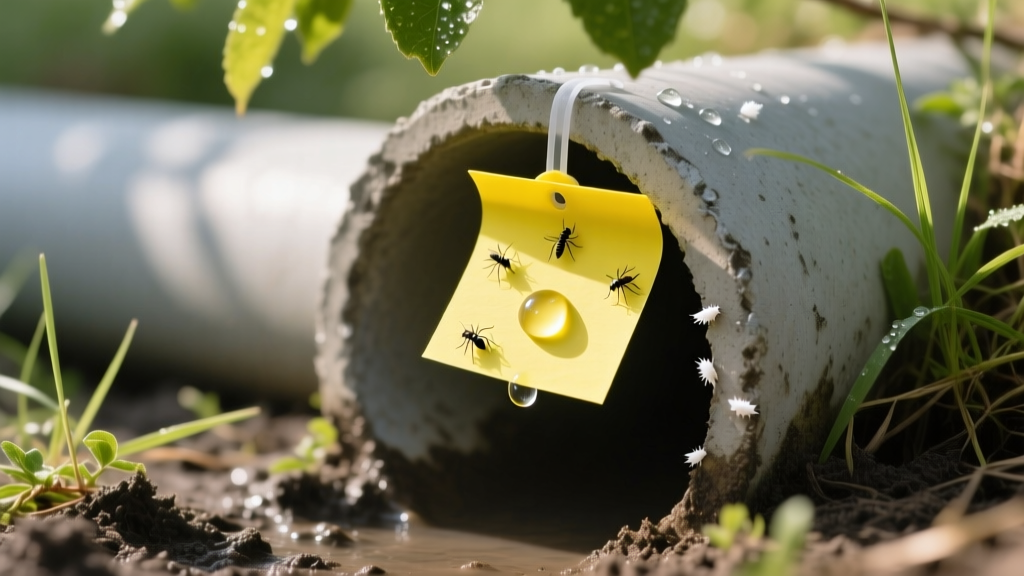
2026 Whitefly Trap & Soap Spray Guide for Drainage Pipes
Emily WatsonPublished
The Hidden Link Between Landscape Drainage Pipes and Whiteflies
When homeowners think of whitefly infestations, they rarely consider their subsurface water management systems. However, as integrated pest management (IPM) strategies evolve in 2026, landscape professionals are increasingly recognizing the microclimates created by landscape drainage pipes as prime breeding grounds for these destructive sap-sucking insects. Whether you are dealing with a French drain, a corrugated slotted HDPE pipe, or a surface-level channel drain, the moisture emitted from these systems creates localized zones of high humidity that whiteflies absolutely love.
Whiteflies, particularly the silverleaf whitefly and the greenhouse whitefly, thrive in humid, sheltered environments. The soil surrounding drainage pipe outlets and catch basins is often perpetually damp, encouraging the growth of broadleaf weeds like morning glory and bindweed. These weeds act as primary host plants for whiteflies. Furthermore, the honeydew excreted by whiteflies attracts ants, which frequently establish colonies in the warm, dry upper sections of corrugated landscape drainage pipes. From inside the pipe infrastructure, these ants protect whitefly nymphs on nearby foliage from natural predators, creating a frustrating pest loop that is difficult to break without a targeted approach.
In this comprehensive 2026 guide, we will explore how to effectively monitor whitefly populations near your drainage infrastructure using yellow sticky traps, and how to safely eradicate them using insecticidal soap without compromising your drainage system or the surrounding environment.
Strategic Sticky Trap Monitoring Around Drainage Infrastructure
Yellow sticky traps are the cornerstone of whitefly monitoring. Whiteflies are highly attracted to the yellow wavelength, making these traps an excellent early-warning system. In 2026, advanced UV-resistant yellow sticky cards, such as the Sentinel Pro UV-Resistant Yellow Sticky Cards, are highly recommended for outdoor use near drainage swales and outlets, as they do not degrade or lose their adhesive properties in direct sunlight or high-moisture environments.
Placing traps randomly in the garden will not give you an accurate picture of the whitefly pressure originating from your drainage zones. Instead, you must map your traps to your drainage infrastructure. Below is a strategic placement guide based on common landscape drainage features.
| Drainage Feature | Trap Placement Height | Trap Density | Inspection Frequency |
|---|---|---|---|
| French Drain Outlet | 6 inches above grade | 1 per 50 sq ft | Weekly |
| Catch Basin Grate | Flush with interior wall | 1 per basin | Bi-weekly |
| Corrugated Pipe Trench | 1 foot above soil line | 1 per 20 linear ft | Weekly |
| Downspout Extension | Attached to adjacent shrub | 1 per plant | Weekly |
According to the University of California IPM, monitoring traps should be checked at least once a week. When inspecting traps near drainage pipes, pay special attention to the presence of ants. If you see a high concentration of ants on the sticky trap, it is highly likely that an ant colony is nesting within the dry voids of your corrugated drainage pipes, farming the whiteflies on the plants directly above the pipe trench.
Why Insecticidal Soap is the Safest Choice for Drainage Zones
When treating whiteflies near landscape drainage pipes, your choice of pesticide is critical. Drainage pipes are designed to move water away from your home and disperse it into the soil via dry wells, gravel beds, or municipal storm drains. Using systemic chemical pesticides, such as neonicotinoids (e.g., imidacloprid), near these infiltration zones is highly discouraged in 2026. These chemicals can leach into the drain field, potentially contaminating groundwater or harming beneficial soil microbes that maintain soil structure around your drainage trenches.
Insecticidal soap, composed of potassium salts of fatty acids, is the gold standard for treating whiteflies in these sensitive areas. As noted by Colorado State University Extension, insecticidal soaps work by penetrating the soft cuticle of soft-bodied insects like whiteflies, causing rapid dehydration and death. Crucially, insecticidal soap breaks down quickly in the environment, leaving no toxic residue. If overspray or runoff enters your French drain or catch basin, it will not harm the aquatic environment at the discharge point, nor will it degrade PVC or HDPE pipe materials.
Top Insecticidal Soap Products for 2026
- Bonide Insecticidal Soap Multi-Purpose Insect Control (Concentrate): Ideal for large properties with extensive drainage networks. Mix at a rate of 2.5 fluid ounces per gallon of water.
- Natria Insecticidal Soap RTU (Ready-to-Use): Perfect for spot-treating specific ornamental shrubs planted near downspout extensions and channel drains. Features a 2026 updated nozzle for finer misting, which improves leaf coverage without excessive dripping into the soil.
- Garden Safe Insecticidal Soap: A budget-friendly option that remains highly effective against whitefly nymphs and adults, safe for use around landscape fabric and geotextile drain wraps.
Step-by-Step Soap Application Protocol Near Drainage Pipes
Applying insecticidal soap requires precision, especially when working around drainage inlets and outlets. The goal is to coat the whiteflies while preventing excessive soap scum from building up inside your drainage grates or clogging the geotextile fabric surrounding your French drains.
Step 1: Time Your Application
Apply the insecticidal soap early in the morning, ideally between 6:00 AM and 8:00 AM. At this time, landscape drainage pipes are often emitting morning condensation, but the ambient temperature is cool enough to prevent the soap from evaporating too quickly. Spraying in the heat of the day can cause phytotoxicity (leaf burn), especially on moisture-stressed plants near poorly graded drainage outlets.
Step 2: Protect the Drainage Inlets
Before spraying, temporarily cover any open catch basin grates or channel drain inlets with a piece of cardboard or a plastic sheet. While insecticidal soap is environmentally safe, large volumes of soapy water entering a dry well can cause temporary foaming and may alter the pH of the soil in the immediate infiltration bed. Keeping the bulk of the spray on the foliage where the whiteflies reside is the best practice.
Step 3: Target the Underside of the Leaves
Whiteflies congregate on the undersides of leaves, where they are protected from rain and direct sunlight. Use a pump sprayer with an adjustable nozzle to spray upward, ensuring the bottom of the canopy is thoroughly coated. The soap must make direct contact with the insect to be effective; it has no residual action once it dries.
Step 4: Address the Weed Hosts in the Trench
Do not forget the weeds growing directly above the corrugated pipe trenches. The disturbed, moist soil of a drainage backfill is a magnet for whitefly-hosting weeds. Spray these weeds thoroughly with the insecticidal soap, and once the whiteflies are eliminated, manually pull the weeds to remove the habitat entirely.
Maintenance and Long-Term Prevention
Because insecticidal soap does not kill whitefly eggs, you must repeat the application every 5 to 7 days for at least three cycles to break the life cycle. Continue monitoring your yellow sticky traps near the drainage outlets to gauge the success of your treatment. Once the traps show a significant reduction in whitefly captures, you can transition to a maintenance schedule.
To prevent future infestations, focus on the physical environment around your drainage pipes. Ensure that your French drain outlets are properly graded so that water does not pool on the surface, creating unnecessary humidity. Keep the area around catch basins free of debris and broadleaf weeds. If ants are emerging from your corrugated pipe weep holes, consider applying a granular ant bait specifically designed for outdoor mounds around the perimeter of the pipe trench, which will sever the protective relationship between the ants and the whiteflies.
By combining strategic sticky trap monitoring with the targeted, environmentally safe application of insecticidal soap, you can effectively manage whitefly populations without compromising the integrity or environmental safety of your landscape drainage system. As IPM practices continue to advance in 2026, working with your landscape's unique microclimates—rather than against them—remains the key to a healthy, pest-free garden.