Pest Control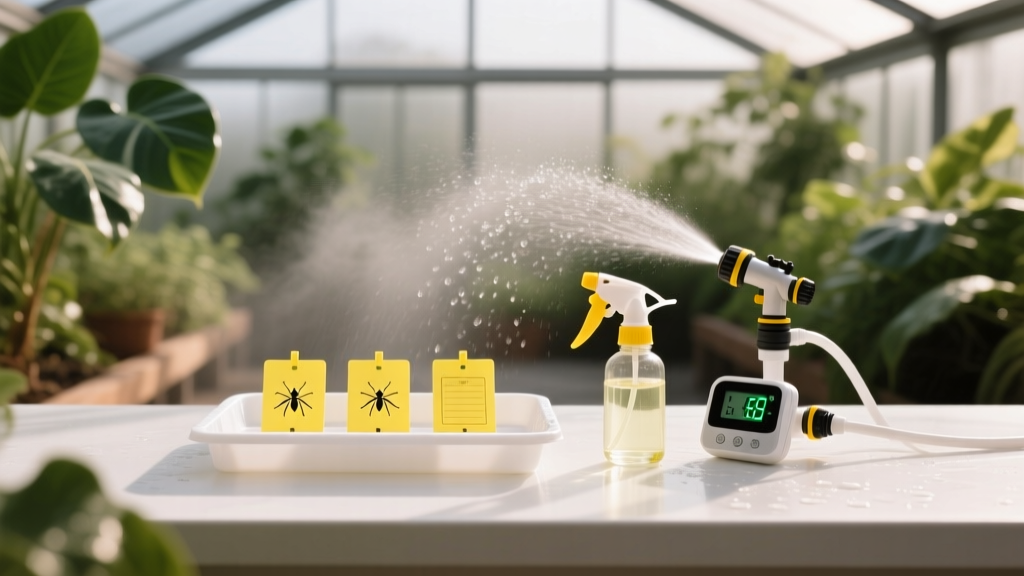
2026 Whitefly Control: Sticky Traps, Soap & Irrigation
Emily WatsonPublished
Understanding the Whitefly Threat in 2026
Whiteflies remain one of the most persistent and damaging pests in home gardens and commercial landscapes. As we navigate the 2026 growing season, integrated pest management (IPM) strategies have evolved, placing a heavy emphasis on how our cultural practices—specifically our sprinkler and irrigation systems—interact with pest control methods. Whiteflies (such as the silverleaf whitefly and the greenhouse whitefly) feed on plant sap, weakening the host and excreting a sugary substance known as honeydew. This honeydew quickly becomes a breeding ground for black sooty mold, which blocks photosynthesis and severely stunts plant growth.
While many gardeners view pest control and irrigation as two separate chores, the reality is that your water delivery system dictates the success or failure of your whitefly eradication efforts. Applying insecticidal soap without considering your sprinkler schedule, or placing monitoring traps in the path of high-pressure rotors, will result in wasted time and money. This comprehensive guide explores how to synchronize your yellow sticky trap monitoring and insecticidal soap applications with your 2026 smart irrigation controllers for maximum efficacy.
The Role of Irrigation in Whitefly Management
Your irrigation system does more than just hydrate plant roots; it fundamentally alters the microclimate of your garden canopy. Whiteflies thrive in warm, stagnant, and slightly humid environments. The type of irrigation you utilize plays a massive role in either suppressing or encouraging whitefly populations.
Overhead sprinkler systems, particularly those utilizing traditional spray nozzles, can physically knock adult whiteflies off the foliage and wash away accumulated honeydew before sooty mold takes hold. However, overhead watering also leaves the canopy wet for extended periods, which can promote fungal diseases if not timed correctly. On the other hand, drip irrigation and subsurface drip systems keep the foliage completely dry. While this is excellent for disease prevention and preserving pesticide applications, it means the gardener must manually wash the foliage to remove honeydew, as the irrigation system will not do it for them.
Strategic Placement of Yellow Sticky Traps
Yellow sticky traps are the gold standard for monitoring whitefly populations. Adult whiteflies are highly attracted to the yellow wavelength, making these traps an essential early-warning system. According to the University of California Statewide IPM Program, monitoring with sticky cards allows you to detect whitefly migrations before they establish massive colonies on the undersides of your leaves.
However, integrating these traps into an irrigated landscape requires strategic placement. If you stake a yellow sticky card directly in the path of a sprinkler head, the water droplets will quickly coat the adhesive surface, rendering the trap completely useless. Furthermore, the physical force of a rotor sprinkler can blast the trap off its stake.
Best Practices for Trap Placement Near Sprinklers:
- The Canopy Shadow Method: Place the sticky trap just inside the outer edge of the plant canopy. The leaves will act as an umbrella, protecting the trap from direct overhead sprinkler spray while still allowing it to intercept whiteflies flying near the host plant.
- Drip Zone Perimeters: If you use drip irrigation, place the traps along the perimeter of the irrigated zone where whiteflies are likely to enter the garden bed from surrounding dry areas.
- Elevation Adjustments: Keep the trap level with the top third of the plant canopy. Whiteflies tend to fly upward when disturbed, so placing the trap too low near the soil line (where splash-back from sprinklers occurs) will result in both a muddy trap and poor capture rates.
Insecticidal Soap: The Ultimate Wash-Off Dilemma
Insecticidal soap is a cornerstone of organic whitefly control. Formulated from potassium salts of fatty acids, these soaps work on contact by penetrating the soft cuticle of the whitefly nymph and adult, causing cellular leakage and rapid suffocation. Because it leaves no toxic residue, it is safe for beneficial insects like ladybugs and parasitic wasps once it dries. The Colorado State University Extension notes that insecticidal soaps are highly effective against soft-bodied insects but require direct contact and thorough coverage, particularly on the undersides of leaves where whiteflies congregate.
The primary vulnerability of insecticidal soap is its susceptibility to being washed off. If your smart irrigation controller is scheduled to run your overhead sprinklers at 6:00 AM, and you apply insecticidal soap at 5:00 PM the previous evening, the soap will have time to dry and do its job. However, if you apply the soap in the morning and the sprinklers run at noon, you will wash the active ingredients down the drain before they can penetrate the pest's cuticle.
The Hidden Danger: Irrigation Water Hardness
There is a secondary, often overlooked interaction between your irrigation system and insecticidal soap: water quality. If you are using a private well or a hard municipal water source to fill your hose-end sprayer or tank sprayer, the high levels of calcium and magnesium in hard water will react with the fatty acids in the soap. This causes the soap to precipitate out of the solution, forming a scum that clogs sprayer nozzles and drastically reduces the pesticide's efficacy against whiteflies. Always test your water hardness if you are mixing your own soap concentrates in 2026, and consider using distilled or filtered water for your spray mix if your irrigation source is exceptionally hard.
Irrigation Methods and Pest Control Compatibility
Choosing the right irrigation method or adjusting your current system's schedule is vital for a cohesive IPM strategy. Below is a comparison of common 2026 irrigation setups and how they impact whitefly management.
| Irrigation Method | Impact on Whiteflies & Honeydew | Impact on Insecticidal Soap | Recommended Strategy |
|---|---|---|---|
| Overhead Spray Nozzles | High. Physically washes off honeydew and knocks down adult populations. | High risk of wash-off if timed poorly. Promotes fungal issues if canopy stays wet. | Run sprinklers at 4:00 AM. Apply soap at 6:00 PM after foliage is completely dry. |
| MP Rotators (Low Precipitation) | Moderate. Slower application allows water to penetrate honeydew without blasting leaves. | Moderate risk. Longer run times mean extended periods of canopy moisture. | Use for deep watering days only. Avoid running on days you plan to apply soap. |
| Surface Drip Emitters | Low. Foliage remains dry; honeydew and sooty mold will accumulate without manual washing. | Excellent. Soap remains on the leaf surface until naturally degraded by UV light. | Ideal for soap applications. Manually hose off honeydew 24 hours before spraying soap. |
| Subsurface Drip (SDI) | None. Zero surface water interaction. | Excellent. Complete environmental control over the canopy. | Best for high-value crops. Requires manual canopy washing to manage sooty mold. |
The 2026 Smart Irrigation and Pest Control Schedule
Modern smart irrigation controllers, such as the latest 2026 models from Rachio and Hunter, utilize hyper-local weather data and soil moisture sensors to dictate watering schedules. To successfully integrate whitefly control, you must utilize the 'Seasonal Shift' or 'Manual Override' features in your app to coordinate pest treatments.
- Day 1 (The Wash): Schedule a brief, 5-minute overhead sprinkler cycle at 10:00 AM. The goal is not deep watering, but rather to use the spray nozzles to physically wash the sticky honeydew and existing sooty mold off the leaves. Allow the canopy to dry completely in the afternoon sun.
- Day 1 (The Trap Check):Inspect your yellow sticky traps. If you count more than 5-10 whiteflies per card, it is time to treat.
- Day 2 (The Application):Disable your smart controller's automatic evening or early morning watering for the specific zones you are treating. In the late afternoon (around 5:30 PM), when UV rays are low and temperatures are below 85°F, apply your insecticidal soap. Ensure you spray upward to coat the undersides of the leaves.
- Day 3 (The Resumption):Allow the soap to remain undisturbed for a full 12 to 18 hours. Resume your smart controller's normal early morning irrigation schedule at 4:30 AM on Day 3. The water will safely wash away the dead insects and the harmless soap residue without compromising the treatment.
Conclusion
Effective whitefly control in 2026 is not just about the products you buy; it is about the timing and synergy of your garden's systems. By strategically placing yellow sticky traps outside of sprinkler splash zones, understanding the chemical interactions between your irrigation water and insecticidal soaps, and programming your smart controller to accommodate treatment windows, you can eradicate whiteflies without sacrificing your landscape's hydration. Treat your irrigation system and your pest control regimen as a single, unified defense mechanism, and your garden will remain vibrant, healthy, and free of sooty mold all season long.