Pest Control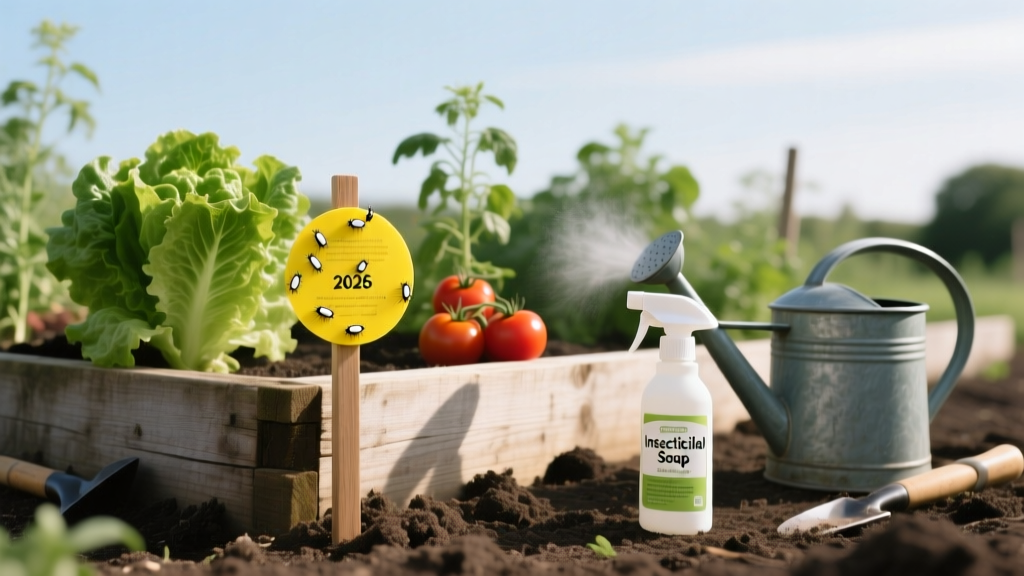
Whitefly Control 2026: Sticky Traps & Soap Spray for Raised Beds
Sarah ChenPublished
The 2026 Whitefly Challenge in Raised Bed Gardens
As we navigate the 2026 growing season, home gardeners are facing unique challenges due to shifting climate patterns and extended early-summer heatwaves. For raised bed vegetable gardeners, these warmer microclimates are a double-edged sword. While the elevated soil temperatures promote rapid root growth and earlier harvests for crops like tomatoes, peppers, and eggplants, they also create the perfect incubator for one of the most notorious garden pests: the whitefly. Whiteflies (Aleyrodidae) are tiny, sap-sucking insects that can rapidly decimate a thriving raised bed garden, transmitting devastating plant viruses and coating your leaves in sticky honeydew.
To combat this pest effectively without resorting to harsh synthetic chemicals that harm soil biology, Integrated Pest Management (IPM) is the gold standard. In 2026, the most reliable, organic-friendly IPM strategy for raised beds combines early detection using yellow sticky traps with targeted eradication using insecticidal soap sprays. This comprehensive guide will walk you through the exact protocols for monitoring, treating, and preventing whitefly outbreaks in your raised bed vegetable garden this year.
Understanding Whitefly Biology and Raised Bed Microclimates
Raised beds warm up significantly faster in the spring than traditional in-ground rows. This thermal advantage accelerates the life cycle of whiteflies. A single female can lay up to 400 eggs on the undersides of leaves, which hatch into tiny, scale-like nymphs that immediately begin feeding on plant phloem. According to the University of California Integrated Pest Management (UC IPM) program, whiteflies not only weaken plants by extracting vital nutrients, but their honeydew excretions promote the growth of black sooty mold, which blocks photosynthesis and severely reduces vegetable yields.
In intensive raised bed systems—where plants are often grown closer together to maximize square footage—airflow can be restricted. This stagnant, humid air beneath the canopy of indeterminate tomatoes or sprawling squash plants provides an ideal refuge for whiteflies to breed unchecked. Recognizing the signs early is critical, as a minor infestation in May can explode into a full-blown plague by late June.
Phase 1: Monitoring with Yellow Sticky Traps
You cannot manage what you do not measure. Yellow sticky traps are an indispensable tool for the raised bed gardener. Whiteflies are highly attracted to the specific wavelength of light reflected by bright yellow surfaces (roughly 500-600 nanometers). By deploying these traps, you accomplish two goals: you reduce the adult breeding population slightly, and more importantly, you establish an early warning system.
Strategic Placement in Raised Beds
For a standard 4x8 foot raised bed (32 square feet), placement is key. Do not simply stick the trap in the soil and forget it. As your vegetables grow, the trap must move with the canopy.
- Seedling Stage: Place one trap every 4 feet, mounted on a small wire stake just 2 inches above the soil line.
- Vegetative Growth Stage: Move the traps to the top third of the plant canopy. Whiteflies prefer the tender, new growth at the top of peppers and tomatoes.
- Density: Use one 3x5 inch sticky card per 100 square feet of garden space. For a 4x8 bed, one well-placed trap is sufficient, but two traps placed at opposite diagonals will give you a more accurate population reading.
Establishing Action Thresholds
Checking your traps weekly is mandatory. The University of Wisconsin-Madison Extension emphasizes that finding a single whitefly does not warrant an immediate, garden-wide chemical assault. Instead, use the following threshold guide to determine when to deploy insecticidal soap.
| Trap Count (Weekly) | Infestation Level | Recommended Action for Raised Beds |
|---|---|---|
| 1 - 5 Adults | Low / Incidental | Monitor only. Ensure proper plant spacing and prune lower leaves to improve airflow. |
| 6 - 15 Adults | Moderate / Emerging | Deploy insecticidal soap spray. Target the undersides of leaves in the affected zone. |
| 16 - 30 Adults | High / Active Outbreak | Aggressive soap spray protocol (every 5-7 days). Prune heavily infested foliage. Remove trap and replace. |
| 30+ Adults | Severe / Critical | Consider removing and bagging heavily infested plants to save the rest of the bed. Introduce beneficial predators. |
Phase 2: Eradication with Insecticidal Soap Spray
Once your sticky traps indicate a moderate to high population, it is time to intervene with insecticidal soap. Unlike synthetic neurotoxins, insecticidal soaps (composed of potassium salts of fatty acids) work on contact by penetrating the soft outer cuticle of the whitefly nymph and adult, causing rapid cellular collapse and desiccation. Penn State Extension notes that insecticidal soaps are highly effective against soft-bodied insects while leaving minimal residual toxicity, making them safe for use on edible crops right up to the day of harvest.
Choosing the Right Soap in 2026
The market for organic pest control has expanded significantly. In 2026, you have several excellent commercial options, as well as the ability to mix your own. However, experts strongly advise against using standard household dish soaps (like Dawn or Palmolive), as these are detergents designed to strip oils and can cause severe phytotoxicity (leaf burn) on sensitive vegetables like cucumbers and squash.
- Safer Brand Insect Killing Soap (Ready-to-Use): A staple for raised bed gardeners. In 2026, a 32 oz spray bottle averages $8.50. It features a 360-degree nozzle, which is crucial for hitting the undersides of leaves.
- Bonide Insecticidal Soap Concentrate: More economical for large raised bed setups. A 16 oz concentrate costs around $14.00 and mixes at a rate of 2.5 tablespoons per gallon of water.
- Natria Insecticidal Soap Organic Miticide: OMRI-listed and widely available at major home improvement centers, perfect for gardeners strictly adhering to organic certification standards.
Step-by-Step Application Protocol
To maximize the efficacy of your insecticidal soap while protecting your vegetable crops, follow this strict application protocol:
- Timing is Everything: Never apply insecticidal soap during the heat of the day or when temperatures exceed 85°F (29°C). The combination of soap and intense UV light will scorch your tomato and pepper leaves. Spray early in the morning or late in the evening.
- Hydrate the Plants: Whiteflies cause water stress. If your raised bed soil is dry, water the plants deeply a few hours before spraying. Turgid, well-hydrated plants are far less susceptible to soap burn.
- Target the Undersides: Whiteflies live and breed on the bottom of the leaves. A superficial top-spray will miss 90% of the population. Use a wand or an adjustable nozzle to spray upward, ensuring the foliage is dripping wet.
- Repeat Applications: Insecticidal soap has no residual effect once it dries. Because whitefly eggs hatch in staggered intervals, you must reapply the soap every 5 to 7 days for at least three cycles to break the reproductive loop.
Pro-Tip for Raised Beds: Before treating your entire 4x8 bed, perform a patch test. Spray a single leaf on your most sensitive crop (like zucchini or melon) and wait 24 hours. If no yellowing or browning occurs, it is safe to treat the entire bed.
Integrating with Beneficial Insects
A core tenet of IPM is preserving the good bugs alongside eliminating the bad. While insecticidal soap is relatively safe, it can still harm beneficial insects like ladybugs, lacewings, and parasitic wasps (Encarsia formosa) if sprayed directly on them. To mitigate this, rely on your yellow sticky traps to monitor the population. Once the whitefly numbers drop below your action threshold, cease soap applications immediately. This allows native predatory insects to move into your raised beds and clean up the remaining stragglers without fear of being desiccated by the soap.
Conclusion
Managing whiteflies in a raised bed vegetable garden requires vigilance, precision, and an understanding of pest biology. By leveraging the early-warning capabilities of yellow sticky traps and the targeted, organic knockdown power of insecticidal soaps, you can protect your 2026 harvest without compromising the health of your soil or the safety of your family. Remember that a few whiteflies are a normal part of the garden ecosystem; it is only when their populations explode that intervention is required. Stay observant, spray smart, and enjoy a bountiful, pest-free harvest this season.