Home & Garden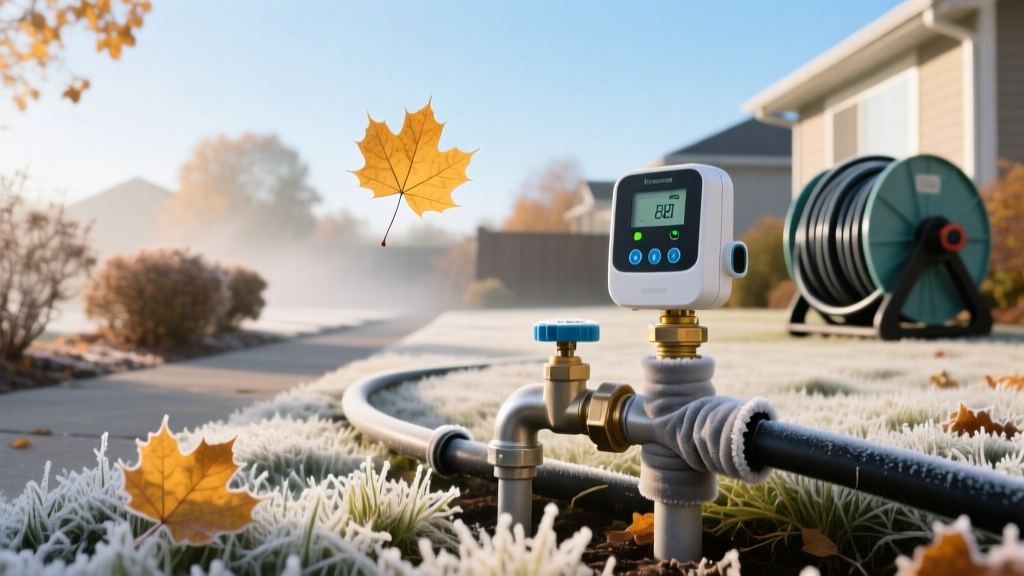
Winterize Smart Irrigation: Essential Fall Maintenance Guide
Robert HayesPublished
As the vibrant hues of autumn fade and the first hard frost threatens to settle over your landscape, homeowners must pivot from active gardening to crucial seasonal maintenance. Bridging the gap between indoor smart home management and outdoor landscape health requires a strategic approach to winterization. Among the most critical, yet frequently overlooked, end-of-season tasks is the proper winterization of smart irrigation systems and outdoor plumbing. Failing to prepare these systems for freezing temperatures can result in catastrophic pipe bursts, ruined smart controllers, and devastating consequences for your soil and root health come spring.
This comprehensive guide explores the intersection of seasonal maintenance, smart technology, and landscape health, providing you with actionable steps, cost estimates, and expert insights to protect your outdoor investments.
The Hidden Costs of Ignoring Irrigation Winterization
Water is a unique substance; unlike most liquids, it expands by approximately nine percent when it freezes. In the confined space of an irrigation line, this expansion generates immense pressure, easily exceeding the structural limits of PVC, polyethylene, and even copper piping. A single cracked lateral line or shattered backflow preventer can lead to thousands of dollars in repairs and severe landscape erosion.
According to the Irrigation Association, the average cost to repair a freeze-damaged backflow preventer ranges from $150 to $400, while replacing a compromised smart controller and ruined solenoid valves can push repair bills well past $800. Beyond the financial toll, a broken pipe leaking silently underground during the spring thaw can drown plant roots, promote fungal diseases, and destroy the soil structure you have worked all year to build.
Step-by-Step Guide to Winterizing Smart Irrigation Systems
Proper winterization is a systematic process that safeguards both the physical plumbing and the digital components of your smart landscape setup. Follow these steps before your region experiences its first hard freeze (typically when nighttime temperatures consistently drop below 32°F for more than four hours).
Step 1: Shut Off the Main Water Supply
Locate the main shut-off valve for your irrigation system. This is usually found indoors, in a basement, crawlspace, or utility room, upstream of the backflow preventer. Turn the valve to the off position to stop the flow of water to the exterior. If your system relies on a dedicated outdoor well pump, disconnect the power to the pump at the breaker panel to prevent it from running dry or activating accidentally during winter thaws.
Step 2: Evacuate Water from the Lines
Simply shutting off the water is not enough; standing water in the pipes will freeze and expand. You must evacuate the lines using one of three methods, depending on your system's design:
- Manual Drain Method: If your system has manual drain valves at the end of each zone and at low points, open them all. Leave them open throughout the winter. This method costs $0 but requires a system specifically designed with sloped piping.
- Automatic Drain Method: Systems equipped with automatic drain valves will empty when the pressure drops below 10 PSI. Simply run a single zone briefly to drop the pressure, and the valves will open. However, these valves can fail or become clogged with debris, making this method less reliable.
- Compressor Blow-Out Method: The most effective and widely recommended method. You will need an air compressor capable of delivering 10 to 25 Cubic Feet per Minute (CFM). Renting a commercial-grade tow-behind compressor from a local hardware store typically costs $50 to $90 per day. Crucial Safety Note: Never exceed 50 PSI for PVC piping or 80 PSI for polyethylene piping, as high-pressure air can cause pipes to shatter explosively.
Step 3: Winterize the Smart Controller
Modern smart controllers, such as the Rachio 3, Orbit B-hyve, or Hunter Hydrawise, rely on continuous Wi-Fi connectivity to receive firmware updates and maintain their internal clocks. Rather than unplugging the unit entirely, utilize the 'Winterize' or 'Rain Delay' feature within the companion app. This suspends all scheduled watering while keeping the device online. If your controller is located outdoors in a weatherproof enclosure, ensure the enclosure's seal is intact and place a silica gel desiccant packet inside to prevent condensation and internal corrosion.
Step 4: Protect Above-Ground Components
The backflow preventer and above-ground valves are highly susceptible to freeze damage. After draining the water from the test cocks (leaving them in a 45-degree open position to prevent water from pooling in the brass seats), wrap the entire assembly in insulation. Use specialized insulated pouches, such as the Irriguard Backflow Insulator (approximately $35), or wrap the device with R-11 fiberglass insulation and secure it with UV-resistant duct tape. Do not use plastic wrap directly against the brass, as it can trap moisture and accelerate oxidation.
Comparing Winterization Methods
Choosing the right evacuation method depends on your system's architecture and your budget. Below is a comparison chart to help you decide the best approach for your landscape.
| Method | Estimated Cost | Time Required | Reliability | Best For |
|---|---|---|---|---|
| Manual Draining | $0 | 30 - 45 Minutes | Moderate | Systems with sloped pipes and accessible drain valves |
| Automatic Draining | $0 | 15 Minutes | Low to Moderate | Newer systems with verified, debris-free auto-drain valves |
| Compressor Blow-Out | $50 - $150 | 1 - 2 Hours | Very High | Flat yards, complex zones, and regions with deep freezes |
| Professional Service | $75 - $250 | N/A (Done for you) | Highest | Homeowners lacking equipment or time; includes liability coverage |
Soil Health and Winter Desiccation: An Expert Perspective
Winterizing your irrigation system is not just about protecting hardware; it is intrinsically linked to the health of your soil and the root systems of your landscape plants. Overwatering late into the fall can lead to waterlogged soils, which freeze into solid blocks of ice, suffocating roots and promoting crown rot. Conversely, shutting off the system too early during a dry autumn can lead to winter desiccation, where plants lose moisture to dry winter winds faster than their frozen roots can replace it.
'Evergreens and newly planted trees are particularly vulnerable to winter desiccation. While it is vital to drain and shut down automated irrigation lines before the deep freeze, homeowners should manually deep-water the root zones of critical plants during extended dry winter spells when daytime temperatures rise above 40°F,' advises the Colorado State University Extension. This targeted, manual hydration ensures plant health without risking the structural integrity of your automated PVC lines.
To support this, apply a 2-to-3-inch layer of organic mulch around the base of trees and shrubs after the ground has cooled but before it freezes. This acts as a thermal blanket, regulating soil temperature and retaining the moisture you applied during your final manual deep-watering session.
Integrating Smart Sensors for the Transition Season
During the unpredictable weeks of late autumn, weather patterns can fluctuate wildly between Indian summers and early frosts. Utilizing smart soil moisture sensors, such as the Toro Precision Soil Sensor or the Rain Bird SMRT-Y, can bridge the gap between active irrigation and full winterization. These sensors communicate directly with your smart controller, overriding scheduled watering if the soil is already saturated from autumn rains. This prevents the dangerous accumulation of excess soil moisture right before the freezing period, safeguarding both your lawn's root health and your irrigation infrastructure.
Preparing for the Spring Thaw
The work you do in the fall dictates how smoothly your landscape will awaken in the spring. Keep a detailed log of your winterization process, noting any zones that were slow to clear during the blow-out or valves that showed signs of wear. When spring arrives and the threat of hard freezes has passed, you will need to slowly reopen the main water supply to prevent water hammer—a shockwave of pressure that can blow apart sprinkler heads. Reconnect your smart controller from its winterized state, update the firmware, and run a manual test of each zone to check for misaligned heads or minor leaks before the peak growing season begins.
Conclusion
Seasonal maintenance is the cornerstone of a thriving, energy-efficient, and technologically integrated outdoor living space. By taking the time to properly winterize your smart irrigation system, you are not only protecting your home from costly water damage but also preserving the delicate health of your soil and root systems. Embrace the fall as a time of strategic preparation, ensuring that when the spring thaw arrives, your landscape is ready to flourish at the simple tap of a screen.
