Home & Garden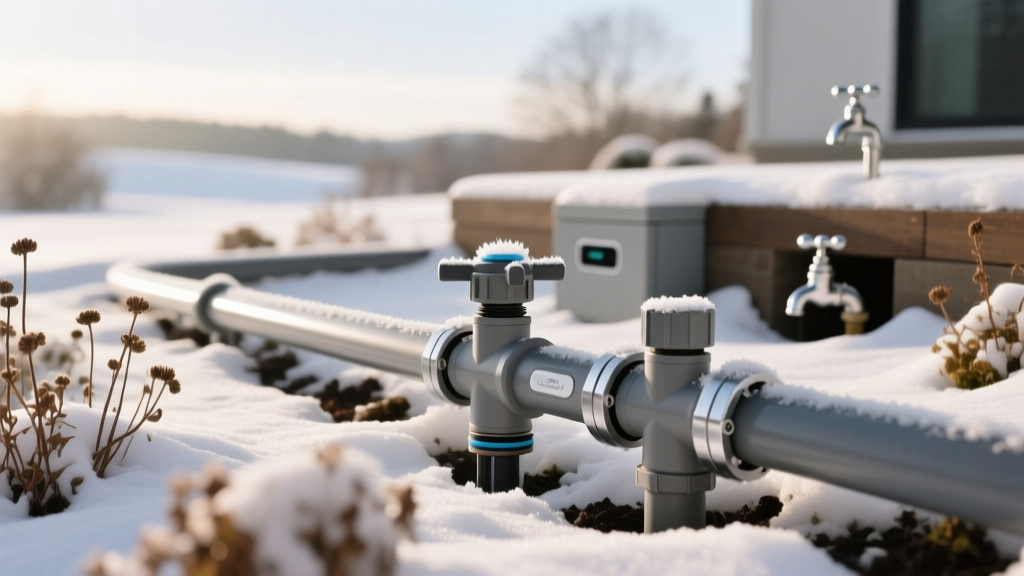
Winterize Smart Irrigation: Seasonal Pipe & Valve Care
James MillerPublished
The Critical Role of Seasonal Irrigation Health
As the vibrant hues of autumn give way to the crisp, biting chill of winter, homeowners must shift their focus from landscape cultivation to critical seasonal maintenance. Bridging the gap between indoor comfort and outdoor resilience requires a proactive approach to your home’s exterior plumbing and smart home integrations. Among the most vital, yet frequently overlooked, seasonal chores is the winterization of your smart irrigation system and outdoor faucets. Neglecting this essential maintenance can lead to catastrophic pipe bursts, ruined smart valves, and thousands of dollars in water damage and landscape restoration.
Water is a miraculous element, but its unique physical property—expanding by approximately 9% when it freezes—makes it a formidable enemy to your home's exterior plumbing. When water trapped inside PVC pipes, polyethylene tubing, or brass valves freezes and expands, the resulting hydrostatic pressure can easily exceed 100,000 PSI. No residential irrigation component is engineered to withstand such force. Therefore, understanding the seasonal health of your irrigation infrastructure is not merely a landscaping task; it is a fundamental aspect of comprehensive home maintenance and property protection.
Timing Your Winterization Correctly
The timing of your irrigation blow-out and faucet winterization is critical. Many homeowners make the mistake of waiting until the first hard freeze is forecasted on their local weather app. By then, it is often too late, and emergency service calls to irrigation professionals are backed up for weeks. According to the Environmental Protection Agency (EPA) WaterSense program, irrigation systems should be shut down and winterized before the first deep freeze, ideally when nighttime temperatures consistently dip below 32°F (0°C) and soil temperatures at a depth of four inches drop below 40°F.
In northern climates, this window typically falls between mid-October and early November. In transitional zones, late November to early December is standard. Monitoring your smart home weather hub or local university extension data will help you pinpoint the exact week to schedule your maintenance, ensuring your system's health is preserved before the ground turns into concrete.
Configuring Your Smart Irrigation Controller for Winter
Modern smart irrigation controllers, such as the Rachio 3, Rain Bird ESP-TM2, or Hunter Pro-C, are sophisticated pieces of technology that bridge outdoor landscaping with indoor Wi-Fi networks. A common misconception is that you should simply unplug the controller or turn off the breaker for the winter. Doing so can corrupt the internal memory, erase your customized zone maps, and force you to completely re-pair the device to your home network in the spring.
Instead, utilize the dedicated 'Winterize' or 'Standby' mode within your controller's companion app.
- Rachio: Navigate to the 'More' tab, select 'Standby Mode,' and confirm. This keeps the unit connected to Wi-Fi for firmware updates while disabling all scheduled watering.
- Rain Bird: Use the 'System Off' setting on the dial or via the app, which halts watering but maintains power to the transformer and internal clock.
- Hunter: Switch the dial to 'Off' or use the Hydrawise app to suspend all schedules indefinitely.
Furthermore, locate the main shut-off valve for your irrigation system—usually found in the basement, crawlspace, or an exterior valve box—and turn it to the closed position. If your system utilizes a backflow preventer above ground, you must also open the test cocks and shut-off valves to drain residual water, then insulate the brass assembly with a specialized foam cover or insulated tape.
Smart Home Integration for Freeze Alerts
To elevate your seasonal maintenance strategy, integrate smart water leak and freeze sensors near your interior irrigation shut-off valves and backflow preventers. Devices like the Moen Flo Smart Water Leak Detector or the Phyn Smart Water Sensor can be placed directly on the floor beneath your mainline valves. These sensors connect to your home’s Wi-Fi and will push instant alerts to your smartphone if ambient temperatures drop to dangerous levels or if micro-leaks occur during winter thaws. Pairing these sensors with a smart mainline shut-off valve allows you to cut the water supply remotely, safeguarding your home's foundation and interior finishes from catastrophic water damage.
The Blow-Out Method: Safely Evacuating Water
Draining the lines via gravity is rarely sufficient for modern, complex irrigation layouts. The industry standard for seasonal irrigation health is the compressed air blow-out method. This process forces high-volume, low-pressure air through the zones to evacuate standing water.
Safety and precision are paramount. Using too much pressure will melt PVC pipes or shatter sprinkler heads, while too little volume will fail to clear the water.
- PVC Pipes: Never exceed 50 PSI of air pressure.
- Polyethylene Pipes: Never exceed 80 PSI of air pressure.
- Compressor Requirements: You need a compressor capable of delivering 10 to 25 Cubic Feet per Minute (CFM). Standard DIY garage compressors (typically 2-5 CFM) are inadequate and can overheat, potentially introducing oil or moisture into your irrigation lines.
Because of the specialized equipment and safety risks involved, hiring a licensed irrigation professional is highly recommended. A professional winterization service typically costs between $60 and $150, depending on the number of zones and your geographic region. This is a minor investment compared to the $1,500 to $3,000 cost of replacing a shattered mainline or ruined smart valve manifold.
Protecting Outdoor Faucets and Sillcocks
Beyond the irrigation system, your outdoor faucets (hose bibbs and sillcocks) require dedicated seasonal maintenance. Even if you have 'frost-free' sillcocks, they are only effective if the interior shut-off valve is functioning correctly and no garden hose is left attached. A hose left connected traps water inside the brass barrel of the sillcock, guaranteeing a freeze and a subsequent burst pipe inside your home's wall cavity.
Disconnect all hoses, drain them, and store them indoors. For standard non-frost-free faucets, shut off the interior supply valve and open the exterior faucet to let it drain. Finally, install an insulated foam faucet cover. Products like the Frost King FC1 Outdoor Faucet Cover or the M-D Building Products Foam Sillcock Cover cost less than $10 each and provide an essential R-value barrier against sub-zero ambient air.
Seasonal Winterization Task and Cost Breakdown
Use the following table to budget and plan your seasonal exterior plumbing maintenance:
| Maintenance Task | Method / Product | Estimated Cost | Time Required |
|---|---|---|---|
| Smart Controller Winterization | App Standby Mode | $0 | 5 Minutes |
| Irrigation Line Blow-Out | Professional Compressor (10-25 CFM) | $60 - $150 | 45 - 90 Minutes |
| Backflow Preventer Insulation | Foam Pouch / Insulated Tape | $15 - $30 | 15 Minutes |
| Outdoor Faucet Protection | Frost King FC1 Foam Cover | $5 - $10 per cover | 5 Minutes |
| Smart Freeze Sensor Placement | Moen Flo / Phyn Sensor | $30 - $50 | 10 Minutes |
Expert Insights on Landscape Water Health
'Failure to properly winterize an irrigation system can result in severe damage to pipes, valves, and sprinkler heads. The cost of repairs in the spring far outweighs the time and expense of a proper autumn blow-out. Homeowners must ensure that all water is evacuated from the backflow assembly, mainline, and lateral zones to maintain the long-term health of the landscape infrastructure.'
— Colorado State University (CSU) Extension, Fact Sheet No. 6.525: Operating and Maintaining Home Irrigation Systems
Preparing for Spring Reactivation
While winterization is about preservation, keeping detailed notes during the fall will vastly improve your spring startup. Use your smart controller's app to log any zones that showed low pressure or poor coverage before winter. When the soil temperatures rise above 45°F in the spring, these notes will guide your seasonal maintenance, allowing you to replace clogged nozzles, adjust sunken rotor heads, and recalibrate your smart watering schedules for optimal garden-to-table health and energy-efficient landscaping. By treating your outdoor plumbing with the same care as your indoor systems, you ensure a seamless, leak-free transition between the seasons.
