Tree Care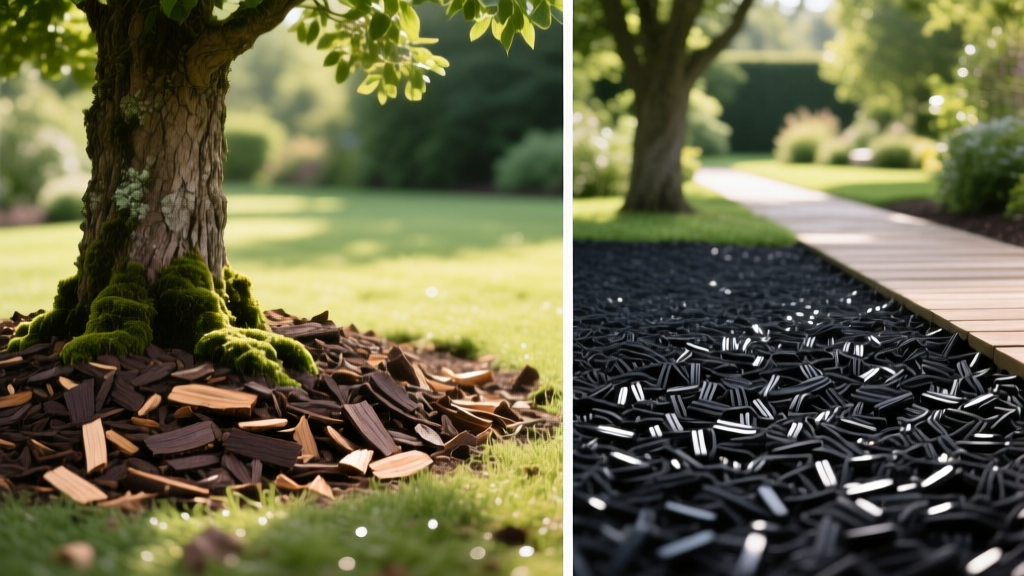
Wood Chips vs Rubber Mulch: Which is Best for Trees?
Lisa ThompsonPublished
Introduction to Tree Mulching Strategies
Mulching is one of the most fundamental and beneficial practices in residential and commercial tree care. A proper layer of mulch mimics the natural forest floor, providing a stable environment for tree roots to thrive. It regulates soil temperature, conserves vital moisture, suppresses competing weeds, and prevents mechanical damage from string trimmers and lawnmowers. However, not all mulching materials are created equal. When homeowners visit the garden center, they are often faced with a pivotal choice between traditional organic options and modern synthetic alternatives. The most common debate centers on Product A (Natural Hardwood Wood Chips) versus Product B (Recycled Rubber Mulch). While both materials serve the basic function of covering the soil, their long-term impacts on tree health, soil biology, and the surrounding environment are vastly different. In this comprehensive comparison, we will evaluate the biological, financial, and practical aspects of both products to determine which is truly best for your trees.
Product A: Natural Hardwood Wood Chips
Natural wood chips, particularly those sourced from local arborists or reputable landscape suppliers, are the gold standard for tree health. These chips are typically made from chipped branches, trunks, and leaves from native hardwood trees. Unlike heavily processed, dyed bagged mulches, raw arborist wood chips retain a diverse mix of bark, sapwood, heartwood, and foliage, providing a complex nutritional profile as they decompose.
Biological and Physical Benefits
The primary advantage of natural wood chips is their active participation in the soil food web. As organic matter, wood chips slowly break down through the action of fungi, bacteria, and soil invertebrates. This decomposition process releases essential macronutrients and micronutrients back into the soil, feeding the tree's fine feeder roots. According to guidelines published by the Arbor Day Foundation, organic mulches like wood chips are critical for improving soil structure, increasing the cation exchange capacity (CEC), and fostering beneficial mycorrhizal fungal networks. These fungal networks attach to tree roots, effectively extending the root system and dramatically increasing the tree's ability to absorb water and phosphorus.
Physically, wood chips are excellent insulators. A three-inch layer of wood chips can keep the root zone up to 10 degrees Fahrenheit cooler in the peak of summer and significantly warmer during freezing winter nights. Furthermore, their irregular shapes and sizes allow them to interlock, creating a porous mat that permits rainwater and oxygen to penetrate the soil while still blocking sunlight from reaching weed seeds.
Drawbacks and Maintenance Requirements
The main drawback of natural wood chips is their impermanence. Because they are biodegradable, they must be replenished every one to two years to maintain an effective depth. Additionally, if applied too thickly or piled against the trunk, wood chips can trap excess moisture against the bark, leading to collar rot, fungal cankers, and providing a hiding place for bark-gnawing rodents like voles.
Product B: Recycled Rubber Mulch
Recycled rubber mulch is a synthetic landscaping product manufactured from shredded, recycled tires. The rubber is typically treated to remove steel belts, cleaned, and often coated with a colored polyurethane sealant to mimic the look of natural wood or provide vibrant playground aesthetics. It is heavily marketed as a permanent, low-maintenance, and eco-friendly solution for landscaping and tree rings.
Aesthetic Longevity and Weed Suppression
Rubber mulch excels in permanence and weed suppression. Because it is inorganic and does not decompose, a single application can last for a decade or more without needing replacement. The colored coatings are UV-resistant, meaning the mulch will not fade to gray like natural wood. For high-traffic areas or playgrounds where fall-height safety is a concern, rubber mulch provides excellent shock absorption. It also creates a very dense, heavy barrier that makes it exceptionally difficult for opportunistic weeds to penetrate.
Environmental and Biological Drawbacks
Despite its convenience, rubber mulch is highly controversial in the arboriculture community. Research highlighted by University of Massachusetts Extension and other horticultural institutions indicates that rubber mulch does not contribute any organic matter or nutrients to the soil. More alarmingly, as the rubber slowly degrades under UV light and heat, it can leach heavy metals and volatile organic compounds (VOCs) into the soil. Tires contain high levels of zinc, which is used in the vulcanization process. In high concentrations, zinc is highly toxic to plant roots and can cause severe chlorosis, stunted growth, and eventual tree decline.
Furthermore, rubber mulch absorbs and radiates heat. On a hot summer day, black or dark brown rubber mulch can reach surface temperatures exceeding 130 degrees Fahrenheit. This intense heat can bake the upper layers of the soil, killing beneficial soil microbes and damaging the shallow feeder roots of sensitive tree species. Finally, unlike wood chips, which smolder and can be extinguished with water, rubber mulch is highly flammable, burns at much higher temperatures, and releases toxic black smoke, posing a significant fire hazard near residential structures.
Head-to-Head Comparison Chart
The following table summarizes the core differences between natural wood chips and recycled rubber mulch across several critical tree care metrics:
| Feature | Natural Wood Chips | Recycled Rubber Mulch |
|---|---|---|
| Soil Nutrition | Adds organic matter and nutrients | Zero nutritional value |
| Moisture Retention | Excellent; absorbs and holds water | Poor; water runs off or evaporates quickly |
| Temperature Regulation | Insulates soil effectively | Absorbs heat; can overheat root zones |
| Soil Biology | Promotes mycorrhizal fungi and microbes | Can leach zinc and harm soil biology |
| Longevity | 1 to 3 years before replenishing | 10+ years |
| Fire Hazard | Low; smolders and is easily extinguished | High; burns hot and releases toxic fumes |
| Average Cost | $3.00 - $6.00 per cubic foot | $8.00 - $12.00 per cubic foot |
Cost Analysis and Longevity
When evaluating the financial investment, rubber mulch is significantly more expensive upfront. A standard bag of rubber mulch can cost two to three times as much as a comparable bag of natural hardwood mulch. Proponents of rubber mulch argue that the higher initial cost is offset by its longevity, as it never needs to be replaced. However, this calculation ignores the hidden costs of tree health. If the use of rubber mulch leads to soil toxicity, root damage, or the premature death of a mature shade tree, the cost of tree removal and replacement will far exceed any savings on mulch. Natural wood chips, while requiring an annual or bi-annual top-dressing, represent an ongoing investment in the biological health of the soil, ultimately reducing the need for synthetic fertilizers and excessive irrigation.
Proper Application: The 3-3-3 Rule
Regardless of the material you choose, improper application can harm your trees. Arborists universally recommend the '3-3-3 Rule' for mulching trees to prevent trunk rot and girdling roots:
- 3 Inches Deep: Maintain a mulch layer that is 2 to 4 inches deep. Any deeper, and you risk suffocating the roots by blocking oxygen exchange; any shallower, and weeds will easily penetrate.
- 3 Feet Radius: The mulch ring should extend at least 3 feet out from the trunk in all directions. Ideally, the mulch ring should extend to the tree's drip line to protect the most active feeder roots and keep competing turfgrass away.
- 3 Inches Away from the Trunk: Never pile mulch against the tree trunk in a 'volcano' shape. Leave a 3-inch gap between the mulch and the bark to keep the root flare visible and dry, preventing fungal diseases and rodent damage.
Always remember that mulch should resemble a flat, wide donut around the tree, not a volcano. Piling mulch against the trunk is one of the most common and fatal mistakes in residential tree care.
Final Verdict: What Do Arborists Recommend?
When comparing natural wood chips and recycled rubber mulch for the specific purpose of tree care, natural wood chips are the undisputed winner. While rubber mulch offers undeniable benefits for playground safety surfaces and high-traffic commercial pathways where plant health is not a priority, it has no place in the root zone of a living tree. The risks of zinc toxicity, soil overheating, and the complete lack of biological contribution make rubber mulch a detriment to long-term tree vitality. By choosing natural hardwood wood chips and applying them correctly using the 3-3-3 rule, you provide your trees with a sustainable, biologically active environment that mirrors nature, ensuring robust growth and resilience against environmental stressors for decades to come.