Gardening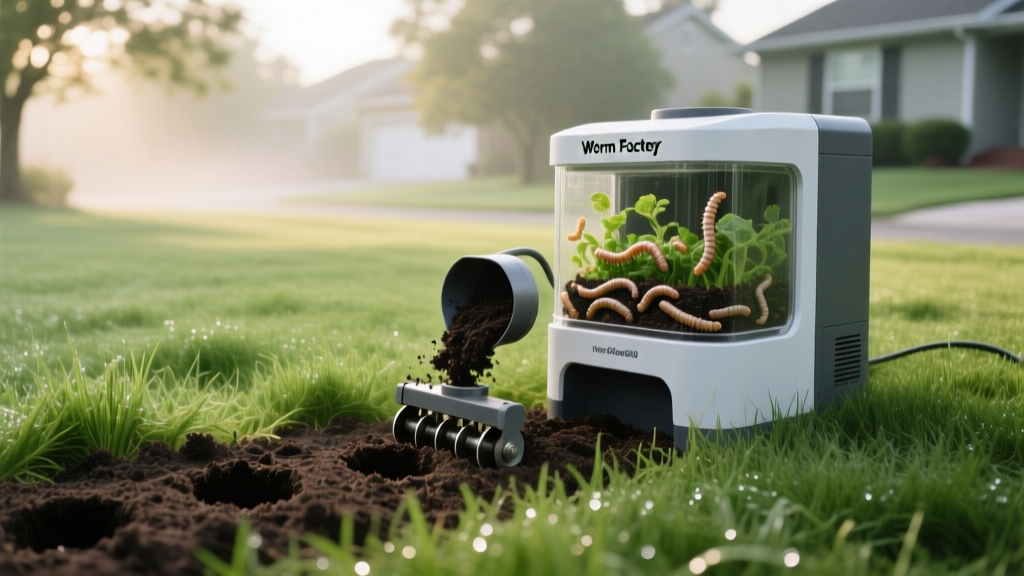
Core Aeration and Worm Factory 360 Castings: 2026 Guide
Emily WatsonPublished
The 2026 Paradigm Shift: Core Aeration Meets Vermicompost
For decades, the standard practice for relieving soil compaction in home lawns and garden beds has been mechanical core aeration. By physically extracting plugs of soil, we create pathways for oxygen, water, and nutrients to reach the root zone. However, as organic lawn care standards have evolved in 2026, simply pulling cores and leaving the holes empty—or worse, filling them with sterile sand—is now considered a missed biological opportunity. The cutting-edge approach to turf and garden management is pairing core aeration with premium vermicompost, specifically utilizing the output from the Worm Factory 360 populated by red wiggler worms (Eisenia fetida).
When you drop nutrient-dense, microbe-rich worm castings directly into fresh aeration holes, you are essentially performing a targeted biological inoculation of your soil's root zone. This guide will walk you through the science, the economics, and the step-by-step process of using the Worm Factory 360 to supercharge your core aeration results this season.
The Biology of Compaction and the Aeration Solution
Soil compaction is the silent killer of turfgrass and deep-rooted garden perennials. When soil particles are pressed together, pore space is eliminated. According to turfgrass researchers at Penn State Extension, core aeration is the most effective mechanical method to alleviate this compaction, improving water infiltration and gas exchange. A standard gas-powered core aerator removes plugs of soil that are typically 0.5 to 0.75 inches in diameter and 2 to 3 inches deep.
In the past, homeowners were told to let these plugs break down naturally or to sweep in masonry sand to improve drainage. But sand lacks biological life, and natural breakdown invites weed seeds to colonize the open holes. In 2026, the focus is on biological topdressing. By sweeping vermicompost into these freshly opened cores, you introduce humic acids, beneficial bacteria, and mycorrhizal fungi exactly where the plant roots are starving for them.
Why the Worm Factory 360 is the Ultimate Aeration Partner
Not all compost is created equal. Traditional outdoor hot compost piles are excellent for bulk organic matter breakdown, but they often lack the concentrated microbial density and plant-available nutrients found in vermicompost. The Worm Factory 360 remains the gold standard for home vermicomposting due to its multi-tray vertical migration system.
Understanding the Red Wiggler Engine
The red wiggler (Eisenia fetida) is a surface-dwelling composting worm that can consume up to half its body weight in organic matter every single day. Unlike earthworms that burrow deep into mineral soil, red wigglers thrive in the dense, decaying organic matter of the Worm Factory 360 trays. As they digest kitchen scraps, shredded cardboard, and coffee grounds, their digestive tract acts as a biological incubator, coating the resulting castings in beneficial microbes and enzymes.
The Worm Factory 360 system capitalizes on this behavior. As the bottom tray fills with finished castings and runs out of food, the worms naturally migrate upward through the grated bottoms into the next tray, following the fresh food supply. This makes harvesting the pure, worm-free castings from the bottom tray incredibly easy—perfect for preparing large volumes of topdressing for aeration day.
Step-by-Step: Aerating and Topdressing with Red Wiggler Castings
To successfully combine these two practices, you need to coordinate your lawn care schedule with your worm bin's harvesting cycle. Here is the definitive 2026 workflow.
Step 1: Timing Your Core Aeration
Timing is critical. For cool-season grasses (Kentucky Bluegrass, Fescue), core aeration should be performed in early fall or early spring. For warm-season grasses (Bermuda, Zoysia), late spring to early summer is ideal. You will need approximately 1 to 2 pounds of dry vermicompost per 100 square feet of lawn to adequately fill aeration cores. Plan your worm feeding schedule 60 days in advance to ensure your bottom Worm Factory 360 tray is fully processed and cured by aeration day.
Step 2: Harvesting and Preparing the Castings
Vermicompost straight from the Worm Factory 360 is often quite moist (around 70-80% moisture content). If you apply it wet, it will clump and sit on top of the aeration holes rather than falling into them.
- Harvest: Remove the bottom tray of your Worm Factory 360. Use a bright light to encourage any lingering red wigglers to burrow down, then scrape the top layer of pure castings.
- Dry: Spread the castings on a tarp in a shaded, well-ventilated area for 24 to 48 hours. You want the castings to reach a "crumbly" consistency, similar to damp coffee grounds, so they can easily be swept into the aeration cores.
- Sift (Optional): If your castings contain large pieces of unprocessed cardboard or coconut coir bedding, run them through a 1/4-inch mesh screen.
Step 3: Executing the Aeration and Topdressing
- Mow Low: Mow your lawn slightly shorter than usual to expose the soil surface.
- Mark Obstacles: Flag all sprinkler heads and shallow utility lines.
- Aerate: Rent a commercial-grade walk-behind core aerator (typically $80-$100 per day in 2026). Make two passes over the lawn in perpendicular directions to maximize the number of holes.
- Apply Castings: Broadcast your dried Worm Factory 360 castings evenly across the lawn using a drop spreader or by hand.
- Sweep and Drag: Use a stiff push broom or a piece of chain-link fence dragged behind a mower to work the castings deeply into the aeration holes.
Step 4: Watering In with Worm Tea
The Worm Factory 360 features a built-in spigot at the base to collect excess liquid, often called "worm tea" or leachate. While raw leachate can sometimes harbor anaerobic bacteria if the bin is too wet, properly managed leachate diluted at a 10:1 ratio with rainwater makes an excellent liquid soil drench. After sweeping your castings into the cores, water the lawn deeply using this diluted solution to activate the microbes and wash the remaining fine casting particles down into the root zone.
Vermicompost vs. Standard Topdressing Materials
Why go through the trouble of maintaining a Worm Factory 360 when you can just buy bags of topsoil? The answer lies in the biological and chemical superiority of red wiggler castings. The United States Environmental Protection Agency (EPA) notes that vermicompost significantly enhances soil structure, water retention, and provides a slow-release nutrient profile that synthetic fertilizers cannot match.
| Topdressing Material | Microbial Density | Water Retention | Nutrient Profile | Est. Cost per Sq Ft |
|---|---|---|---|---|
| Standard Bagged Topsoil | Low | Moderate | Low (Mostly inert) | $0.05 |
| Peat Moss | Very Low | High | Acidic, Low Nutrients | $0.12 |
| Mason Sand | None | Low (Drains fast) | None | $0.08 |
| Worm Factory 360 Castings | Extremely High | Very High (Humus) | Rich in N-P-K & Microbes | $0.15 (Amortized) |
Note: While the upfront cost of the Worm Factory 360 (approximately $169.99 in 2026) and the initial pound of red wigglers ($45) represents an investment, the ongoing cost of producing castings is virtually zero, as it utilizes household food waste that would otherwise go to the landfill.
Scaling Up: Managing Your Red Wiggler Population for Lawn-Scale Yields
A common critique of vermicomposting for lawn care is volume. A single Worm Factory 360 unit housing 2,000 red wigglers will produce roughly 5 to 8 pounds of finished castings per month under optimal conditions. If you have a 5,000-square-foot lawn, you may need 50 to 100 pounds of castings for a heavy aeration topdressing.
To achieve this in 2026, serious organic lawn enthusiasts are adopting a modular bin strategy. By stacking or running two to three Worm Factory 360 units in parallel—perhaps one in the garage, one in the basement, and one on a shaded patio—you can easily generate the 100+ pounds of castings required for an annual fall aeration event. Furthermore, research from the Cornell Waste Management Institute highlights that blending vermicompost with standard bulk compost at a 20% vermicompost to 80% bulk compost ratio still yields massive biological benefits, allowing you to stretch your Worm Factory 360 harvest much further across large turf areas.
Conclusion
Core aeration is no longer just about making physical space in the soil; it is about creating a welcoming environment for soil biology. By integrating the Worm Factory 360 and the tireless work of red wiggler worms into your lawn care regimen, you transform a routine mechanical chore into a powerful biological intervention. The castings dropped into those aeration holes will break down thatch, suppress soil-borne pathogens, and retain moisture during the heat of summer. Embrace the 2026 standard of organic turf management, and let your red wigglers do the heavy lifting beneath the surface.
