Pest Control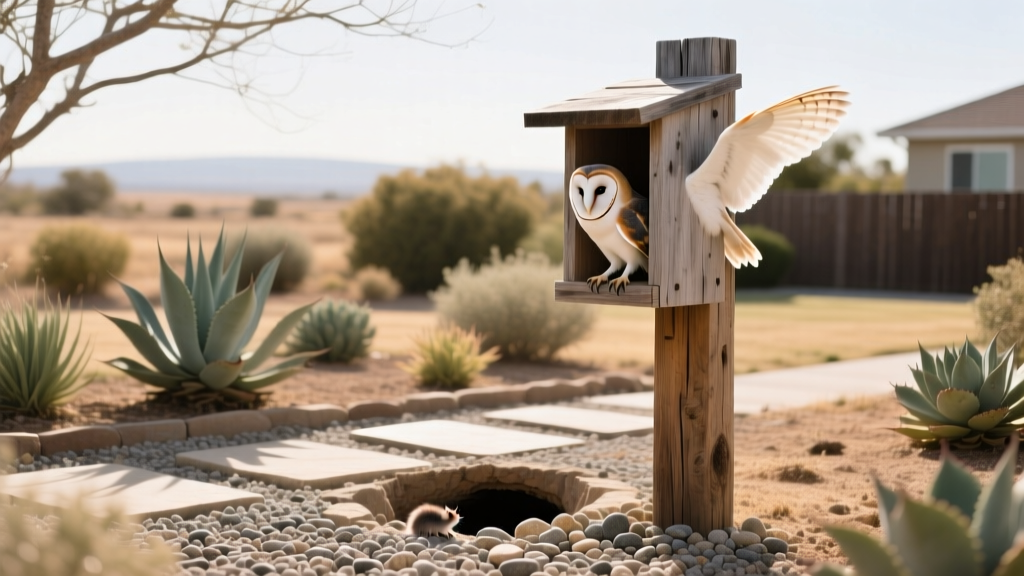
Barn Owl Box Placement for Xeriscape Rodent Control 2026
Mike RodriguezPublished
The Xeriscape Rodent Paradox
Xeriscaping and low-water landscaping have become the gold standard for sustainable gardening in 2026, particularly in arid and drought-prone regions. By replacing thirsty turfgrass with native bunchgrasses, succulents, and decorative gravel, homeowners drastically reduce water consumption while creating stunning, ecologically appropriate landscapes. However, this transition often introduces an unintended consequence: a surge in rodent populations. Gophers, voles, kangaroo rats, and ground squirrels are naturally drawn to the shelter provided by rock mulch, dry washes, and the dense basal foliage of drought-tolerant plants. Furthermore, the shallow root systems of expensive agaves, aloes, and native shrubs become prime targets for foraging rodents.
While traditional pest control might rely on chemical baits, the modern xeriscape gardener knows that toxic rodenticides pose a severe threat to the fragile desert ecosystem. Secondary poisoning can devastate local predators, and chemical runoff can contaminate the very soil biology that sustains a low-water garden. This is where integrated pest management (IPM) meets avian biocontrol. By strategically placing barn owl (Tyto alba) nesting boxes, you can invite nature's most efficient rodent-hunting predators directly into your xeriscaped yard.
Why Barn Owls Are the Ultimate IPM Solution for 2026
As environmental regulations tighten and ecological awareness grows in 2026, the shift away from lethal chemical controls is more pronounced than ever. The Xerces Society for Invertebrate Conservation and other ecological watchdogs continually emphasize the cascading damage that broad-spectrum pesticides and rodenticides inflict on local food webs. Barn owls offer a 100% organic, self-sustaining alternative.
A single breeding pair of barn owls, along with their brood of owlets, can consume upwards of 3,000 rodents in a single nesting season. Unlike diurnal raptors, barn owls hunt primarily at night and rely on their exceptional, asymmetrical hearing to pinpoint the exact location of a vole rustling beneath gravel mulch or a gopher moving through shallow tunnels. Their silent flight and low-altitude hunting style make them perfectly adapted to the open, structured sightlines typical of a well-designed xeriscape.
Selecting an Arid-Climate Owl Nesting Box
Not all owl boxes are created equal, and standard wooden boxes designed for temperate, forested regions will fail in a hot, low-water landscape. When selecting a box for a xeriscaped environment in 2026, you must prioritize thermal regulation and predator deterrence.
- Material and Coating: Opt for boxes constructed from marine-grade plywood or recycled composite lumber. The exterior must be painted with a high-quality, solar-reflective white elastomeric paint to deflect intense UV radiation and keep the interior temperature stable.
- Ventilation: Arid climates demand superior airflow. Look for 2026 models that feature concealed, baffled ventilation slots near the roofline. These allow hot air to escape without letting in blowing sand, monsoon rain, or direct sunlight.
- Entrance Dimensions: The entry hole should be an ellipse measuring roughly 3 inches by 4.5 inches. This specific dimension excludes larger, aggressive competitors like great horned owls while perfectly accommodating the barn owl.
- Interior Dimensions: A depth of at least 15 to 24 inches from the bottom of the entrance hole to the floor is critical to prevent premature fledging and protect owlets from extreme heat.
Strategic Placement in Low-Water Landscapes
Where you place the box is just as important as the box itself. A poorly placed box will remain empty, while a strategically positioned one will quickly become a thriving biocontrol hub.
Orientation and Sun Exposure
In low-water landscapes, afternoon sun is brutal. The entrance of the owl box must never face south or west. Always orient the box so the entrance faces North or Northeast. This ensures that the interior remains shaded during the hottest parts of the day, preventing lethal heatstroke for developing owlets. If your xeriscape lacks tall trees to mount a box, you will need to use a freestanding metal pole equipped with a specialized shade awning over the entrance.
Flight Paths and Hunting Corridors
Barn owls require clear, unobstructed flight paths to enter and exit the box, as well as open ground to hunt. Xeriscapes often utilize large boulders, tall ornamental grasses like deergrass (Muhlenbergia rigens), and towering agaves. Ensure the box is mounted at least 15 feet away from any dense, tall plantings that could impede the owl's approach. Position the box to overlook "hunting corridors"—these are the open gravel pathways, dry creek beds, and low-growing groundcover zones (like creeping thyme or dymondia) where rodents are forced to expose themselves while foraging.
Height and Predator Protection
Mount the box between 10 and 15 feet above the ground. In xeriscaped regions, terrestrial predators such as coyotes, bobcats, and large rat snakes are common. If using a freestanding pole, it must be made of smooth, galvanized steel. Wooden posts are easily scaled by climbing predators and are susceptible to rot at the base when exposed to infrequent but heavy desert monsoon flooding.
Xeriscape Owl Box Placement Matrix
Use the following matrix to ensure your installation meets the specific requirements of an arid, low-water environment.
| Placement Factor | Ideal Xeriscape Specification | Why It Matters |
|---|---|---|
| Orientation | North or Northeast facing | Prevents solar heating of the nest cavity during peak summer months. |
| Height | 10 to 15 feet above grade | Protects from ground predators while maintaining hunting visibility. |
| Clearance | Minimum 15 feet from tall boulders/grasses | Ensures unobstructed flight paths and prevents ambush by snakes. |
| Mounting Structure | Smooth galvanized steel pole | Prevents climbing predators; resists rot from drip-irrigation overspray. |
| Proximity to Forage | Overlooking gravel paths or dry washes | Directs owls to high-traffic rodent zones within the landscape. |
Installation Without Damaging Delicate Xeric Roots
One of the greatest challenges of installing an owl box in a mature xeriscape is the risk of damaging the root systems of established drought-tolerant plants. Many native desert shrubs, succulents, and adapted trees possess wide, shallow root networks that are highly sensitive to soil compaction and severing. Digging a traditional 3-foot-deep post hole can fatally damage a nearby palo verde tree or a prized century plant.
To mitigate this in 2026, landscape professionals recommend using helical pier foundations or surface-mounted concrete counterweights for the steel mounting poles. A helical pier is mechanically screwed into the soil using handheld hydraulic equipment, displacing the earth rather than excavating it, which minimizes root trauma. Alternatively, a heavy, pre-cast concrete base can be anchored with shallow landscape spikes and camouflaged using the same decorative river rock or decomposed granite used throughout your xeriscape design.
Monitoring and Maintenance in Dry Climates
Once your box is installed, monitoring is key to ensuring long-term biocontrol success. According to the UC Agriculture and Natural Resources Integrated Pest Management program, regular observation helps track pest populations and ensures the nest box remains a safe environment. However, running electrical wires through a xeriscape for lighting or cameras is impractical and disruptive to the hardscaping.
Instead, utilize the latest 2026 solar-powered Wi-Fi nest box cameras. These compact units mount inside the roof of the box and transmit footage directly to your smartphone. Because they draw power from a small, integrated solar panel mounted on the box's roof, they require zero trenching or wiring through your water-wise garden.
Annual Cleaning: Barn owls do not clean their nests. Over time, a thick mat of regurgitated pellets, feces, and debris will accumulate on the floor of the box. In dry climates, this debris can harbor mites and parasitic flies. Every late autumn, after the owlets have fledged and the box is vacant, open the clean-out door and scrape the debris into a compost bin. Dust the interior floor lightly with food-grade diatomaceous earth (DE) to naturally desiccate any remaining parasites before the next breeding season begins.
Conclusion
Integrating a barn owl nesting box into your xeriscape is a masterclass in ecological pest management. By providing a safe, thermally regulated haven for these nocturnal hunters, you establish a natural, chemical-free defense against the rodents that threaten your low-water plantings. As water conservation and ecological stewardship continue to drive landscaping trends in 2026, the barn owl box stands out as a functional, beautiful, and highly effective addition to the modern, sustainable garden. For more information on creating wildlife-friendly habitats, consult resources from the National Audubon Society to ensure your landscape supports a thriving, balanced local ecosystem.