
Landscaping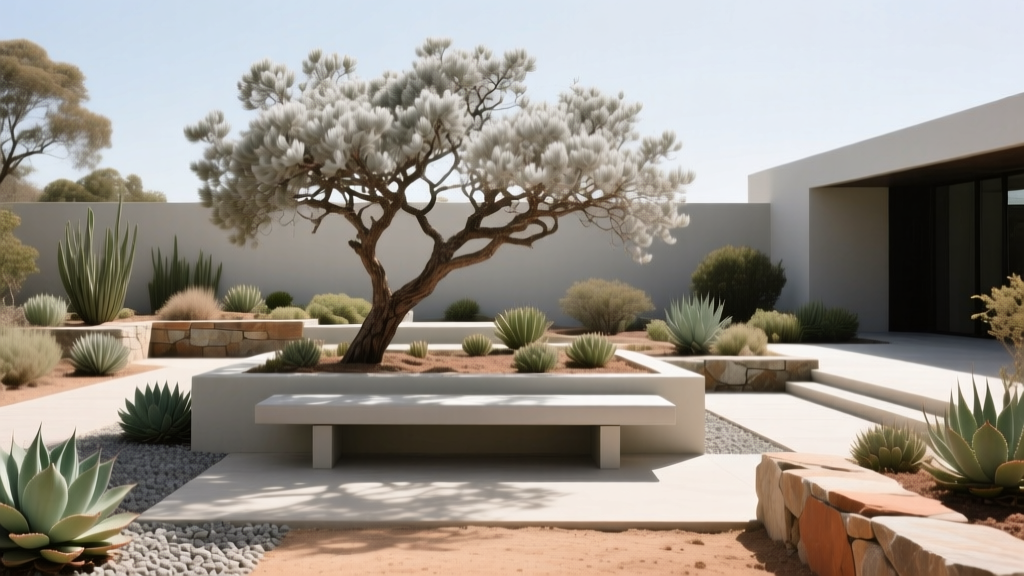
Xeriscape Garden Bench Placement: Shade & Focal Points in 2026
Emily WatsonPublished
As water conservation becomes the defining landscaping mandate of 2026, homeowners across arid and semi-arid regions are fundamentally rethinking their outdoor spaces. Xeriscaping has evolved far beyond the sterile "rocks and cacti" stereotype of the early 2000s. Today, it is about creating lush, highly functional outdoor living areas that thrive on minimal irrigation. At the heart of this transformation is the strategic placement of a garden bench. When positioned correctly, a bench serves as both a striking focal point and a vital shade destination, anchoring your low-water landscape while providing a comfortable, inviting retreat.
The Art of the Focal Point in Xeriscaping
In landscape design, a focal point draws the eye and gives the garden a sense of purpose and direction. In a traditional landscape, a sweeping green lawn often serves as the visual anchor. In a xeriscape, where thirsty turf is replaced with sweeping curves of decomposed granite (DG), permeable pavers, and structured succulent beds, a garden bench acts as the visual terminus. Placing a bench at the intersection of two dry riverbeds, or at the end of a meandering pathway lined with Mexican Feather Grass (Nassella tenuissima), creates a powerful sightline that invites exploration. The key to 2026 xeriscape design is ensuring the bench does not look like an afterthought dropped into a barren lot, but rather an integrated architectural element that grounds the surrounding low-water plantings.
Choosing Low-Water Shade Trees for Bench Anchoring
You cannot comfortably enjoy a garden bench in the Southwest or West without adequate shade. However, traditional shade trees like the Southern Magnolia or Weeping Willow are entirely incompatible with low-water landscapes. For modern xeriscape designs, we recommend drought-tolerant, small-to-medium canopy trees that provide dappled shade without demanding heavy irrigation.
- Desert Willow (Chilopsis linearis): Offers beautiful, orchid-like summer blooms and an open, airy canopy that provides dappled shade, perfect for a bench underneath.
- Fruitless Olive (Olea europaea 'Majestic Beauty'): Provides a silvery, Mediterranean aesthetic with a denser canopy, ideal for blocking harsh afternoon sun.
- Palo Verde (Parkinsonia hybrida): Features striking green bark and a sprawling, architectural branch structure that casts intricate, cooling shadows.
According to the U.S. Department of Energy, strategically placed shade trees can reduce local ambient temperatures by up to 6°F, creating a crucial microclimate for your seating area. When planting, position these trees 6 to 10 feet behind or to the sunward side (typically the west or southwest) of the bench. This distance allows the canopy to drape over the seating area while preventing aggressive surface roots from heaving your hardscape pad over time.
Hardscape Shade Solutions for Arid Climates
If your soil cannot support even low-water trees, or if you need immediate shade without waiting years for a canopy to mature, architectural hardscapes are the 2026 standard. A powder-coated aluminum pergola or a tensioned shade sail system anchored by Corten steel posts provides instant relief from the sun. Corten steel develops a beautiful, protective rust patina that complements the earthy tones of a xeriscape, while modern UV-stabilized shade sails can block up to 95% of harmful rays while allowing cooling breezes to pass through. Positioning a pergola over a decomposed granite patio creates a defined "outdoor room" that serves as an undeniable focal point in a water-wise yard.
Strategic Placement: Sightlines and Dry Creek Beds
To maximize the visual impact of your bench, utilize the "rule of thirds" and terminating sightlines. If you have a dry creek bed winding through your front or back yard, place the bench slightly off-center at the head of the creek. This draws the eye along the natural flow of the stones and gives the landscape a sense of journey. Surround the base of the bench with a contrasting hardscape material. If your paths are flagstone, use a circular pad of dark basalt gravel or warm-toned decomposed granite beneath the bench to visually separate the seating area from the rest of the garden.
2026 Bench Material Comparison for High-UV Environments
Not all outdoor furniture survives the intense UV radiation and temperature fluctuations of a xeriscaped environment. Wooden benches can crack and splinter, while dark metals can become dangerously hot. Below is a comparison of the top bench materials recommended for low-water landscapes in 2026:
| Material | Heat Retention | UV & Drought Resistance | Water Damage Risk | 2026 Avg. Cost (60-inch) |
|---|---|---|---|---|
| Thermal-Modified Ash | Low | Excellent (Eco-friendly, no chemicals) | Very Low | $800 - $1,200 |
| Recycled HDPE Composite (e.g., Polywood) | Moderate | Excellent (UV-stabilized) | Zero | $400 - $700 |
| Cast Aluminum with UV Mesh | Low | High (Rust-proof, lightweight) | Zero | $500 - $900 |
| Traditional Teak | Moderate | Good (Requires annual sealing) | Low | $1,000 - $1,500 |
For the ultimate xeriscape aesthetic, recycled HDPE composite benches in colors like slate gray or desert sand offer the look of painted wood without the maintenance, while thermal-modified ash provides a natural, sustainable wood option that withstands extreme arid heat without warping.
Curating the Surrounding Drought-Tolerant Plant Palette
A bench placed in isolation feels stranded. To integrate it into the landscape, flank the seating area with structural, drought-adapted flora. Incorporating the Lady Bird Johnson Wildflower Center's recommendations for native, drought-adapted flora ensures your bench feels ecologically connected to the region. Use large, architectural agaves, such as Agave parryi 'Truncata', to frame the bench on either side. Behind the bench, plant fragrant, low-water shrubs like Texas Sage (Leucophyllum frutescens) or Desert Lavender (Hyptis emoryi) to provide a sensory experience. The silver foliage of these plants reflects sunlight, reducing local heat and providing a stunning visual contrast to the bench material.
Microclimates, Mulch, and Soil Moisture Retention
The area immediately surrounding your bench requires careful mulching to balance aesthetics with water conservation. Directly under and immediately around the bench, use inorganic mulch like smooth river rock or crushed granite. This prevents organic matter from accumulating under the bench, which can lead to rot or harbor pests. However, transition to organic wood chips or shredded bark further out in the planting beds to retain soil moisture for your surrounding drought-tolerant plants. The EPA WaterSense program highlights that proper mulching and hydrozoning can reduce outdoor water use by up to 50%, ensuring your focal point remains vibrant even during peak summer droughts.
Illuminating the Xeriscape Retreat
To ensure your garden bench remains a focal point after the sun goes down, integrate low-voltage, solar-powered LED lighting. In 2026, high-lumen solar path lights with warm 2700K color temperatures are the industry standard. Place two low-profile bollard lights on either side of the bench pad to define the space. Additionally, use a small, solar-powered uplight at the base of your shade tree to illuminate the canopy and cast dramatic, intricate shadows over the bench at night. This not only enhances the beauty of your xeriscape but also provides essential safety and security along your garden pathways.
By thoughtfully selecting drought-tolerant shade structures, utilizing modern composite materials, and anchoring your bench with native plantings, you can create a stunning, water-wise focal point that defines your 2026 landscape. A well-placed garden bench proves that xeriscaping is not about sacrificing comfort, but about designing smarter, more resilient outdoor living spaces.

