
Landscaping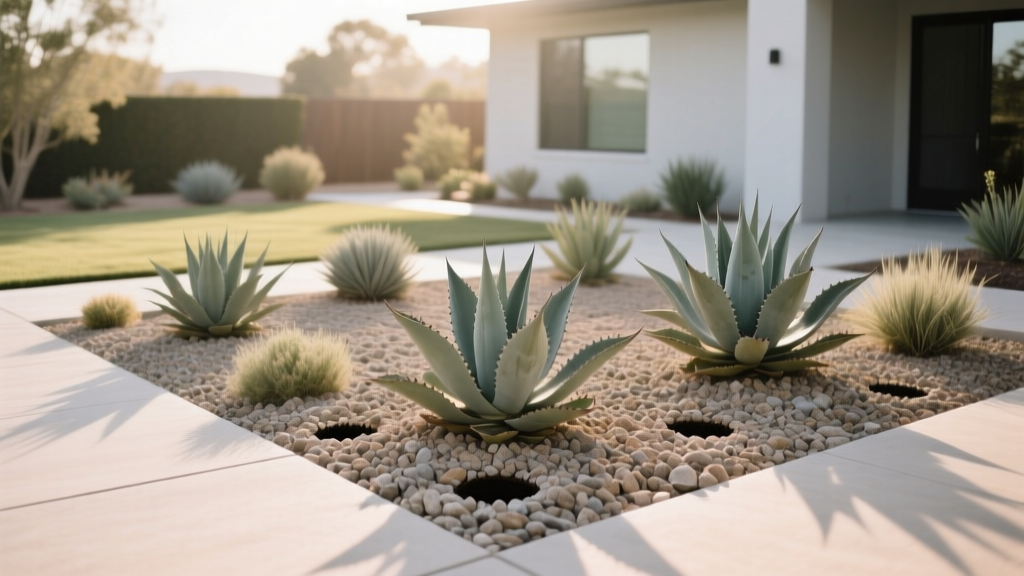
2026 Xeriscape Front Yard: Core Aeration for DG and Agave
David ParkPublished
The 2026 Xeriscape Boom and the Hidden Soil Problem
As we navigate the landscaping trends of 2026, the shift away from water-intensive turfgrass toward sustainable, low-water front yards has never been more pronounced. Homeowners and landscape architects alike are embracing the striking, modern aesthetic of xeriscape front yards featuring decomposed granite (DG) and architectural agaves. This combination offers unparalleled curb appeal, drastic reductions in municipal water usage, and a modern desert-chic vibe that dominates neighborhood design. However, beneath the surface of these beautiful, low-maintenance landscapes lies a hidden threat that ruins thousands of dollars of hardscaping every year: severe soil compaction. When you decide to convert a traditional lawn into a DG and agave paradise, you cannot simply kill the grass, lay down weed barrier, and dump the granite. The soil beneath your old lawn has been subjected to years of lawnmower traffic, foot traffic, and shallow irrigation, creating a dense, impenetrable layer of hardpan. If you install decomposed granite over this compacted subgrade, water will pool, the DG will wash away during heavy storms, and your expensive agaves will succumb to fatal root rot. This is where the principles of core aeration transition from lawn maintenance to essential hardscape preparation.
Why Core Aeration is Mandatory Before Laying DG
Core aeration is traditionally known as the practice of removing small plugs of thatch and soil from a lawn to improve air, water, and nutrient penetration. But in the context of a 2026 xeriscape conversion, core aeration serves a much more critical structural purpose. According to landscaping guidelines outlined by the EPA's WaterSense program, proper soil preparation and drainage are the foundational pillars of any successful water-wise landscape. When heavy equipment or years of mowing compress the top three to four inches of soil, the percolation rate drops to near zero. Decomposed granite relies on a permeable subgrade to allow rainwater to infiltrate the earth rather than sheeting off the surface and eroding your driveway or sidewalk. By running a heavy-duty, gas-powered core aerator over the bare soil after turf removal, you physically fracture the hardpan. The extracted cores bring deep, compacted clay to the surface, while the empty holes create vertical channels for drainage. This mechanical fracturing is the exact equivalent of deep-tine aeration used in commercial sports field construction, adapted here for residential xeriscaping.
Traditional Lawn Aeration vs. Xeriscape Subgrade Aeration
It is vital to distinguish between aerating a living lawn and aerating a subgrade for hardscaping. When aerating a living lawn, the goal is to preserve the turf while relieving minor compaction. You typically use a standard residential aerator and leave the plugs on the lawn to break down naturally. For a xeriscape front yard with decomposed granite and agave, the approach in 2026 is far more aggressive. First, the existing turf is completely removed using a sod cutter, exposing the raw, compacted soil. Next, a commercial-grade walk-behind core aerator—such as a Ryan Lawnaire V or a Billy Goat Outback—is used to pull plugs that are at least 3 to 4 inches deep and 0.75 inches in diameter. Because the soil is bare, you will make multiple passes in a crisscross pattern to ensure maximum fracture density. Instead of leaving the plugs to decompose into the lawn, these plugs are raked up and removed or broken down and mixed with a coarse, angular sand and expanded shale to create a highly draining top-dressing mix. This mix is then swept back into the aeration holes, creating permanent, highly permeable vertical columns that guarantee rapid drainage for your agave root zones.
Step-by-Step Core Aeration and Soil Prep Guide
To achieve a flawless xeriscape front yard in 2026, follow this meticulous soil preparation sequence. Step one is turf removal and initial grading. Cut the sod as shallow as possible to preserve the existing soil volume, then grade the area to ensure a minimum 2% slope away from your home's foundation. Step two is the deep core aeration pass. Water the bare soil lightly the day before to soften the hardpan, allowing the aerator tines to penetrate deeply without shattering the soil structure. Make at least three passes over the entire front yard. Step three is plug management and amendment. Rake up the majority of the clay-heavy cores. In a wheelbarrow, mix coarse builder's sand, expanded shale, and a small amount of compost. Broadcast this mixture over the aerated soil and use a stiff push broom to force the amendment deep into the aeration holes. Step four is subgrade compaction. Once the holes are filled with the permeable mix, use a mechanical plate compactor to lightly vibrate the surface. This settles the amendment into the holes without re-sealing the surface, creating a stable, free-draining base that is finally ready for your geotextile fabric and decomposed granite.
Selecting Agaves for Aerated DG Landscapes
Agaves are the crown jewels of the modern xeriscape, but they are notoriously susceptible to crown and root rot if water lingers around their base. The deep core aeration method described above provides the rapid drainage these succulents demand. When designing your 2026 front yard, selecting the right agave variety for your specific microclimate and spatial layout is crucial. Below is a comparison chart of top-performing agaves for DG landscapes.
| Agave Variety | Mature Size | Drainage Requirement | Best DG Stabilizer Pairing |
|---|---|---|---|
| Agave 'Blue Glow' | 2-3 ft wide | High (Fast) | Permeable Resin Binder |
| Agave americana 'Mediopicta Alba' | 4-6 ft wide | Extreme (Very Fast) | Loose DG with Edging |
| Agave parryi 'Truncata' | 1-2 ft wide | High (Fast) | Polymeric Sand Blend |
| Agave ovatifolia 'Frosty Blue' | 3-4 ft wide | Moderate to High | Liquid Polyurethane Binder |
As noted by experts at Colorado State University Extension, matching the plant's mature size and drainage requirements to your soil amendments is the key to long-term xeriscape survival. Agave 'Blue Glow' remains a top seller in 2026 due to its striking red margins and manageable size, making it perfect for flanking a DG walkway. For a dramatic focal point, Agave americana 'Mediopicta Alba' offers stunning variegation, but requires a wider planting zone and impeccable drainage to prevent winter rot in cooler zones.
Laying and Stabilizing Decomposed Granite in 2026
With your subgrade properly core-aerated and amended, you are ready to install the decomposed granite. In 2026, loose DG is rarely recommended for front yards due to the mess it tracks into homes and the erosion caused by heavy rain. Instead, professionals use advanced polymeric stabilizers. After laying down a heavy-duty, permeable geotextile fabric to prevent weed growth while maintaining water permeability, spread a 1-inch base layer of crushed 3/4-inch minus gravel. Compact this base layer thoroughly. Next, apply a 2-inch layer of your chosen DG color. Before compacting the DG, you must integrate a liquid or powdered binder. Products like Gator Stone Bond XP or Terra-Kote are industry standards in 2026. These stabilizers lock the granite particles together into a firm, natural-looking surface that feels like a paved stone path but remains partially permeable. The water will sheet off the stabilized surface, drain into the edges, and infiltrate the earth through the highly aerated subgrade channels you created earlier.
Planting Agave in Stabilized DG
Planting agaves into a stabilized DG landscape requires a specific technique to ensure the collar of the plant sits above the grade. Because the DG is stabilized, you must cut an 'X' into the geotextile fabric at the planting location and excavate a hole twice as wide as the agave's root ball. The soil removed from the hole should be discarded or heavily amended with pumice and gravel. Backfill around the agave with a specialized succulent and cactus mix that guarantees rapid water escape. Crucially, the top of the agave's root crown must sit at least one inch above the surrounding DG level. Top-dress the immediate area around the plant with large, decorative river rock or 1-inch lava rock. This not only provides a beautiful visual contrast against the fine texture of the decomposed granite but also keeps the base of the agave completely dry, preventing the fungal issues that plague poorly planned xeriscapes.
Post-Installation Care and Drainage Monitoring
The beauty of a core-aerated, DG-and-agave xeriscape is its remarkably low maintenance profile. However, the first year requires careful observation. During the 2026 rainy season, monitor the edges of your DG pathways and the base of your agaves. If you notice water pooling, it indicates that the subgrade aeration was insufficient or that the DG stabilizer was applied too thickly, sealing the surface entirely. In established landscapes, occasional deep watering of the agaves during extreme summer heat waves is necessary, but the aerated subgrade will ensure that any excess water drains away from the crown within minutes. By respecting the physics of soil compaction and utilizing core aeration as a foundational hardscaping tool, your xeriscape front yard will remain structurally sound, visually breathtaking, and ecologically responsible for decades to come.

