
Landscaping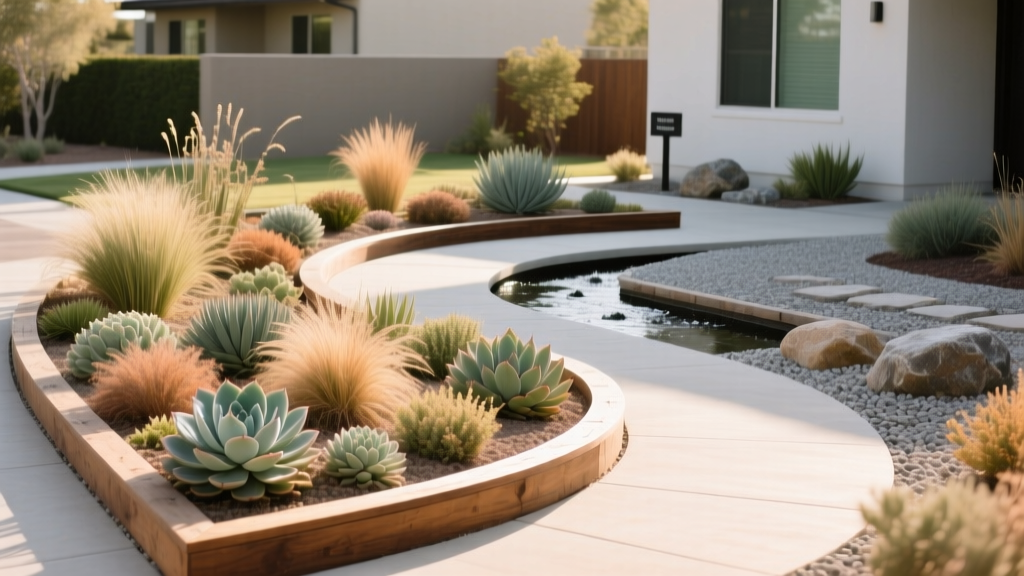
Corner Lot Xeriscaping 2026: Curved Bed Borders Guide
Robert HayesPublished
The Unique Challenges of Corner Lots in 2026
Corner lots present a unique paradox in residential landscape design. On one hand, they offer expansive street frontage, abundant natural light, and a prominent neighborhood presence. On the other hand, they are flanked by double the amount of heat-radiating asphalt and concrete, creating a severe microclimate that accelerates soil moisture evaporation. Furthermore, corner lots are subjected to heavy pedestrian traffic, as walkers naturally attempt to cut the corner, and they are bound by strict municipal visibility codes. As we navigate the tightening water restrictions and tiered utility pricing of 2026, traditional turf-heavy corner landscapes are becoming financially and environmentally unsustainable.
According to the EPA's WaterSense program, outdoor water use accounts for nearly 30% of total household water use, a figure that spikes dramatically in sun-belt regions during the summer months. Transitioning to a xeriscape or low-water landscape is no longer just an ecological preference; it is a financial necessity. By combining the principles of xeriscaping with the fluid, organic geometry of curved bed borders, homeowners can solve the functional challenges of a corner lot while creating a stunning, water-wise oasis.
Why Curved Bed Borders Work for Xeriscaping
Straight, rigid bed lines often feel artificial and can inadvertently encourage pedestrians to step over the corner to shorten their walking route. Curved bed borders, however, introduce a natural, organic flow to the landscape. From a xeriscaping perspective, curves offer several distinct advantages:
- Traffic Calming and Pathway Guidance: A sweeping curve naturally guides the eye and the foot, gently directing pedestrians toward designated crosswalks without the need for unsightly fencing.
- Enhanced Rainwater Harvesting: Curved beds allow for the integration of shallow bioswales and rain gardens. By contouring the curve to capture street runoff, you can passively irrigate your low-water plants during rare but heavy 2026 storm events.
- Microclimate Buffering: Sweeping curves allow you to stagger plant heights more effectively, creating layered windbreaks that protect delicate succulents from harsh street winds and reduce overall soil evaporation.
Step-by-Step Guide to Designing Curved Xeriscape Borders
1. Mapping the Corner Visibility Triangle
Before laying out a single curve, you must respect the 'sight triangle' or 'daylighting' zone. Most municipal codes in 2026 require a clear vision triangle at intersections, typically measuring 25 to 30 feet along both curbs from the corner point. Within this triangle, no plant or hardscape feature can exceed 24 to 30 inches in height to ensure drivers and pedestrians have unobstructed sightlines. Your curved bed border must arc gracefully around or through this zone, utilizing only low-growing, drought-tolerant groundcovers in the restricted area, while saving taller architectural xeriscape plants for the outer curves further from the intersection.
2. Laying Out the Curve
Use a flexible garden hose to outline your proposed bed borders. For a corner lot, an 'S-curve' or a deep, sweeping crescent shape works best to pull the focal point away from the dangerous intersection and toward the safer interior of your yard. Once you are satisfied with the hose layout, use inverted marking paint to trace the line. Ensure the curve is wide enough to accommodate mature plant spreads—xeriscape plants like Agave and Yucca need significant lateral space, and overcrowding leads to poor air circulation and fungal issues.
3. Installing Permeable Hardscape Edging
To maintain the crisp lines of a curved xeriscape bed against a lawn or decomposed granite pathway, install flexible Corten steel or heavy-duty aluminum edging. Corten steel develops a beautiful, rust-like patina that complements the earthy tones of a xeriscape. More importantly, secure edging prevents inorganic mulches like gravel or decomposed granite (DG) from migrating into the street or storm drains during heavy rains.
Top Low-Water Plants for Curved Corner Beds
Selecting the right plant for the right zone is the core tenet of xeriscaping. As outlined by the Colorado State University Extension, hydrozoning—grouping plants with similar water needs together—is critical for irrigation efficiency. Below is a curated list of low-water plants ideal for the varying zones of a curved corner lot bed.
| Plant Name | Botanical Name | Water Need | Max Height | Corner Placement Strategy |
|---|---|---|---|---|
| Parry's Agave | Agave parryi | Very Low | 2 ft | Inner curve focal point (Outside sight triangle) |
| New Gold Lantana | Lantana 'New Gold' | Low | 1.5 ft | Mid-border filler; excellent heat tolerance |
| Dwarf Ruellia | Ruellia brittoniana 'Katie' | Low-Medium | 1 ft | Inside the 30ft sight triangle; stays under code limits |
| Angelita Daisy | Tetraneuris acaulis | Low | 1 ft | Outer curve border; provides year-round yellow blooms |
| Desert Spoon | Dasylirion wheeleri | Very Low | 4 ft | Background anchor; keep far back from intersection |
Soil Preparation and Mulching Strategies
The foundation of any successful xeriscape is its soil. Corner lots often suffer from severe soil compaction due to years of foot traffic and construction debris left behind by developers. In 2026, the standard practice for retrofitting a corner lot is to perform a 'deep tine aeration' or manually turn the soil to a depth of 12 inches, amending it with 3 inches of high-quality organic compost. This improves drainage, which is vital for succulents and Mediterranean herbs that will rot in heavy, waterlogged clay.
For mulching curved beds, inorganic options like 3/4-inch crushed gravel or decomposed granite are highly recommended over organic wood chips. Gravel reflects sunlight, suppresses weeds, and does not blow away onto the adjacent sidewalks. When applying gravel mulch over a curved bed, use a high-quality, permeable woven geotextile weed barrier underneath. Avoid solid black plastic, as it prevents rainwater from penetrating the soil and disrupts the natural gas exchange required by plant roots.
Smart Irrigation for the Modern Xeriscape
While xeriscaping drastically reduces water consumption, it does not mean 'zero water.' Newly installed xeriscape plants require deep, infrequent watering to establish their extensive root systems. For curved corner beds, traditional spray sprinklers are highly inefficient due to wind drift from the adjacent streets.
Instead, utilize a subsurface drip irrigation system. Drip emitters deliver water directly to the root zone, eliminating evaporation. In 2026, pairing your drip system with a Networked Evapotranspiration (ET) smart controller—such as the latest Rachio 4 or Hunter Hydrawise models—is essential. These controllers connect to local weather stations and automatically adjust watering schedules based on real-time temperature, humidity, and solar radiation data. By integrating soil moisture sensors into your curved beds, you ensure that your Agave and Lantana receive water only when the soil profile is genuinely dry, preventing overwatering and maximizing your utility savings.
Conclusion
Designing a corner lot landscape in 2026 requires a delicate balance of aesthetic vision, municipal compliance, and environmental stewardship. By embracing xeriscaping principles and utilizing sweeping, curved bed borders, you can transform a challenging, heat-baked intersection into a fluid, water-wise masterpiece. Curves naturally manage pedestrian flow, respect critical sight triangles, and provide the perfect canvas for a diverse palette of drought-tolerant flora. With proper soil preparation, permeable edging, and smart drip irrigation, your corner lot will not only survive the harshest summer conditions but will stand out as a premier example of modern, sustainable landscaping.

