Gardening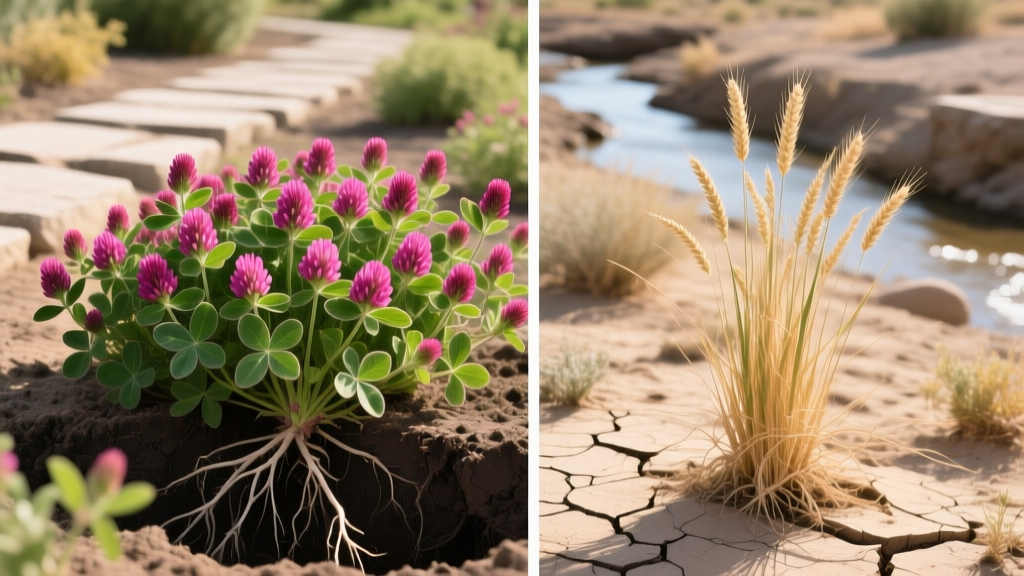
Crimson Clover vs Winter Rye: 2026 Xeriscape Soil Guide
Emily WatsonPublished
The Xeriscape Soil Paradox: Why Cover Crops Matter
Xeriscaping is frequently misunderstood by novice gardeners as simply swapping thirsty turfgrass for a barren expanse of gravel, boulders, and cacti. In reality, the most successful, vibrant low-water landscapes in 2026 rely on a hidden, subterranean foundation: highly engineered, moisture-retentive soil. Before you plant your first native sage, agave, or desert willow, the soil must be meticulously prepared to capture, store, and slowly release infrequent rainfall. This is where cover crops become a xeriscaper’s ultimate secret weapon.
By temporarily dedicating a single season to growing a cover crop, you can dramatically increase soil organic matter (SOM). Every 1% increase in SOM allows an acre of soil to hold an additional 20,000 gallons of water. However, when preparing arid or semi-arid sites, water conservation remains a strict priority even during the soil-building phase. You cannot waste thousands of gallons of irrigation water just to grow a soil amendment. This brings us to a common debate among low-water landscaping professionals and master gardeners: should you use crimson clover or winter rye? Both are powerhouse cover crops, but their water requirements, root architectures, and termination methods differ vastly. In this comprehensive 2026 guide, we will break down the pros, cons, and xeriscape-specific applications of crimson clover versus winter rye.
Crimson Clover (Trifolium incarnatum): The Nitrogen-Fixing Taproot
Crimson clover is a cool-season annual legume renowned for its striking red blooms and its ability to pull nitrogen directly from the atmosphere and fix it into the soil. From a xeriscaping perspective, its primary value lies in its root architecture and its relatively rapid life cycle.
Root Structure and Water Infiltration
Unlike grasses that form dense, fibrous mats, crimson clover develops a strong, deep taproot. In compacted, clay-heavy soils often found in arid regions, this taproot acts as a biological drill. It punches through hardpan layers, creating deep macropores. When the clover is eventually terminated and the roots decompose, these channels remain, allowing infrequent, heavy desert downpours to infiltrate deeply into the soil profile rather than flashing off the surface as runoff.
Water Requirements and Xeriscape Limitations
The main drawback of crimson clover in a strict low-water landscape is its establishment phase. It requires consistent, moderate moisture to germinate and establish a strong root system. If you are relying entirely on erratic winter rains in a drought-prone zone, crimson clover may fail to germinate without supplemental irrigation. It is best suited for xeriscape zones that receive reliable winter precipitation, or for use in rain gardens and bioswales where runoff naturally concentrates.
2026 Seed Costs and Seeding Rates
As of 2026, high-quality, pre-inoculated crimson clover seed averages between $4.50 and $5.50 per pound. The recommended seeding rate for a home garden or landscape bed is 0.5 to 1 pound per 1,000 square feet. Because the seed is relatively expensive, it is highly cost-effective for smaller, targeted xeriscape beds rather than large-scale acreage.
Winter Rye (Secale cereale): The Drought-Tolerant Biomass Giant
Winter rye (often referred to as cereal rye) is a cool-season grass that is practically indestructible once established. It is the undisputed king of biomass production and is a staple in regenerative agriculture and large-scale xeriscape soil preparation.
Root Structure and Moisture Sequestration
Winter rye develops a massive, incredibly dense fibrous root system that can extend several feet into the soil. This root mass is unparalleled for building soil organic matter. When terminated, the sheer volume of decaying roots feeds the soil microbiome, particularly mycorrhizal fungi. These fungi produce glomalin, a sticky protein that binds soil particles together into aggregates. Well-aggregated soil is the holy grail of xeriscaping, as it creates a sponge-like structure that holds water in the root zone for months.
Extreme Drought Tolerance
Where winter rye truly outshines clover in a low-water context is its drought tolerance. It can germinate in incredibly dry soils with minimal moisture and will survive freezing temperatures and prolonged dry spells that would instantly kill crimson clover. It is an excellent scavenger, pulling up residual nutrients from deep in the soil profile and holding them in its tissues until spring.
2026 Seed Costs and Seeding Rates
Winter rye is highly economical. In 2026, organic cereal rye seed typically costs between $2.00 and $2.75 per pound. The seeding rate is higher than clover, requiring 2 to 3 pounds per 1,000 square feet. Despite the higher volume, the overall cost per square foot remains exceptionally low, making it ideal for large, blank-canvas xeriscape projects.
2026 Head-to-Head Comparison Chart
To help you make an informed decision for your low-water landscape, review the direct comparison below based on current 2026 horticultural data.
| Feature | Crimson Clover | Winter Rye |
|---|---|---|
| Primary Xeriscape Benefit | Deep taproot breaks hardpan for water infiltration | Massive fibrous roots build water-holding organic matter |
| Water Requirement | Moderate (needs consistent moisture to establish) | Very Low (highly drought-tolerant once germinated) |
| Nitrogen Fixation | Yes (up to 100 lbs/acre) | No (scavenges existing nitrogen) |
| Biomass Yield | Low to Moderate | Very High |
| 2026 Avg. Seed Cost | $4.50 - $5.50 / lb | $2.00 - $2.75 / lb |
| Seeding Rate (per 1k sq ft) | 0.5 - 1.0 lbs | 2.0 - 3.0 lbs |
| Best Xeriscape Application | Rain gardens, swales, small raised beds | Large open beds, slopes, severe erosion zones |
Water-Wise Establishment Strategies
Planting a cover crop in a xeriscape requires a strategic approach to ensure you are not wasting municipal water. According to the EPA's Water-Smart Landscaping guidelines, the goal is to align plant life cycles with natural precipitation patterns.
Timing is Everything
Do not plant cover crops in the heat of late summer. Wait until the soil temperatures drop below 60°F and the fall or winter rainy season is imminent. In the American Southwest, this means timing your seeding with the late-summer monsoon rains or the first deep winter storms. In cooler climates, seed immediately after the first light frost when evaporation rates plummet.
The "Dust Mulch" Germination Trick
To germinate winter rye without supplemental irrigation, broadcast the seed right before a forecasted rain event. Immediately after broadcasting, lightly rake the soil to cover the seed with just a quarter-inch of dust. This thin layer of dry soil acts as a mulch, trapping the moisture from the rain below the surface and preventing it from evaporating under the arid sun.
Targeted Drip Irrigation for Clover
If you must use crimson clover in a dry zone, do not use overhead sprinklers, which lose massive amounts of water to wind and evaporation. Instead, lay down temporary drip tape on a 12-inch grid. Run the drip system for just 15 minutes a day for the first 10 days to keep the top inch of soil moist. Once the clover's taproot anchors, remove the drip tape and let the crop survive on ambient rainfall.
Termination: Creating a Moisture-Sealing Mulch
In traditional agriculture, cover crops are tilled into the soil. Never till cover crops in a xeriscape. Tilling destroys the delicate soil aggregates and fungal networks you just spent a season building, and it exposes bare soil to the sun, causing rapid moisture loss. Instead, use the "chop and drop" or "crimping" method to terminate the crops and leave them on the surface.
Timing the Termination
Terminate winter rye when it begins to flower (the "boot stage"), usually in mid-to-late spring. If you let it go to seed, it will become a persistent weed in your new xeriscape beds. Terminate crimson clover just as it finishes blooming but before it sets hard seed.
The Chop and Drop Method
Use a string trimmer or a specialized roller-crimper to flatten the cover crop directly onto the soil surface. This creates a thick, woven mat of organic matter. This mat serves three critical xeriscape functions:
- Shade: It blocks the intense summer sun, keeping the soil temperature up to 15°F cooler than bare dirt.
- Evaporation Barrier: It physically prevents wind and sun from pulling moisture out of the soil.
- Weed Suppression: It outcompetes invasive, water-stealing weeds while your slow-growing xeriscape perennials establish their root systems.
When you are ready to plant your drought-tolerant perennials, simply part the dead mulch mat, dig a small hole, and plant directly into the undisturbed, highly fertile soil beneath. For more advanced techniques on managing these crops without herbicides, the SARE publication Managing Cover Crops Profitably offers extensive data on mechanical termination.
Making the Final Choice for Your 2026 Landscape
Choosing between crimson clover and winter rye ultimately depends on your specific site conditions, budget, and the existing state of your soil. If you are dealing with heavily compacted, alkaline clay soil that suffers from severe water runoff, crimson clover is your best ally. Its taproots will fracture the hardpan, and its nitrogen-fixing capabilities will feed the incoming desert-adapted plants. However, you must be willing to provide temporary, targeted irrigation to ensure it establishes.
Conversely, if you are tackling a large, sloped, or highly degraded site where erosion is a threat and irrigation is strictly limited, winter rye is the undisputed champion. Its aggressive fibrous roots will hold the soil in place, and its massive biomass will rapidly build the organic matter necessary to turn lifeless dirt into a water-holding sponge. As noted by researchers at the UC Davis Cover Crop Database, cereal rye's allelopathic properties also provide a natural pre-emergent herbicide effect, keeping your future xeriscape beds remarkably weed-free.
By viewing cover crops not as a permanent landscape feature, but as a temporary, biological tool for soil engineering, you can create a xeriscape in 2026 that is not only breathtakingly beautiful but fundamentally resilient to the challenges of a changing, water-scarce climate.
