Gardening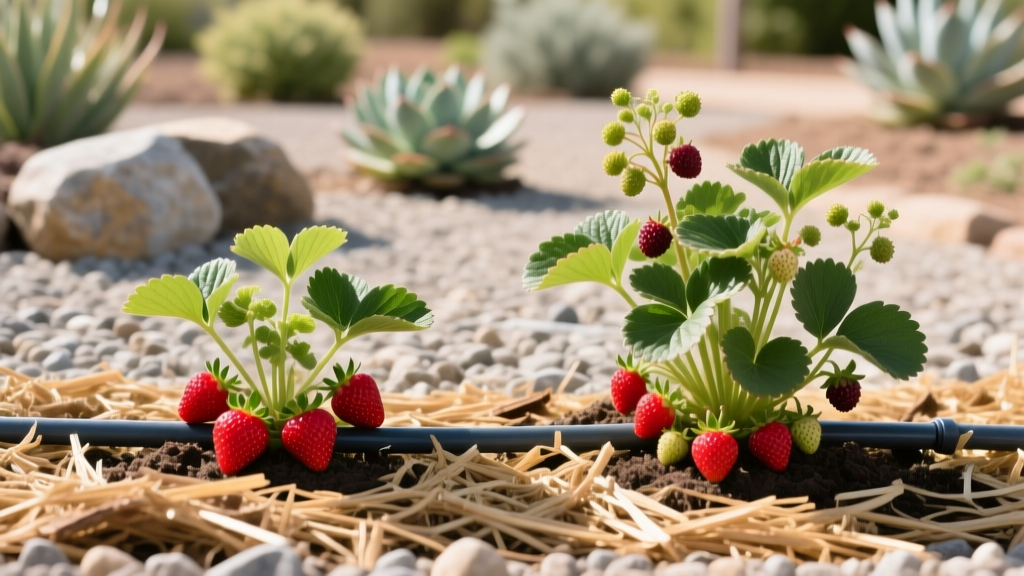
Low-Water Strawberries: June-Bearing vs Everbearing 2026
Anna KowalskiPublished
Introduction to Xeriscape Strawberries
As municipal water restrictions tighten across the country in 2026, home gardeners are rethinking traditional water-heavy crops. Xeriscaping and low-water landscaping are no longer limited to ornamental succulents and native grasses; they are evolving into highly productive, edible ecosystems. One of the most common questions we receive at LawnsGuide is whether it is possible to grow strawberries—a notoriously thirsty fruit—in a drought-conscious garden. The answer is yes, but success depends entirely on understanding the physiological differences between June-bearing and everbearing (day-neutral) varieties and matching them to the right low-water infrastructure.
The Hydration Paradox
Strawberries consist of about 91% water, and their shallow root systems make them highly susceptible to drought stress. Historically, commercial growers applied up to an inch of water per week via overhead sprinklers. In a modern xeriscape, this is neither sustainable nor permissible under 2026 tier-3 water mandates in many western and southern states. To succeed, we must shift from volume-based watering to precision moisture retention, leveraging soil biology, targeted subsurface irrigation, and strategic varietal selection.
June-Bearing vs. Everbearing: The Xeriscape Breakdown
The fundamental difference between June-bearing and everbearing strawberries lies in their fruiting triggers and, consequently, their water demand curves. June-bearing varieties are short-day plants that initiate flower buds in the autumn and produce one massive, concentrated harvest over three to four weeks in late spring or early summer. Everbearing (and day-neutral) varieties produce fruit continuously from early summer until the first frost, requiring a steady, uninterrupted supply of moisture.
| Feature | June-Bearing | Everbearing / Day-Neutral |
|---|---|---|
| Harvest Window | 3-4 weeks in late spring | Continuous summer to fall |
| Water Demand Profile | High peak in spring; low in summer | Consistent, moderate demand all season |
| Xeriscape Strategy | Time with spring rains; summer dormancy | Subsurface drip, heavy mulch, shade cloth |
| Top 2026 Drought Varieties | Chandler, Sequoia | Albion, Seascape |
Strategic Water Profiling
For the xeriscaper, June-bearing strawberries offer a unique advantage: a defined peak water window. Because the bulk of the fruit development occurs in late spring, you can time your supplemental irrigation to coincide with the tail end of natural spring rainfall. Once the harvest concludes in early summer, the plants enter a vegetative state where they can tolerate much lower soil moisture levels, surviving the peak heat of July and August on minimal deep-soaking. This makes them ideal for gardens that rely heavily on passive rainwater harvesting systems that deplete by mid-summer.
Everbearing varieties, by contrast, demand a "slow drip" approach. Because they are constantly pushing out new flowers and ripening fruit through the hottest months of the year, they cannot be allowed to dry out completely. In a low-water landscape, this means everbearing strawberries must be integrated into highly engineered microclimates featuring heavy mulching, shade cloth, and automated subsurface drip lines to prevent evapotranspiration losses. If you choose everbearing types, you must commit to a rigorous, low-volume daily irrigation schedule.
Soil Engineering for Maximum Moisture Retention
Before planting either variety, your soil must be transformed into a sponge. According to research highlighted by the Colorado State University Extension, xeriscape soil preparation focuses on increasing organic matter to hold water without waterlogging the roots. In 2026, the gold standard for low-water strawberry beds is a mix of 40% native loam, 40% high-quality compost, and 20% horticultural biochar.
Biochar is a game-changer for drought-prone gardens. Its highly porous structure acts like a microscopic reservoir, holding water and nutrients in the root zone long after the surface soil has dried out. When preparing your raised beds or mounded rows, pre-charge the biochar by soaking it in compost tea for 48 hours before mixing it into the soil. This prevents the dry carbon from initially wicking moisture away from your young strawberry crowns.
Another highly effective xeriscape technique is the Hugelkultur mound. By burying rotting logs and woody debris beneath your strawberry bed, you create a deep, internal sponge. As the wood decomposes, it holds gallons of water, releasing it slowly to the shallow strawberry roots during dry spells. This mimics the natural forest floor and drastically reduces the need for summer irrigation.
Low-Water Irrigation Tactics for 2026
Overhead watering is strictly forbidden in a xeriscape strawberry patch. It wastes water to evaporation and promotes fungal diseases like powdery mildew. Instead, utilize the following precision methods:
- Subsurface Drip Irrigation: Burying 0.5 GPH (gallons per hour) inline drip lines 2 inches beneath the soil surface delivers water directly to the root zone. In 2026, pairing these lines with smart soil moisture sensors ensures you only irrigate when the soil tension drops below optimal levels, saving up to 60% more water compared to surface drip.
- Ollas (Unglazed Clay Pots): An ancient technique making a massive comeback in modern permaculture. Burying a terracotta olla up to its neck in the center of your strawberry patch allows water to slowly seep through the porous clay walls. The plant roots wrap around the pot, drawing moisture only when they need it. This method eliminates runoff and evaporation entirely.
Mulching: The Xeriscaper's Best Friend
The term "strawberry" literally originates from the practice of mulching the plants with straw. In a low-water garden, mulch is non-negotiable. A 3-inch layer of organic mulch can reduce soil surface evaporation by up to 70%, keeping the shallow root systems cool and moist even when ambient temperatures exceed 95°F.
However, not all mulches are created equal. While traditional wheat straw is popular, it can harbor weed seeds and breaks down quickly. For 2026 xeriscape beds, we recommend pine needles (pine straw). Pine needles interlock, preventing them from blowing away in harsh winds, and they allow water to penetrate directly to the soil rather than shedding it like wood chips. Additionally, pine needles slightly acidify the soil, matching the ideal pH (5.5 to 6.5) preferred by strawberries, as noted by the University of Minnesota Extension.
For advanced xeriscapers, consider a living mulch of low-growing, drought-tolerant creeping thyme planted between the strawberry rows. This shades the soil, suppresses weeds, and creates a humid microclimate at the soil surface, further reducing evaporation.
Top Drought-Tolerant Varieties to Plant
Selecting the right cultivar is the ultimate water-saving hack. The University of California Agriculture and Natural Resources program has extensively tested varieties for heat and drought resilience, providing excellent data for low-water gardeners.
- June-Bearing: 'Chandler' and 'Sequoia'. These varieties develop vigorous, deep root systems that can forage for moisture deeper in the soil profile than standard cultivars, making them forgiving if you miss a watering cycle in late spring.
- Everbearing/Day-Neutral: 'Albion' and 'Seascape'. 'Albion' is renowned for its exceptional heat tolerance and firm fruit, which resists sun-scald and dehydration on the vine during late-summer heat domes.
Conclusion
Growing strawberries in a xeriscape or low-water landscape requires a paradigm shift from traditional farming methods. By understanding the distinct water-demand curves of June-bearing versus everbearing varieties, engineering your soil with biochar and hugelkultur techniques, and deploying subsurface irrigation, you can enjoy a bountiful, sweet harvest without violating municipal water restrictions. Whether you choose the concentrated spring bounty of a June-bearer or the steady summer trickle of an everbearing day-neutral, the key to 2026 gardening success is working with precision, not volume.
