Gardening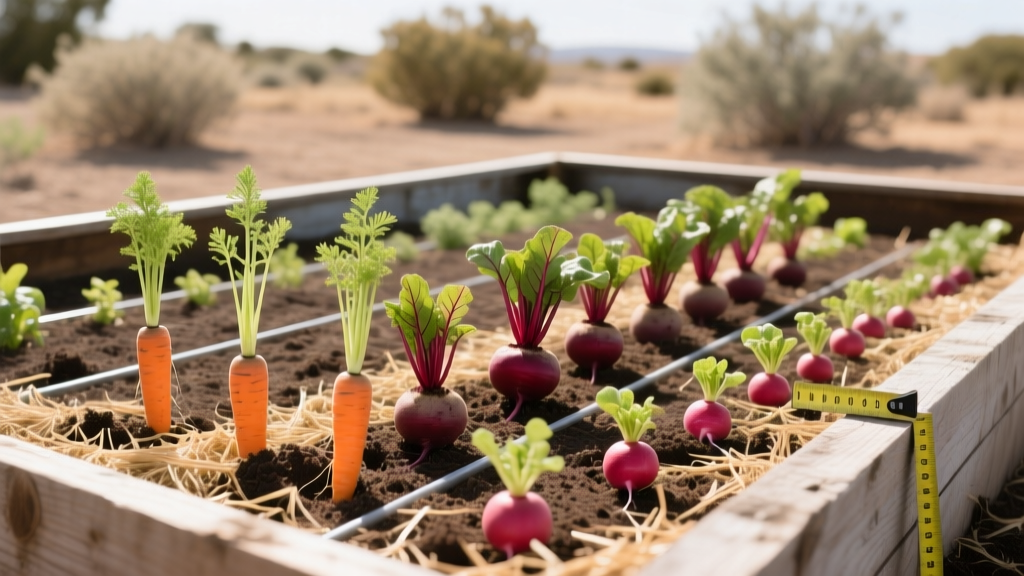
Xeriscape Root Vegetable Spacing: Carrots, Beets & Radishes 2026
Emily WatsonPublished
The Xeriscape Dilemma for Root Crops
As municipal water restrictions tighten across the Sun Belt, Western regions, and increasingly temperate zones in 2026, home gardeners are turning to xeriscaping principles to keep their landscapes alive. Xeriscaping and low-water landscaping are no longer just about succulents, gravel, and native ornamental grasses; they are about intelligent resource allocation. But what happens when you want to apply these low-water principles to the vegetable patch? Root crops like carrots, beets, and radishes are notoriously thirsty during their germination and early taproot formation phases. Traditionally, growing these crops requires consistent, shallow moisture to prevent soil crusting and ensure even emergence.
However, by fundamentally rethinking your root vegetable spacing, soil architecture, and irrigation delivery, you can successfully integrate these crops into a low-water landscape. According to the EPA WaterSense program, outdoor water use accounts for nearly 30% of total household water consumption, a statistic that has driven the 2026 push toward hyper-efficient, drought-tolerant edible landscaping. By increasing the spatial distance between root crops, you drastically reduce subterranean competition for limited soil moisture, allowing each plant to develop a robust, deep root system capable of scavenging water from lower soil horizons.
The 2026 Low-Water Spacing Matrix
In a traditional, high-irrigation garden, maximizing yield per square foot is the primary goal. In a xeriscape garden, maximizing survival and root quality per drop of water takes precedence. Wider spacing means fewer plants per bed, but it ensures that the available soil moisture is not rapidly depleted by dense root networks. Below is the definitive low-water spacing guide for the 2026 growing season.
| Crop | Traditional Spacing | Xeriscape Spacing | Row Spacing | Water Competition Factor |
|---|---|---|---|---|
| Carrots | 2 inches | 4 to 5 inches | 14 inches | Low (Deep Taproot) |
| Beets | 3 inches | 6 to 8 inches | 16 inches | Medium (Fibrous Swollen Root) |
| Radishes | 1 inch | 3 to 4 inches | 12 inches | High (Shallow, Fast Growth) |
Carrots (Daucus carota)
Carrots develop a single, deep taproot. In a low-water environment, you want that taproot to drive downward as quickly as possible to reach deeper, moister soil nodes. If carrots are spaced at the traditional 2 inches, their lateral feeder roots will intertwine and compete for the same scarce topsoil moisture. By increasing the spacing to 4 or 5 inches, each carrot has a dedicated cylinder of soil from which to draw water. This wider spacing also improves air circulation at the soil level, which is critical when utilizing heavy mulches that can otherwise trap humidity and invite fungal pathogens.
Beets (Beta vulgaris)
Beets are unique because the edible portion is a swollen hypocotyl (the stem base) rather than a true taproot. They rely heavily on a wide, fibrous lateral root system to gather nutrients and water. In xeriscaping, lateral root competition is the enemy of beet development. Spacing beets 6 to 8 inches apart ensures that their fibrous networks do not overlap. Furthermore, wider spacing allows the broad beet greens to act as a 'living mulch,' shading the soil surface and reducing evaporation rates during the peak heat of the 2026 summer.
Radishes (Raphanus sativus)
Radishes are a sprint crop, often maturing in under 30 days. However, water stress causes radishes to become pithy, overly spicy, and prone to premature bolting. While they do not have deep taproots, increasing their spacing to 3 or 4 inches prevents the dense canopy overlap that typically forces the plants to bolt when surface water evaporates. The Texas A&M AgriLife Extension notes that reducing plant density is one of the most effective, non-technological methods for conserving soil moisture in drought-prone edible landscapes.
Eliminating Thinning Through Precision Seeding
In a low-water garden, the act of thinning seedlings is a cardinal sin. When you pull out excess seedlings to achieve proper spacing, you are not only disturbing the fragile roots of the remaining plants, but you are also wasting every drop of water that was used to germinate the removed seedling. To achieve perfect xeriscape spacing without thinning, you must utilize precision seeding techniques.
- Pelleted Seeds: Many seed suppliers now offer carrots and beets encased in a clay-based pellet. These pellets are large enough to be spaced exactly 4 to 6 inches apart by hand or with a standard garden seeder, completely eliminating the need for thinning.
- Seed Tapes: Biodegradable seed tapes pre-space seeds at optimal xeriscape intervals. Simply lay the tape in a shallow furrow, cover with fine vermiculite, and water. This also prevents the soil crusting that hinders delicate carrot germination.
- Vacuum Seeders: For larger xeriscape plots, handheld vacuum seeders allow you to drop a single, perfectly spaced seed every few inches, ensuring zero water waste on excess germination.
Soil Architecture for Maximum Water Retention
Spacing alone will not save a root crop in a xeriscape; the soil must act as a subterranean reservoir. In 2026, the integration of horticultural biochar has become a standard practice in low-water vegetable gardening. Biochar is a highly porous form of charcoal that acts like a microscopic sponge. When incorporated into the top 8 inches of a root vegetable bed at a rate of 2 pounds per square foot, it can increase the soil's water-holding capacity by up to 20%.
Additionally, inoculating your seeds with Glomus intraradices (a mycorrhizal fungus) is crucial for xeriscape root crops. These beneficial fungi form a symbiotic relationship with the plant's roots, effectively extending the root system's reach by hundreds of feet on a microscopic level, allowing the carrot or beet to access water pockets far beyond its immediate spacing zone. The Colorado State University Extension heavily advocates for soil organic matter and biological amendments as the foundation of any water-wise gardening strategy.
Mulching and Subsurface Irrigation Strategies
Mulching root vegetables is notoriously difficult. Carrot and beet seeds are planted shallowly (about 1/4 to 1/2 inch deep), and applying a thick layer of straw or wood chips immediately after planting will block the fragile seedlings from emerging. The 2026 xeriscape solution involves a two-step mulching and irrigation approach:
- Germination Phase (The Burlap Trick): After sowing your precisely spaced seeds, lay a layer of damp, untreated burlap directly over the seed row. This prevents the sun from baking the shallow soil and causing a hard crust, retaining the exact moisture needed for germination without requiring daily overhead watering. Remove the burlap the moment the seedlings break the surface.
- Growth Phase (Fine Straw & Ollas): Once the seedlings are 2 inches tall, gently tuck fine, seed-free straw around them, leaving a 1-inch clear circle around the base of each plant to prevent rot. For irrigation, abandon overhead sprinklers entirely. Instead, utilize Ollas (unglazed clay pots). By burying an Olla up to its neck in the center of your xeriscape root bed and filling it with water, the water slowly seeps through the porous clay directly into the root zone. The roots of your widely spaced carrots and beets will naturally grow toward and wrap around the Olla, drawing moisture exactly when they need it, with zero surface evaporation.
Recommended Drought-Tolerant Varieties for 2026
Finally, success in low-water landscaping requires selecting genetics adapted to drought stress. For carrots, the Danvers 126 variety is unmatched in xeriscapes; its stout, tapered shape and aggressive taproot easily penetrate heavy, dry soils where longer varieties like Imperator would snap or fork. For beets, Chioggia and Bull's Blood exhibit remarkable heat and drought tolerance, maintaining their sweetness even when water is restricted. For radishes, stick to fast-maturing varieties like Cherry Belle or French Breakfast, which can complete their life cycle before the most severe late-summer drought conditions take hold.
By combining wider xeriscape spacing, precision seeding, biochar soil amendments, and targeted subsurface irrigation, you can enjoy a bountiful harvest of crisp carrots, earthy beets, and peppery radishes in 2026, all while adhering to the strictest low-water landscaping principles.
