Gardening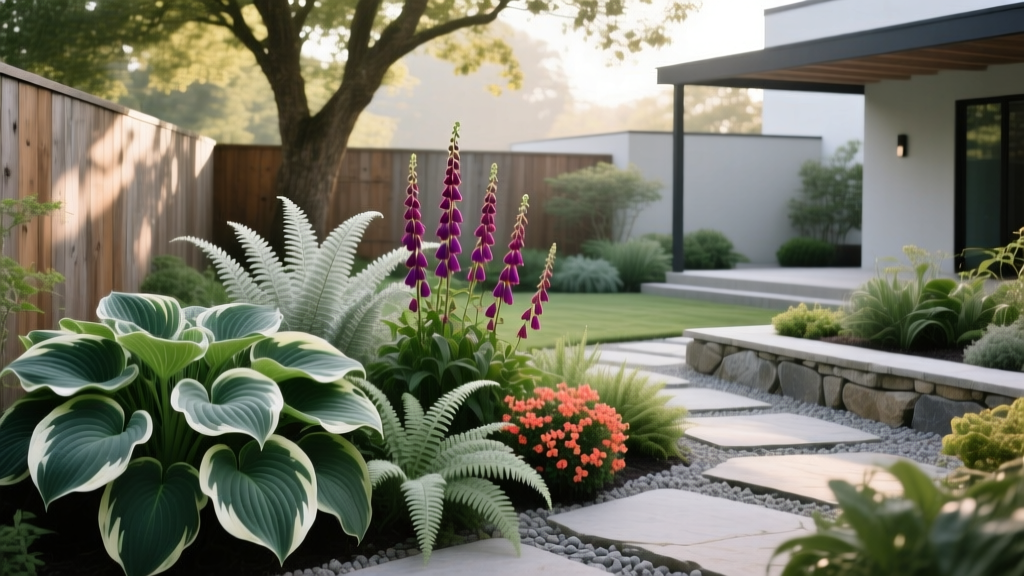
Low-Water Shade Garden 2026: Hostas, Ferns & Coral Bells
Emily WatsonPublished
The Challenge of Dry Shade in Xeriscaping
When homeowners think of xeriscaping and low-water landscaping, the mind often jumps to sun-drenched rock gardens, succulents, and ornamental grasses. However, one of the most challenging and frequently overlooked zones in the modern landscape is dry shade. As we navigate the 2026 growing season, with stricter municipal water tiers and prolonged summer heat waves becoming the norm, mastering the art of the low-water shade garden is more critical than ever. The paradox of dry shade lies in the fact that while the sun's evaporation is blocked by a tree canopy, the massive root systems of mature trees aggressively compete for every drop of soil moisture. Furthermore, dense canopies can act like umbrellas, deflecting light rain away from the soil below.
Despite these challenges, you do not have to settle for bare dirt or sterile gravel under your mature oaks and maples. By combining the lush, architectural foliage of hostas, the delicate textures of specific fern species, and the vibrant, drought-adapted mounds of coral bells (Heuchera), you can create a breathtaking, multi-layered shade oasis. This guide will walk you through the specific plant selections, soil preparation techniques, and hydrozoning strategies required to make this classic shade trio thrive in a low-water xeriscape environment.
The 2026 Approach to Low-Water Shade Landscaping
In 2026, sustainable landscaping is driven by data and precision. According to the EPA's WaterSense program, water-smart landscapes focus on matching plant water requirements to the specific microclimates of your yard. This practice, known as hydrozoning, is the cornerstone of successful xeriscaping. When designing a shade garden under established trees, the goal is not to eliminate water entirely, but to drastically reduce the frequency of irrigation by selecting plants that have evolved to survive periods of drought and by amending the soil to maximize moisture retention.
Furthermore, modern xeriscaping embraces the Water Use Classification of Landscape Species (WUCOLS) framework, which helps gardeners understand the actual water needs of plants based on regional evapotranspiration rates. While traditional gardening guides might label hostas and ferns as 'high water' plants, horticultural science has identified specific cultivars that exhibit remarkable drought tolerance once their root systems are fully established.
Selecting Drought-Tolerant Varieties
To succeed in a low-water shade garden, you must be highly selective. The generic varieties found in big-box store bargain bins will wither in dry shade. You need specialized cultivars with specific physiological adaptations.
Hostas: Thick-Leaved Champions
Hostas are famous for their love of moisture, but their drought tolerance is directly correlated to leaf thickness and color. Thin-leaved, bright green, or heavily variegated hostas lose water rapidly through transpiration. For a xeriscape shade garden, you must select blue-leaved or heavily corrugated varieties. The blue color is actually a waxy cuticle on the leaf surface that reflects light and seals in moisture. Top choices for 2026 include Hosta 'Halcyon', Hosta 'Big Daddy', and Hosta 'Blue Angel'. These varieties feature thick, slug-resistant, heavily ribbed leaves that act as natural water reservoirs, allowing the plant to endure weeks without supplemental irrigation once established.
Ferns: Ancient Survivors of the Forest Floor
Ferns are ancient plants that have survived millennia of shifting climates. While the delicate Maidenhair fern requires constant moisture, several robust species are perfectly adapted to the dry, acidic soil found beneath trees. The Dryopteris erythrosora (Autumn Fern) is a superstar in low-water landscaping, featuring coppery-red new growth that matures to a deep, leathery green. Another exceptional choice is the Polystichum munitum (Western Sword Fern), which boasts deep, extensive root systems that scavenge moisture from deep within the soil profile. The Dryopteris marginalis (Leatherwood Fern) is also highly recommended for its stiff, evergreen fronds that resist desiccation even in late summer.
Coral Bells: The Colorful Anchor
Coral bells (Heuchera) are naturally more drought-tolerant than hostas and ferns. Native to North American woodlands and rocky cliffs, they possess deep, fibrous taproots that anchor them firmly and seek out hidden moisture. In 2026, nursery pricing for premium 1-gallon Heuchera cultivars averages between $18 and $24, a worthwhile investment for their year-round color. Varieties like Heuchera 'Palace Purples', Heuchera 'Melting Fire', and Heuchera 'Citronelle' provide stunning foliage in shades of deep burgundy, fiery orange, and bright chartreuse. Their ruffled leaves provide a striking textural contrast to the broad hostas and fine ferns, while their airy flower spikes attract native pollinators without demanding excessive water.
Soil Preparation and Hydrozoning
The secret to a successful xeriscape shade garden lies beneath the surface. Tree roots create a dense mat that repels water and starves new plantings. You cannot simply dig a hole and drop in a plant; you must engineer the soil environment.
- Gentle Aeration: Use a broad fork to gently lift and crack the soil surface without severing the major structural roots of the overstory tree.
- Organic Amendment: Incorporate a 2-inch layer of high-quality compost mixed with biochar. Biochar is a highly porous form of charcoal that acts like a sponge, holding water and nutrients in the soil profile and releasing them slowly to plant roots during dry spells.
- Mycorrhizal Inoculation: Dust the root balls of your ferns and hostas with a mycorrhizal fungi inoculant at planting time. These beneficial fungi form a symbiotic relationship with plant roots, effectively extending the root system's reach by hundreds of times, allowing the plants to access water trapped in microscopic soil pores.
Planting Strategy and Spacing Guide
Proper spacing ensures adequate air circulation, which prevents fungal diseases, while also allowing each plant's root system to establish without immediate, fierce competition. Below is a structured guide for laying out your dry shade trio.
| Plant Type | Recommended Cultivar | Mature Size (H x W) | Spacing | Xeriscape Role |
|---|---|---|---|---|
| Hosta | 'Halcyon' or 'Blue Angel' | 18-24" x 30-36" | 36 inches apart | Mid-ground architectural anchor |
| Fern | Autumn Fern (Dryopteris) | 18-24" x 18-24" | 24 inches apart | Background texture & height |
| Coral Bells | 'Palace Purples' | 12-18" x 12-18" | 18 inches apart | Front border & color contrast |
Mulching and Smart Irrigation
In a low-water landscape, mulch is your primary defense against evaporation. According to the Colorado State University Extension's guidelines on xeriscaping, a proper mulch layer can reduce soil moisture loss by up to 70 percent. For a shade garden, avoid inorganic gravel or river rock, which can overheat and reflect damaging light onto the delicate foliage of ferns. Instead, apply a 3-inch layer of coarse arborist wood chips or shredded bark. Keep the mulch a few inches away from the crowns of the hostas and coral bells to prevent crown rot.
While the ultimate goal of xeriscaping is to eliminate supplemental watering, the establishment phase is critical. During the first 12 to 18 months, your plants need consistent moisture to drive their roots deep into the soil. In 2026, the most efficient way to achieve this is through a smart drip irrigation system paired with a Bluetooth-enabled soil moisture sensor. Place the drip emitters directly at the base of each plant, delivering water slowly and deeply. Program your smart controller to water only when the soil moisture drops below 30 percent capacity, ensuring you never waste a drop of water while guaranteeing the survival of your new shade garden.
Design and Texture Combinations
The visual success of this combination relies on the juxtaposition of textures and colors. To maximize the aesthetic impact of your low-water shade garden, employ a layered planting design. Start by placing the taller, upright fronds of the Autumn Ferns toward the back of the bed or against the trunk of the tree to serve as a dark, textured backdrop. In the middle ground, stagger the broad, ribbed, blue-green mounds of the 'Halcyon' hostas. Their wide leaves will catch the dappled sunlight filtering through the canopy, creating a luminous effect. Finally, line the front edges of the garden bed with the ruffled, deep-purple foliage of the 'Palace Purples' coral bells. The dark, warm tones of the Heuchera will make the cool blue of the hostas and the coppery tones of the emerging ferns pop dramatically.
Conclusion
Designing a shade garden under mature trees no longer means choosing between a lush aesthetic and your water bill. By embracing the principles of xeriscaping and carefully selecting drought-adapted cultivars of hostas, ferns, and coral bells, you can cultivate a vibrant, resilient sanctuary. With proper soil preparation utilizing biochar and mycorrhizae, strategic hydrozoning, and the application of coarse organic mulch, your 2026 low-water shade garden will not only survive the dry summer months but will thrive, proving that sustainable landscaping can be as beautiful as it is responsible.
