Pest Control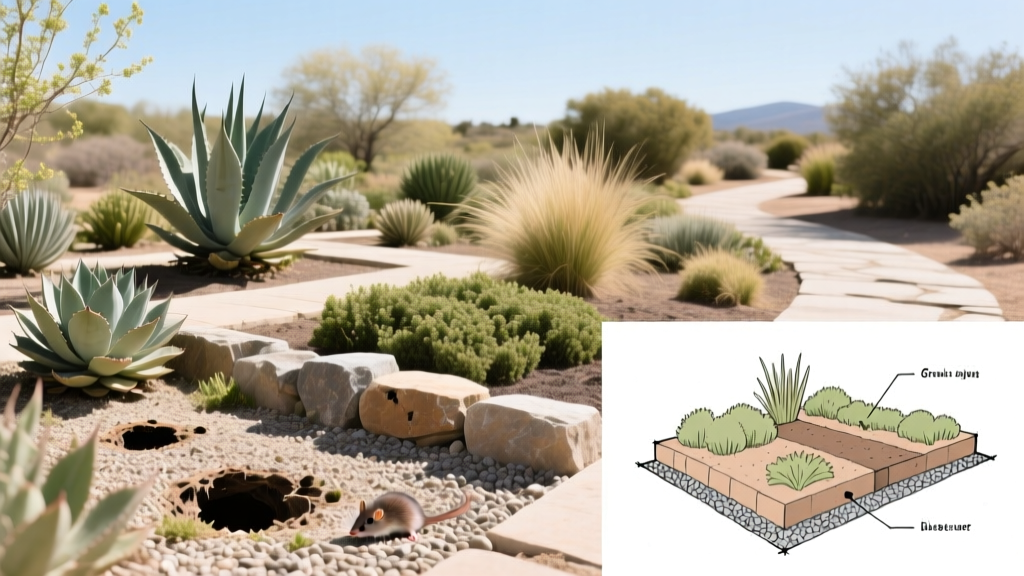
Stop Vole Damage In Xeriscape Gardens: 2026 Control Guide
Robert HayesPublished
The Xeriscaping Paradox: Why Low-Water Gardens Still Attract Voles
As municipal water conservation mandates tighten across the western and southwestern United States in 2026, xeriscaping has transitioned from a niche gardening trend to an absolute mainstream necessity. Homeowners are rapidly replacing thirsty turfgrass with drought-tolerant succulents, native ornamental grasses, and permeable hardscapes. However, this dramatic shift in landscape ecology introduces unique pest management challenges. While many assume that dry, low-water gardens are naturally immune to burrowing rodents, voles (Microtus spp.) remain a persistent and destructive threat. Voles do not require lush, irrigated lawns to thrive; they merely require ground cover, protection from aerial predators, and accessible root systems or bark to gnaw. In fact, certain xeriscaping practices—such as the heavy use of organic wood mulch to retain soil moisture or the planting of dense, low-water groundcovers like creeping thyme—can inadvertently create the perfect microhabitat for vole colonies. Understanding how to identify vole damage in a xeric landscape and employing habitat modification techniques rooted in integrated pest management (IPM) is essential for protecting your low-water investment this year.
Identifying Vole Damage in Xeric Landscapes
Before you can implement control measures, you must accurately identify the culprit. Voles are frequently confused with moles, but their behaviors and the damage they leave behind are distinctly different. Moles are insectivores that create raised, volcano-shaped mounds of soil as they tunnel in search of grubs. Voles, on the other hand, are primarily herbivores. They do not typically push up mounds of dirt; instead, they utilize existing crevices, mulch layers, and dry creek beds to construct hidden runways.
Key Signs of Vole Activity in Low-Water Gardens
- Surface Runways: In a xeriscape, vole runways might not be visible in grass. Instead, look for cleared, 1-to-2-inch-wide pathways beneath the fronds of drought-tolerant ornamental grasses, under dense mats of sedum, or along the shaded edges of boulders and dry river rock beds.
- Gnaw Marks on Bark: Voles love to girdle the base of shrubs and small trees, especially during the winter months when other food sources are scarce. Look for irregular, 1/8-inch-wide gnaw marks on the lower trunks of junipers, lavender, and young desert willows. The bark will appear scraped away, exposing the cambium layer.
- Root and Tuber Damage: If your prized agave, yucca, or native wildflowers suddenly wilt, turn yellow, or become loose in the soil despite proper low-water irrigation schedules, voles may have severed the taproots or consumed the tubers from below.
- Droppings and Nesting Material: Vole droppings are small, brown, and spindle-shaped, often found concentrated along their runways or near the entrances of their burrows, which are typically hidden beneath rocks or thick mulch.
For a comprehensive breakdown of the biological differences between burrowing rodents, the University of California Integrated Pest Management (UC IPM) program offers excellent diagnostic resources that remain the gold standard for western gardeners in 2026.
Habitat Modification: The Xeriscape Approach to Vole Control
The core of xeriscape pest control is habitat modification. Voles are agoraphobic; they require overhead cover to feel safe from hawks, owls, and snakes. By altering the physical structure of your low-water garden, you can make the environment deeply inhospitable to voles without relying on toxic chemicals or excessive water usage.
1. Transitioning from Organic Mulch to Inorganic Gravel
One of the most common mistakes in early xeriscaping was the over-reliance on thick layers of cedar or pine bark mulch to suppress weeds and retain moisture. While effective for water conservation, organic mulch acts as a luxury hotel for voles, providing both cover and nesting material. In 2026, the best practice for vole-prone xeric zones is to replace organic mulch within 3 feet of vulnerable shrubs and trees with 3/4-inch crushed angular gravel (such as decomposed granite or crushed basalt). The sharp, angular edges of the stone deter burrowing, and the lack of moisture retention removes the humid microclimate voles crave. Furthermore, gravel collars around tree trunks prevent voles from hiding against the bark to gnaw. Expect to pay between $55 and $85 per ton for high-quality crushed gravel in 2026, depending on your region.
2. Strategic Plant Spacing and Ornamental Grass Management
Drought-tolerant ornamental grasses like Muhly grass (Muhlenbergia capillaris) and Deergrass (Muhlenbergia rigens) are staples of modern xeriscaping. However, if planted too closely together, their dense, overlapping canopies create continuous vole highways. Maintain a minimum spacing of 24 to 36 inches between mature grass clumps to expose the soil to sunlight and aerial predators. Additionally, commit to cutting back ornamental grasses to within 4 inches of the ground in late winter. This removes the protective thatch layer where voles overwinter and build nests.
3. Subsurface Root Zone Protection with Hardware Cloth
When installing new, expensive xeric specimens like mature agaves or rare desert trees, physical exclusion is your best defense. Line the planting hole with 1/4-inch galvanized hardware cloth. Create a basket that extends at least 12 inches below the soil surface and 4 inches above the mulch line. This prevents voles from tunneling into the root ball while still allowing water permeability and root expansion. As of 2026, a 2-foot by 10-foot roll of 1/4-inch galvanized mesh typically costs between $18 and $25 at major home improvement centers—a small price to pay to protect a $150 specimen tree.
Xeriscape Plant Selection: Vole-Resistant vs. Vole-Magnet
Not all low-water plants are created equal when it comes to pest resistance. Voles have distinct preferences, often targeting plants with fleshy roots, tender bark, or dense, low-growing foliage. When designing or renovating your xeriscape, consult this comparison chart to make informed planting decisions.
| Category | Vole-Magnet Plants & Materials (Avoid or Protect) | Vole-Resistant Plants & Materials (Preferred) |
|---|---|---|
| Groundcovers | Creeping Thyme, Ice Plant, Sedum mats | Woolly Thyme (sparse), Creeping Rosemary (woody stems) |
| Succulents | Agave (fleshy roots), Aloe vera | Hens and Chicks (Sempervivum), Prickly Pear Cactus (Opuntia) |
| Shrubs & Trees | Juniper (low-lying varieties), Lavender, Rosemary | Texas Ranger (Leucophyllum), Red Yucca, Desert Willow |
| Hardscape & Mulch | Shredded bark, Pine needles, Smooth river rock | 3/4-inch crushed gravel, Lava rock, Decomposed granite |
According to Colorado State University Extension, incorporating plants with tough, fibrous, or highly aromatic foliage can significantly reduce the palatability of your garden to foraging voles, making your xeriscape both beautiful and resilient.
Integrated Pest Management (IPM) for Xeric Gardens
When habitat modification alone is not enough to break an established vole cycle, IPM strategies must be deployed. In a xeriscape, the goal is to eliminate the pest without disrupting the delicate, low-water ecosystem or harming the beneficial wildlife that naturally patrols it.
Why You Must Avoid Rodenticides in Xeriscapes
Using toxic bait stations is highly discouraged in low-water landscapes for two critical reasons. First, xeriscapes are designed to be highly permeable, allowing rainwater to percolate directly into the water table. Toxic baits can leach into the soil and contaminate local groundwater. Second, xeric landscapes naturally attract raptors like red-tailed hawks and barn owls. If a vole consumes a sublethal dose of anticoagulant rodenticide and is subsequently eaten by an owl, the secondary poisoning can be fatal to the bird. In 2026, preserving the local predatory bird population is a cornerstone of sustainable, organic pest control.
Effective Trapping Techniques for Dry Landscapes
The traditional wooden or plastic snap trap (such as the Victor Easy Set) remains the most effective, eco-friendly method for reducing vole populations. To trap voles in a xeriscape:
- Locate the Runway: Identify an active surface runway, usually found beneath a rock or along a hardscape edge.
- Placement: Place the trap perpendicular to the runway, with the trigger end directly in the path. Voles have poor eyesight and rely on touch; they will run directly into the trigger.
- Baiting: Voles are attracted to high-calorie foods. A mixture of peanut butter and dry oatmeal works exceptionally well in dry climates where moisture-heavy baits might spoil or attract ants.
- Covering: Place a small, dark plastic nursery pot or a curved piece of PVC pipe over the trap. This protects the trap from debris, prevents non-target species (like ground-foraging birds or lizards) from accessing it, and makes the vole feel secure enough to investigate.
Conclusion: Maintaining a Resilient Low-Water Landscape
Xeriscaping is a brilliant, sustainable approach to modern landscaping, but it requires a nuanced understanding of local ecology. Voles are opportunistic survivors that will exploit any dense cover or accessible root system, regardless of how little water your garden receives. By accurately identifying the subtle signs of vole damage, replacing organic mulches with sharp, angular gravel, properly spacing drought-tolerant plants, and utilizing physical barriers and snap traps, you can maintain a stunning, low-water garden that is naturally fortified against these destructive rodents. Embracing these habitat modification techniques in 2026 ensures your xeriscape remains a thriving, water-wise oasis for years to come.