Home & Garden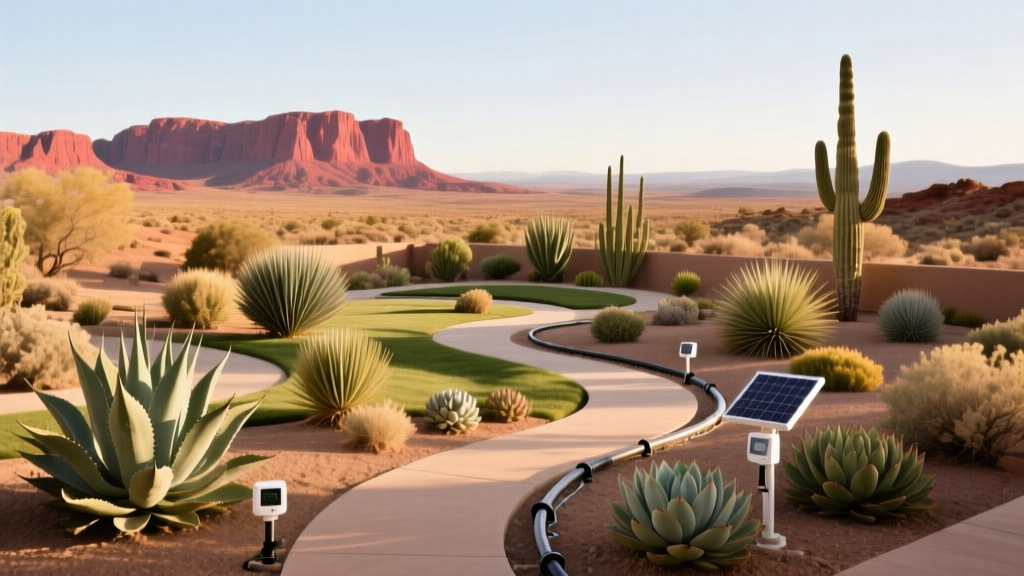
Xeriscaping and Smart Irrigation in the US Southwest
James MillerPublished
Transforming Your Southwest Landscape: Xeriscaping Meets Smart Technology
The US Southwest, encompassing regions like Arizona, New Mexico, Nevada, and parts of Southern California, presents a unique set of challenges for homeowners and gardeners. With scorching summer temperatures frequently exceeding 105°F, low annual rainfall, and highly alkaline soils, maintaining a traditional turf lawn is both environmentally unsustainable and financially draining. However, bridging the gap between indoor comfort and outdoor living doesn't require a water-guzzling green lawn. By combining the ancient principles of xeriscaping with modern smart home irrigation technology, you can create a stunning, energy-efficient desert oasis that thrives in USDA Hardiness Zones 8 through 10.
The Challenge of the Arid Southwest Climate
Landscaping in the desert is fundamentally different from landscaping in temperate or humid climates. The soil in the Southwest is often heavy clay or excessively sandy, lacking the organic matter necessary to retain moisture. Furthermore, the intense UV index and dry, desiccating winds can strip moisture from plant leaves faster than roots can replace it. According to the City of Tucson Water Department, outdoor water use can account for up to 60% of a household's total water consumption in arid regions. Transitioning to a xeriscape design integrated with smart irrigation is not just a landscaping trend; it is a necessary adaptation to the regional climate that can reduce outdoor water use by up to 50% while increasing your property's curb appeal.
Core Principles of Southwest Xeriscaping
Xeriscaping is often misunderstood as simply replacing grass with rocks and cacti. In reality, it is a comprehensive approach to landscape design that focuses on water conservation through seven core principles. The Colorado State University Extension outlines these principles, which are universally applicable to arid and semi-arid climates. For the Southwest, the most critical principles are hydrozoning, soil amendment, and the use of inorganic mulches.
Hydrozoning Your Desert Property
Hydrozoning is the practice of grouping plants with similar water, sun, and soil requirements together. This prevents the common mistake of overwatering drought-tolerant native plants just to keep a nearby thirsty plant alive. In a Southwest landscape, you should divide your yard into three distinct zones:
- Oasis Zone (Zone 1): Located near patios, entryways, and outdoor living spaces. This zone utilizes higher-water plants to provide cooling shade and vibrant color where you spend the most time.
- Transition Zone (Zone 2): The middle ground that receives occasional irrigation. This area bridges the lush Oasis and the wild Desert zones, utilizing moderate-water desert adaptives.
- Desert Zone (Zone 3): The perimeter of your property. This zone relies entirely on natural rainfall once established and features native, highly drought-tolerant succulents and shrubs.
Soil Amendment and Inorganic Mulching
Unlike temperate gardens that rely heavily on organic compost, Southwest soils often require careful amendment to improve drainage rather than just water retention. For native desert plants, adding decomposed granite or pumice to heavy clay soils prevents root rot. When it comes to mulch, organic wood chips can blow away in desert monsoons and harbor pests. Instead, use inorganic mulches like crushed granite, river rock, or pea gravel. A 2-to-3-inch layer of decomposed granite not only retains soil moisture and suppresses weeds but also radiates heat away from plant roots, mimicking the natural desert floor.
Integrating Smart Irrigation Technology
The true magic of a modern Southwest landscape lies in how it is watered. Traditional timer-based sprinkler systems are notoriously inefficient, often watering the landscape during monsoon rains or applying water faster than the arid soil can absorb it, leading to massive runoff. Upgrading to a smart irrigation system bridges the gap between garden care and smart home integration.
Weather-Based vs. Soil Moisture Controllers
Smart irrigation controllers replace your outdated timer with a computerized hub that connects to your home's Wi-Fi. According to the EPA WaterSense program, smart controllers can save the average home nearly 7,600 gallons of water annually. There are two main types to consider for the Southwest:
- Weather-Based Controllers (Evapotranspiration or ET): Devices like the Rachio 3 or Orbit B-hyve use local weather station data, including temperature, humidity, solar radiation, and wind speed, to calculate the exact amount of water your landscape needs. If a summer monsoon is forecasted, the controller automatically skips the scheduled watering cycle.
- Soil Moisture Sensors: These involve burying sensors in the root zones of your hydrozones. The system will only trigger irrigation when the volumetric water content of the soil drops below a specific threshold, ensuring you never water soil that is already saturated.
Drip Irrigation vs. Smart Sprinklers
In the arid Southwest, overhead spraying is highly discouraged due to rapid evaporation and wind drift. Drip irrigation is the gold standard. By delivering water directly to the root zone at a slow, measurable rate, drip systems achieve up to 95% water efficiency. For a smart setup, connect your smart controller to a drip manifold equipped with pressure regulators (reducing household water pressure from 60 PSI to a safe 25 PSI for drip lines) and flush valves. Use Netafim drip tubing with built-in emitters for hedges, and individual button emitters (rated at 1 Gallon Per Hour or 2 GPH) for trees and large agaves.
Southwest Hydrozoning and Irrigation Schedule
To help you visualize how to program your smart controller, refer to the table below. This schedule assumes the use of a drip irrigation system and mature, established plants. Your smart controller will dynamically adjust these baseline frequencies based on real-time weather data.
| Hydrozone | Plant Examples | Irrigation Type | Summer Schedule | Winter Schedule |
|---|---|---|---|---|
| Oasis (Zone 1) | Citrus, Hybrid Roses, Bougainvillea | Drip (2-4 GPH Emitters) | 3x per week (deep soak) | 1x per week |
| Transition (Zone 2) | Texas Sage, Lantana, Red Yucca | Drip (1-2 GPH Emitters) | 2x per week | Once every 2 weeks |
| Desert (Zone 3) | Agave, Ocotillo, Saguaro, Palo Verde | Drip (1 GPH) or Natural | 1x per week (deep soak) | Natural Rainfall Only |
Note: Deep soaking is critical in the Southwest. It encourages roots to grow downward into the cooler, moister soil layers, protecting them from the baking surface heat. A 2 GPH emitter running for 3 hours delivers 6 gallons of water directly to the root ball, which is far more beneficial than 15 minutes of shallow watering.
Seasonal Maintenance for Arid Climates
While xeriscapes are famously low-maintenance, they are not no-maintenance. Seasonal care in the Southwest revolves around the extremes of summer heat and winter freezes.
Spring Preparation (March - April)
Spring is the time to prepare for the brutal summer ahead. Refresh your inorganic mulch layers to ensure a minimum depth of 2 inches. Prune winter-damaged branches from native shrubs like the Texas Ranger (*Leucophyllum frutescens*). This is also the ideal time to apply a slow-release, low-nitrogen fertilizer specifically formulated for desert soils, which often lack iron and zinc. If you have a smart irrigation system, inspect all drip lines for clogs or rodent damage and flush the lateral lines.
Summer Survival (May - August)
During the peak of summer, avoid heavy pruning, as the exposed bark of desert trees like the Palo Verde can suffer from severe sunscald. Allow your smart controller to manage the increased water demand. If you experience a heavy monsoon downpour, manually check your soil moisture sensors to ensure the system isn't overwatering the following day. Keep an eye out for agave snout weevils, a destructive pest common in the Southwest, and treat with systemic insecticides if necessary.
Winterizing (November - December)
While the Southwest is known for heat, high-elevation desert areas and regions like New Mexico can experience hard freezes. Protect sensitive Oasis zone plants by covering them with frost cloth. More importantly, you must winterize your smart irrigation system. Even in mild winters, an unexpected freeze can crack the plastic valves and drip manifolds. Drain the mainlines, insulate the above-ground backflow preventer, and use your smart controller's 'rain delay' or 'winterize' feature to shut off the water schedule until spring.
Conclusion
Embracing xeriscaping and smart irrigation in the US Southwest is a powerful way to harmonize your outdoor living space with the natural desert environment. By thoughtfully hydrozoning your property, selecting resilient native flora, and leveraging Wi-Fi-enabled weather controllers and precision drip lines, you can cultivate a vibrant, thriving landscape. Not only will you drastically reduce your water bills and maintenance chores, but you will also create a sustainable, energy-efficient garden that celebrates the stark, rugged beauty of the American Southwest.
