Pest Control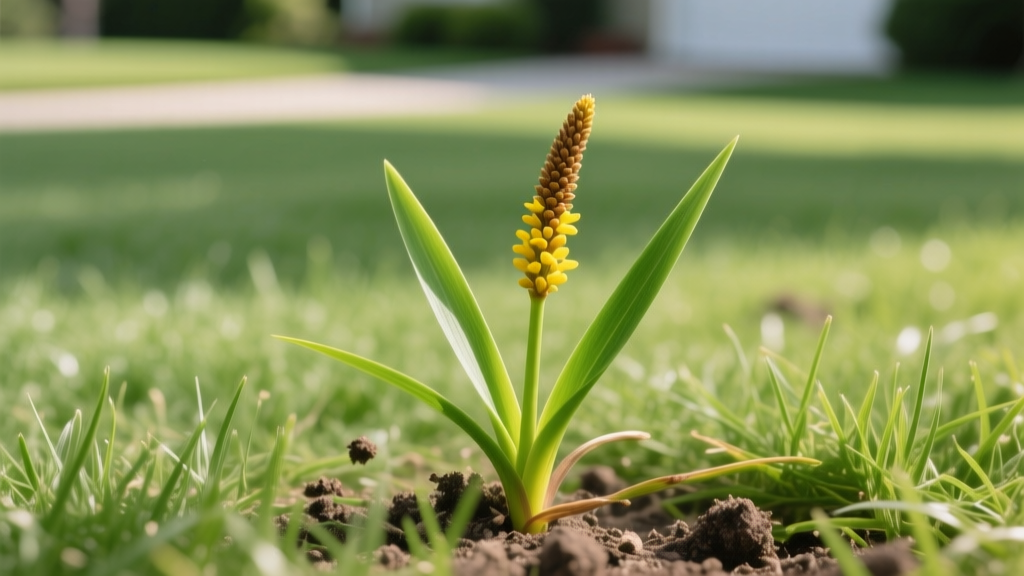
How to Identify and Eradicate Yellow Nutsedge Lawn Weeds
David ParkPublished
Introduction to Yellow Nutsedge: The Lawn Care Nightmare
When maintaining a pristine lawn, few pests are as frustrating and persistent as yellow nutsedge (Cyperus esculentus). Often mistakenly referred to as nutgrass, yellow nutsedge is neither a grass nor a broadleaf weed; it is a sedge. In the realm of integrated pest management (IPM), treating sedges requires a completely different approach than standard lawn weeds. If you have ever applied a broadleaf weed killer to your lawn only to watch the nutsedge thrive, you have experienced the unique biology of this plant.
Yellow nutsedge is a perennial pest that thrives in moist, poorly drained soils, though it can easily adapt to drier conditions once established. It grows significantly faster than most turfgrasses, often shooting up inches above the canopy just days after mowing. This rapid vertical growth not only ruins the aesthetic uniformity of your lawn but also aggressively competes with your turf for water, nutrients, and sunlight.
Sedges have edges, rushes are round, grasses have nodes that go all the way down. This classic horticultural rhyme is the first step in proper weed identification.
How to Accurately Identify Yellow Nutsedge
Proper identification is the cornerstone of any successful pest control strategy. Misidentifying nutsedge as a standard grassy weed like crabgrass will lead to wasted time, money, and chemical applications. According to Penn State Extension, yellow nutsedge has several distinct morphological features that set it apart from desirable turfgrasses.
- Stem Structure: The most definitive characteristic is the stem. If you roll the stem of yellow nutsedge between your fingers, you will feel that it is distinctly triangular (V-shaped).
- Leaf Color and Texture: The leaves are typically a lighter, more vibrant yellow-green compared to the darker green of surrounding turfgrass. They are thick, stiff, and have a prominent midrib groove.
- Seedheads: In late summer, mature plants produce a cluster of flat, straw-colored or golden-brown spikelets radiating from a central point, resembling a small starburst or umbrella.
- Root System and Tubers: Below the soil surface, yellow nutsedge produces an extensive network of rhizomes and small, edible tubers (nutlets). These tubers are initially white and turn dark brown or black as they mature.
Comparison Chart: Yellow Nutsedge vs. Purple Nutsedge vs. Turfgrass
| Feature | Yellow Nutsedge | Purple Nutsedge | Standard Turfgrass |
|---|---|---|---|
| Stem Shape | Triangular (3-sided) | Triangular (3-sided) | Round or flattened |
| Leaf Tip | Sharply pointed (tapered) | Blunt or rounded | Varies (boat-shaped or pointed) |
| Tuber Color | Light brown / golden | Dark purple / black | N/A (No tubers) |
| Tuber Chain | Forms at the end of rhizomes | Forms in chains along rhizomes | N/A |
| Growth Rate | Extremely fast in summer | Extremely fast in summer | Moderate to slow |
Why is Yellow Nutsedge So Difficult to Control?
To understand how to eradicate yellow nutsedge, you must understand its reproductive strategy. The true danger of this weed lies beneath the soil. A single yellow nutsedge plant can produce hundreds of tubers in a single growing season. These tubers can remain dormant in the soil profile for several years, waiting for the right moisture and temperature conditions to sprout.
Furthermore, when you pull a nutsedge plant by hand, the rhizome usually snaps, leaving the tubers safely in the ground. In fact, the physical stress of pulling the plant can stimulate dormant buds on the remaining rhizome to activate, resulting in multiple new shoots emerging where there was once only one. This makes manual removal highly counterproductive unless the soil is completely excavated.
Cultural and Preventative IPM Strategies
Integrated Pest Management (IPM) dictates that chemical controls should be a last resort, or at least paired with cultural practices that make the environment less hospitable to the pest. Yellow nutsedge is an indicator plant for excess soil moisture and poor drainage.
1. Correct Irrigation and Drainage Issues
If you have a nutsedge outbreak, audit your irrigation system. Look for leaky sprinkler heads, over-watering, or areas where water naturally pools. Aerating compacted soil and incorporating organic matter can improve percolation. By drying out the top few inches of the soil profile, you severely limit the germination of new nutsedge shoots.
2. Optimize Mowing Height
Nutsedge thrives in full sunlight and struggles when shaded. By raising your mower deck to 3.5 or 4 inches, you encourage your desirable turfgrass to grow thicker and taller, casting a dense shadow over the soil surface. This canopy shade suppresses nutsedge emergence and weakens existing shoots.
3. Maintain Turf Density
A thick, healthy lawn is the best natural defense against any weed. Follow a strict fertilization schedule tailored to your specific grass type (e.g., Kentucky Bluegrass, Bermudagrass, or Zoysia) to ensure the turf can outcompete weeds for nutrients.
Chemical Control: Herbicides That Actually Work
Standard broadleaf herbicides containing 2,4-D, dicamba, or MCPP will have zero effect on yellow nutsedge. Similarly, standard grassy weed preventatives often fail to stop tubers from sprouting. To achieve chemical control, you must use herbicides specifically formulated for sedges. According to NC State Extension, the most effective active ingredients target the unique enzymatic pathways of sedges.
Top Active Ingredients for Nutsedge Eradication
- Halosulfuron-methyl: Widely considered the gold standard for nutsedge control. It is a systemic herbicide that travels down through the plant and into the rhizomes, killing the hidden tubers. Popular Product: SedgeHammer. Cost is typically around $30 to $40 for a small box that treats up to 1,000 square feet, or larger bulk bottles for professional use.
- Sulfentrazone: A fast-acting contact and systemic herbicide that causes rapid tissue necrosis (browning) within 24 to 48 hours. It is excellent for quick knockdown but may require a follow-up application to ensure deep tuber death. Popular Product: Dismiss. Costs approximately $60 to $90 per 8 oz bottle, treating roughly 8,000 to 16,000 square feet depending on the dilution rate.
- Imazaquin: Primarily used on warm-season turfgrasses (like Bermudagrass and St. Augustine). It provides excellent systemic control but has a long residual effect, meaning you must wait several months before overseeding or planting ornamental beds. Popular Product: Image Kills Nutsedge. Generally costs $20 to $30 for a ready-to-spray hose-end bottle.
Step-by-Step Nutsedge Removal Plan
Timing and application technique are critical when applying sedge-specific herbicides. Follow this protocol for maximum efficacy:
- Wait for the Right Growth Stage: The best time to treat yellow nutsedge is in late spring or early summer when the plant is actively growing and has between 3 to 8 leaves. At this stage, the plant has exhausted its initial tuber energy reserves but has not yet produced new tubers for the season.
- Prepare the Lawn: Do not mow for two days before application, and wait two days after application. This maximizes the leaf surface area available to absorb the herbicide.
- Mix and Apply: If using a concentrate like Halosulfuron-methyl, mix at a rate of roughly 0.5 to 0.66 ounces per 1,000 square feet. Always add a non-ionic surfactant (about 1 to 2 teaspoons per gallon of water) to help the chemical stick to the waxy surface of the nutsedge leaves.
- Watering Restrictions: Ensure no rainfall or irrigation occurs for at least 24 hours post-application to allow the chemical to fully translocate into the root system.
- Follow-Up Treatment: Yellow nutsedge is rarely eliminated in a single application. Inspect the treated area 21 to 30 days later. If new shoots emerge from surviving deep-soil tubers, apply a second treatment. Most products limit you to 2 or 3 applications per calendar year.
Conclusion
Yellow nutsedge is a formidable lawn pest, but it is not invincible. By combining accurate identification with cultural practices that reduce soil moisture and utilizing targeted systemic herbicides like halosulfuron-methyl or sulfentrazone, you can reclaim your turf. Patience and consistency are key; monitor your lawn throughout the growing season, address drainage issues promptly, and treat new outbreaks early before the hidden tubers can multiply. With a dedicated IPM approach, a nutsedge-free lawn is entirely achievable.