Lawn Care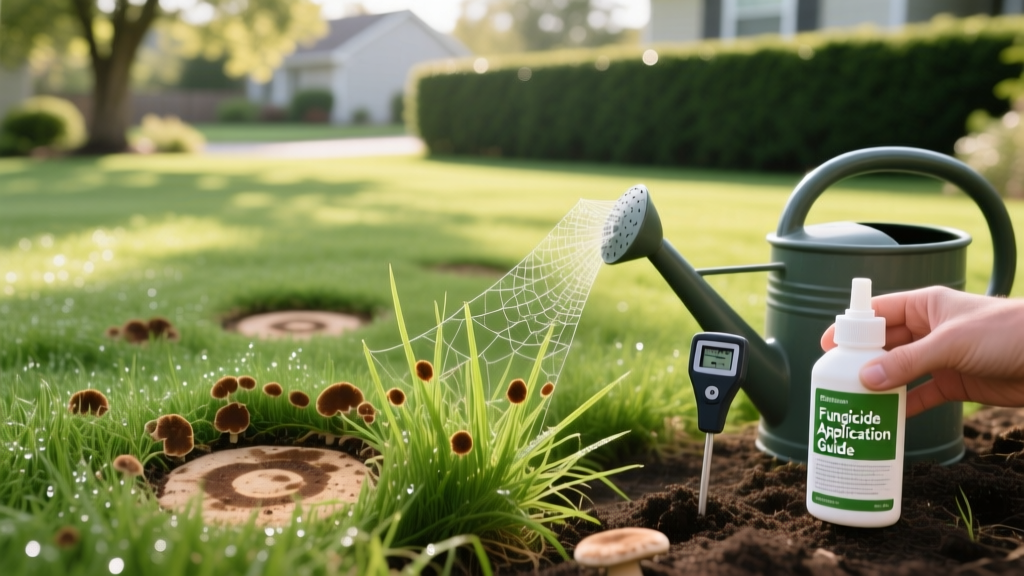
Identifying and Treating Brown Patch and Dollar Spot
Anna KowalskiPublished
Introduction to Summer Turfgrass Fungal Diseases
Summer is undeniably the most stressful season for cool-season turfgrasses such as Tall Fescue, Kentucky Bluegrass, and Perennial Ryegrass. As temperatures rise and humidity levels soar, your lawn becomes highly susceptible to a variety of fungal pathogens. Among the most common and destructive of these are Brown Patch and Dollar Spot. Both diseases can rapidly transform a lush, green landscape into a patchy, brown eyesore if left unmanaged. Understanding the environmental triggers, identifying the unique visual symptoms, and implementing a robust treatment plan are essential steps for any serious lawn care enthusiast. In this comprehensive guide, we will break down exactly how to identify, prevent, and treat these two notorious turfgrass diseases.
Brown Patch (Rhizoctonia solani): Identification and Causes
Brown patch is a foliar disease caused by the soil-borne fungus Rhizoctonia solani. It is notorious for its aggressive nature, capable of killing large areas of turf in a matter of days under the right conditions. The disease primarily targets the leaves and sheaths of the grass plant, though severe infections can lead to crown and root rot.
The hallmark symptom of brown patch is the appearance of circular, brown, or tan patches that range from a few inches to several feet in diameter. In the early morning, when dew is heavy, you may notice a dark, smoke-colored ring at the leading edge of the patch. This is known as a "smoke ring" and indicates active mycelial growth. Upon closer inspection of individual grass blades, you will see irregular, tan-colored lesions with dark brown borders. These lesions often cause the leaf blade to collapse and die.
Brown patch thrives in hot, humid weather. According to North Carolina State University's TurfFiles, the disease becomes highly active when nighttime temperatures remain above 68°F (20°C) and daytime temperatures exceed 80°F (27°C), especially when accompanied by prolonged leaf wetness from heavy dew, evening irrigation, or frequent rainfall.
Dollar Spot (Clarireedia jacksonii): Identification and Causes
Dollar spot, formerly attributed to Sclerotinia homoeocarpa and now known to be caused by Clarireedia jacksonii, is another pervasive summer disease. Unlike brown patch, which favors excessive nitrogen and high heat, dollar spot often exploits turf that is under-fertilized and experiencing moisture stress or prolonged morning dew.
As the name suggests, dollar spot initially presents as small, straw-colored circles roughly the size of a silver dollar (about 1 to 3 inches across). As the disease progresses, these small spots can coalesce into larger, irregular patches. The most reliable way to confirm dollar spot is by examining individual grass blades for distinctive hourglass-shaped lesions with bleached centers and reddish-brown margins. In the early morning, a white, cobweb-like mycelium may be visible spanning across the infected leaves.
Research from UMass Extension indicates that dollar spot is heavily influenced by nitrogen deficiency and low soil moisture, making it particularly problematic on golf course fairways and residential lawns that are not receiving adequate summer nutrition or consistent irrigation.
Comparison Chart: Brown Patch vs. Dollar Spot
| Feature | Brown Patch | Dollar Spot |
|---|---|---|
| Primary Pathogen | Rhizoctonia solani | Clarireedia jacksonii |
| Patch Size | 6 inches to 3+ feet | 1 to 3 inches (silver dollar-sized) |
| Leaf Lesions | Irregular tan spots with dark borders | Hourglass-shaped with bleached centers |
| Early Morning Sign | Dark "smoke ring" at patch edge | White, cobweb-like mycelium |
| Primary Triggers | High heat, high humidity, excess nitrogen | Prolonged dew, low nitrogen, moisture stress |
Cultural Practices for Disease Prevention
Before reaching for chemical controls, it is imperative to establish a cultural environment that discourages fungal growth. Fungi require specific conditions to infect turf, and altering your lawn care routine can drastically reduce disease pressure.
1. Strategic Irrigation
Leaf wetness duration is the most critical factor in fungal infection. Never water your lawn in the evening, as this leaves the grass blades wet overnight, creating a perfect breeding ground for pathogens. Instead, water deeply and infrequently between 4:00 AM and 6:00 AM. This allows the water to penetrate the soil while the rising sun quickly dries the leaf canopy. Aim for 1 to 1.5 inches of water per week, including rainfall.
2. Proper Mowing Techniques
Mowing too low stresses cool-season grasses and reduces their ability to photosynthesize and fight off disease. Keep Tall Fescue at 3.5 to 4 inches and Kentucky Bluegrass at 2.5 to 3 inches during the summer months. Furthermore, always use a sharp mower blade. Dull blades tear the grass, creating ragged wounds that serve as direct entry points for fungal spores.
3. Balanced Fertilization
Nitrogen management is a delicate balancing act. While brown patch exploits turf with excessive, fast-release nitrogen in the heat of summer, dollar spot attacks nitrogen-starved lawns. Apply slow-release nitrogen fertilizers in the late spring and early fall. Avoid heavy nitrogen applications when daytime temperatures consistently exceed 85°F.
4. Thatch Management and Aeration
A thatch layer thicker than 0.5 inches acts like a sponge, trapping moisture against the soil surface and harboring fungal spores. Core aeration in the fall helps break down thatch, relieves soil compaction, and improves drainage, ultimately creating a healthier root zone that is more resilient to summer stress.
Chemical Treatments and Fungicide Application
When cultural practices are not enough to halt an active outbreak, or if your lawn has a historical susceptibility to these diseases, fungicides become a necessary tool. Fungicides are most effective when used preventatively, but certain systemic options can offer curative action if applied at the very first sign of disease.
Selecting the Right Fungicide
For homeowners, granular fungicides are generally the easiest to apply using a standard broadcast spreader. Scotts DiseaseEx is a widely available and highly effective granular product whose active ingredient is Azoxystrobin (a QoI strobilurin). It provides excellent control over both brown patch and dollar spot. The recommended application rate is typically 2.87 oz per 1,000 square feet. A standard 10 lb bag costs around $25 to $35 and covers up to 5,000 square feet.
For liquid applications, which often provide faster systemic absorption, products containing Propiconazole (such as Bayer Advanced Fungus Control or generic Banner Maxx) are highly effective. Propiconazole is a DMI (triazole) fungicide that halts fungal growth from the inside out. Liquid concentrates usually cost between $30 and $50 per pint, which can be diluted to treat 10,000 square feet or more, making it a cost-effective option for larger properties.
Application Timing and Resistance Management
To prevent an active outbreak, begin preventative applications in late spring when nighttime temperatures consistently hit 65°F. Reapply every 21 to 28 days depending on the product label and environmental pressure. If treating an active infection, use the higher "curative" rate listed on the product label and consider combining a contact fungicide with a systemic one for immediate knockdown and long-term protection.
Crucially, you must rotate fungicide modes of action (FRAC groups). Applying the same chemical class repeatedly will lead to fungal resistance. Alternate between a strobilurin (FRAC Group 11, like Azoxystrobin) and a triazole (FRAC Group 3, like Propiconazole) to ensure long-term efficacy. Always read and follow the manufacturer's label instructions, as the label is the law regarding pesticide application rates and safety protocols.
Conclusion
Brown patch and dollar spot are formidable adversaries for cool-season lawns, but they are entirely manageable with the right knowledge and proactive approach. By accurately identifying the symptoms, adjusting your irrigation and mowing habits, and strategically deploying fungicides when necessary, you can maintain a thick, vibrant lawn even in the peak of summer. Remember that a healthy, deeply rooted turfgrass plant is your first and best line of defense against fungal diseases. Stay observant, act quickly at the first sign of trouble, and your lawn will reward you with enduring beauty and resilience.