Lawn Care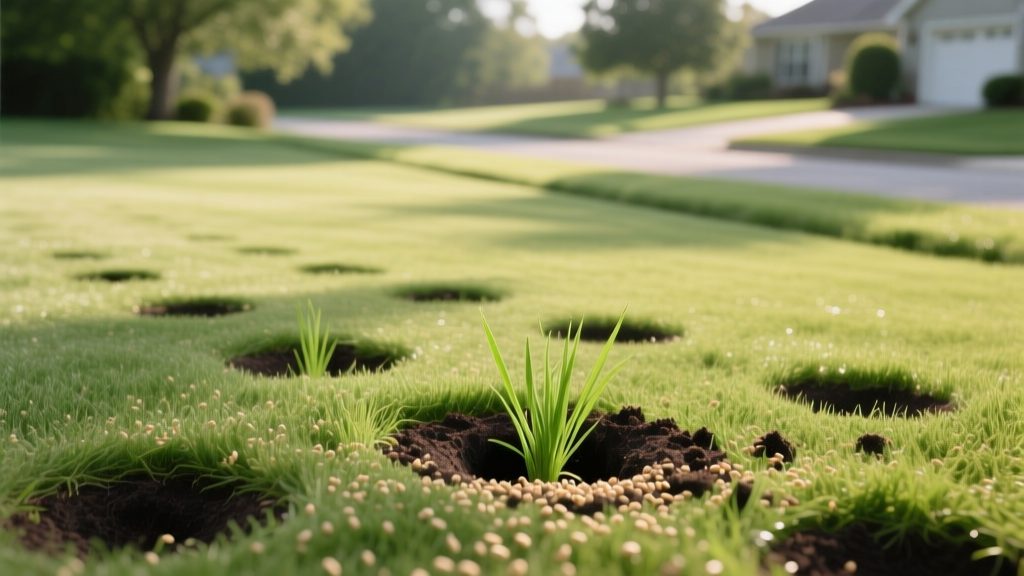
Core Aeration and Overseeding Cool-Season Lawns Guide
Lisa ThompsonPublished
Why Cool-Season Lawns Need Aeration and Overseeding
Cool-season grasses, such as Kentucky Bluegrass, Tall Fescue, and Perennial Ryegrass, are the backbone of northern and transitional zone lawns. However, these grasses face intense environmental stressors during the hot summer months, often resulting in thinning turf, soil compaction, and thatch buildup. To restore a lush, dense, and resilient lawn, homeowners must employ a combination of core aeration and overseeding. This dual approach addresses both the subterranean soil environment and the surface-level turf density, creating the ideal conditions for vigorous root development and weed suppression.
Over time, foot traffic, heavy equipment, and natural soil settling cause the soil particles to compress. This compaction restricts the flow of essential oxygen, water, and nutrients to the root zone. Simultaneously, the existing grass canopy thins out due to summer heat stress and disease pressure, opening the door for opportunistic weeds like crabgrass and dandelions. By pairing aeration with overseeding, you physically relieve soil compaction while introducing new, genetically robust grass seedlings directly into the newly created soil channels.
Core Aeration vs. Spike Aeration: The Verdict
When discussing lawn aeration, it is crucial to distinguish between core aeration and spike aeration. Spike aerators simply punch solid holes into the ground using solid tines. While this may seem beneficial, the act of driving a solid spike into the earth actually compresses the surrounding soil laterally, potentially worsening compaction issues in heavy clay soils.
Core aeration, on the other hand, utilizes hollow tines to extract cylindrical plugs of soil and thatch—typically 2 to 3 inches deep and 0.5 to 0.75 inches in diameter—from the lawn. According to turfgrass experts at Clemson University Extension, removing these cores physically fractures the compacted soil layers, allowing for immediate gas exchange and water infiltration. Furthermore, the extracted soil cores are left on the surface to break down, acting as a natural topdressing that introduces beneficial microbes back into the thatch layer, accelerating its decomposition.
Optimal Timing: When to Execute
Timing is the single most critical factor in the success of your aeration and overseeding project. For cool-season grasses, early fall is the undisputed champion of lawn renovation. The ideal window generally falls between late August and mid-October, depending on your specific hardiness zone.
During early fall, soil temperatures remain warm (ideally between 60°F and 75°F), which promotes rapid seed germination. Meanwhile, the cooling air temperatures reduce heat stress on young seedlings and minimize the evaporation rate of soil moisture. Additionally, fall weed competition is significantly lower than in spring, giving your new grass a distinct competitive advantage. Performing this process in spring is generally discouraged for cool-season lawns, as the impending summer heat will likely scorch young, shallow-rooted seedlings before they can establish a deep root system.
Equipment, Costs, and Lawn Preparation
Proper preparation ensures that your aeration tines can penetrate deeply and that your seed makes direct contact with the soil. Begin by mowing your lawn slightly shorter than usual, targeting a height of 1.5 to 2 inches. This reduces the physical barrier for the overseeder and allows sunlight to reach the soil surface. Next, flag all irrigation heads, shallow utility lines, and invisible dog fences with bright marking paint or flags to prevent costly damage.
For equipment, you will need a walk-behind core aerator. These can be rented from most local hardware stores and equipment rental centers for approximately $50 to $90 per day. Because these machines are exceptionally heavy (often weighing over 250 pounds) and feature self-propelled drive wheels, it is highly recommended to have a second person assist you with loading and unloading. You will also need a broadcast spreader for the seed and a high-quality starter fertilizer.
Step-by-Step Aeration and Overseeding Process
Step 1: Hydrate the Soil
Two days before your scheduled aeration, water your lawn deeply. The soil should be moist but not muddy. If the ground is too dry, the aerator tines will bounce off the surface; if it is too wet, the tines will clog with mud and fail to pull clean plugs.
Step 2: The Aeration Pattern
Operate the core aerator across your lawn in a systematic, crisscross pattern. Make one full pass horizontally and a second pass vertically. In highly compacted areas, such as high-traffic pathways or near driveways, make a third diagonal pass. Aim to pull between 20 to 40 plugs per square foot. Leave the extracted soil cores exactly where they fall; they will break apart within a few weeks with the help of mowing and rainfall.
Step 3: Overseeding the Lawn
Immediately following aeration, apply your grass seed using a broadcast spreader. The open aeration holes provide a perfect, protected micro-environment for the seeds to fall into, ensuring vital seed-to-soil contact. For optimal coverage, split your total seed application in half, applying the first half in a north-south direction and the second half in an east-west direction.
Seed Selection and Application Rates
Choosing the right seed and applying it at the correct rate prevents overcrowding and resource depletion. Below is a comparison chart for common cool-season grasses. According to the University of Minnesota Extension, overseeding rates should be roughly half of the rates used for establishing a brand-new lawn from bare soil.
| Grass Species | New Lawn Rate (per 1,000 sq ft) | Overseeding Rate (per 1,000 sq ft) | Best Use Case |
|---|---|---|---|
| Tall Fescue | 6 - 8 lbs | 3 - 4 lbs | High traffic, drought-prone areas |
| Kentucky Bluegrass | 2 - 3 lbs | 1 - 1.5 lbs | Full sun, aesthetic premium lawns |
| Perennial Ryegrass | 5 - 7 lbs | 2.5 - 3.5 lbs | Rapid germination, patch repair |
| Fine Fescue Blend | 4 - 5 lbs | 2 - 2.5 lbs | Shaded areas, low-maintenance zones |
Fertilization: The Starter Food Advantage
After seeding, apply a high-quality starter fertilizer. Starter fertilizers are specifically formulated with elevated levels of Phosphorus (the middle number on the N-P-K fertilizer bag), which is critical for stimulating rapid root development in young seedlings. A popular and effective choice is Scotts Turf Builder Starter Food for New Grass (24-25-4) or a professional-grade Lesco Starter Fertilizer (18-24-12). Apply the fertilizer immediately after seeding to ensure the nutrients are available the moment the seeds germinate.
The 21-Day Watering and Aftercare Protocol
The most common reason overseeding fails is improper watering. Grass seed must remain consistently moist until it germinates and establishes a rudimentary root system. Drying out even once during the germination phase can kill the embryo inside the seed.
Pro Tip: If your schedule prevents you from watering manually multiple times a day, invest in a programmable digital hose timer (such as the Orbit B-hyve or Melnor AquaTimer) to automate your irrigation cycles during the critical first two weeks.
Days 1 to 14: The Germination Phase
Water the lawn lightly 2 to 3 times per day for about 5 to 10 minutes per zone. The goal is not to saturate the deep soil, but to keep the top inch of the soil and the seed consistently damp. If the weather is exceptionally hot or windy, you may need to increase this to 4 short cycles per day to prevent the surface from crusting over.
Days 15 to 21: The Establishment Phase
Once the majority of the seed has germinated and you see a green fuzz of new grass, transition to deeper, less frequent watering. Water once a day for 15 to 20 minutes. This encourages the new roots to stretch deeper into the aeration holes in search of moisture, building drought tolerance.
The First Mow
Resist the urge to mow until the new grass reaches a height of 3.5 to 4 inches. When you do mow, ensure your mower blades are freshly sharpened to prevent tearing the delicate new seedlings out of the ground. Set your mower deck to cut the grass down to 3 inches, and never remove more than one-third of the grass blade in a single mowing session. By following this meticulous aeration and overseeding protocol, your cool-season lawn will enter the winter months with a thickened canopy and a robust root system, ready to explode with vibrant green growth the following spring.