Lawn Care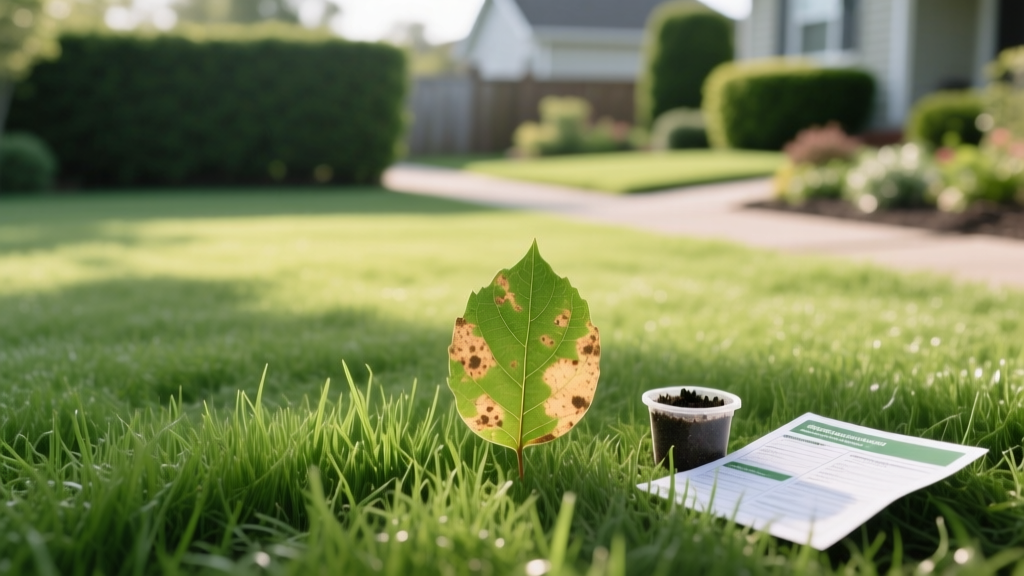
Dollar Spot Lawn Disease: Identification and Treatment Guide
Sarah ChenPublished
What is Dollar Spot Disease?
Dollar spot is one of the most common and frustrating fungal diseases affecting both cool-season and warm-season turfgrasses. Caused by the pathogen Clarireedia jacksonii (formerly known as Sclerotinia homoeocarpa), this disease is notorious for its ability to rapidly destroy the aesthetic appeal of a meticulously maintained lawn. Unlike some turf diseases that only attack the leaf blades, severe dollar spot infections can kill the entire plant, including the roots and crown, leaving behind sunken, dead patches that require costly and time-consuming renovation.
According to the NC State Extension TurfFiles, dollar spot is particularly aggressive on creeping bentgrass, annual bluegrass, and bermudagrass on golf courses, but it is increasingly problematic for homeowners managing tall fescue, Kentucky bluegrass, and zoysiagrass lawns. Understanding the life cycle of the fungus, recognizing its early warning signs, and implementing a robust cultural and chemical management strategy are essential for maintaining a pristine, disease-free landscape.
Identifying Dollar Spot: Signs and Symptoms
Early identification is the cornerstone of effective disease management. Dollar spot earns its name from the classic symptom of small, circular, straw-colored patches roughly the size of a silver dollar (about 2 to 3 inches in diameter). However, in residential lawns with wider mowing heights, these spots can expand to 6 inches or more. If left untreated, these individual spots will coalesce into large, irregular areas of dead turf.
To confirm a dollar spot infection, homeowners should look for the following specific diagnostic indicators:
- Leaf Lesions: Examine individual grass blades closely. Dollar spot creates distinctive hourglass-shaped or band-like lesions across the leaf blade. These lesions typically feature a bleached, straw-colored center with a distinct purplish-brown or reddish border.
- Mycelium Growth: In the early morning, when the grass is wet with dew and the air is still, you may observe a white, cobweb-like fungal growth (mycelium) hovering over the infected patches. This mycelium disappears quickly as the sun dries the turf canopy.
- Thinning Turf: Unlike brown patch, which often leaves a 'smoke ring' or spares the crown in mild cases, dollar spot frequently kills the entire plant, leading to severe thinning and pitting of the turf surface.
Comparison Chart: Dollar Spot vs. Other Common Turf Diseases
Misdiagnosis can lead to the wrong treatment, wasting time and money. Use this comparison chart to differentiate dollar spot from other common lawn diseases.
| Disease | Patch Size | Leaf Lesion Characteristics | Primary Environmental Triggers |
|---|---|---|---|
| Dollar Spot | 2 to 6 inches | Hourglass bands, bleached center, purplish-brown margins | Low nitrogen, high humidity, dry soil, wet canopy |
| Brown Patch | 6 inches to several feet | Irregular tan lesions with dark borders, often on leaf edges | High heat (80F+), high humidity, excess nitrogen |
| Pythium Blight | 1 to 3 inches, irregular | Water-soaked, greasy, slimy appearance, rapid collapse | Hot days, warm nights (70F+), poor drainage |
| Snow Mold | 3 to 12 inches | Matted, crusty, pink or gray webbing after snowmelt | Prolonged snow cover, un-raked leaves, late fall nitrogen |
Environmental Conditions That Trigger Outbreaks
Dollar spot thrives in a very specific microclimate. The pathogen becomes active when daytime temperatures range between 60°F and 85°F, coupled with high relative humidity or prolonged periods of leaf wetness. Interestingly, while the turf canopy requires moisture for the spores to germinate and infect the leaf tissue, the underlying soil is often under moisture stress. This combination of a wet canopy and dry soil is a hallmark trigger for dollar spot outbreaks.
Furthermore, the UMass Extension Turf Program notes that turfgrass suffering from nitrogen deficiency is exponentially more susceptible to dollar spot. The fungus exploits weakened plants that lack the necessary nutrients to produce defensive compounds and rapidly replace damaged leaf tissue. Heavy thatch layers and poor air circulation also trap moisture at the soil line, creating an ideal incubator for the disease.
Cultural Practices for Prevention and Control
Before reaching for chemical fungicides, homeowners must address the underlying cultural deficiencies that invite dollar spot. Implementing the following best practices will drastically reduce disease pressure.
1. Strategic Nitrogen Fertilization
Maintaining adequate nitrogen levels is the single most effective cultural defense against dollar spot. Apply a balanced, slow-release nitrogen fertilizer in the late spring and early summer to ensure the grass is actively growing. A general guideline is to apply 0.5 to 1.0 pounds of actual nitrogen per 1,000 square feet when symptoms first appear or just prior to the historical onset of the disease in your region. This flush of growth allows the turf to outpace the fungal damage and recover quickly.
2. Deep and Infrequent Irrigation
Avoid light, frequent watering, which keeps the leaf canopy wet for extended periods while failing to moisten the root zone. Instead, water deeply and infrequently to encourage deep root growth and alleviate soil moisture stress. Always irrigate in the early morning (between 4:00 AM and 6:00 AM) so the grass blades dry quickly once the sun rises. If morning dew is heavy, use a bamboo pole to gently 'whip' the dew off the grass or run a brief irrigation cycle to wash the dew off the leaves before the sun bakes it into the tissue.
3. Thatch Management and Aeration
A thatch layer exceeding 0.5 inches acts like a sponge, holding moisture against the grass crown and harboring fungal sclerotia (survival structures). Perform core aeration in the spring or fall to break up compacted soil, improve drainage, and accelerate thatch decomposition. Follow aeration with a light topdressing of compost or sand to further dilute the thatch layer and introduce beneficial microbes that compete with the dollar spot pathogen.
4. Mowing Height and Frequency
Never remove more than one-third of the grass blade in a single mowing. Scalping the lawn stresses the plant and opens wounds for the fungus to enter. For cool-season grasses like Kentucky bluegrass and tall fescue, maintain a mowing height of 3.0 to 4.0 inches during the peak summer stress months. Taller grass shades the soil, reducing soil temperature and moisture evaporation, which in turn reduces the humidity at the turf canopy level.
Chemical Treatment: Fungicide Options and Application
When cultural practices are insufficient, or when an outbreak is actively spreading, chemical intervention is necessary. Fungicides are most effective when used preventatively or at the very first sign of disease. Curative applications can stop the spread, but they cannot resurrect dead grass.
Active Ingredients and Product Selection
For residential lawn care, several classes of fungicides are highly effective against Clarireedia jacksonii:
- DMI Fungicides (Group 3): Active ingredients like propiconazole (e.g., Banner MAXX, Bonide Infuse) and myclobutanil (e.g., Eagle 20EW) offer excellent systemic, curative, and preventative control. They work by inhibiting fungal cell membrane synthesis.
- QoI Fungicides (Group 11): Products containing azoxystrobin (e.g., Heritage SC, Scotts DiseaseEX) are highly effective preventatives that also provide broad-spectrum control against other diseases like brown patch and pythium blight.
- SDHI Fungicides (Group 7): Fluxapyroxad and penthiopyrad are newer chemistries that offer outstanding control and are excellent tools for resistance management.
Application Rates and Resistance Management
Always read and follow the manufacturer's label instructions. A typical preventative application of a consumer-grade azoxystrobin granular product costs between $40 and $70 and covers roughly 5,000 square feet, providing 14 to 28 days of residual control. Systemic liquid concentrates like propiconazole are often more cost-effective, costing around $30 to $50 for the same coverage area.
Critical Warning: The dollar spot pathogen is notorious for developing resistance to single-site fungicides, particularly the QoI (Group 11) and DMI (Group 3) classes. To prevent resistance, never use the same fungicide class for consecutive applications. Rotate between different FRAC (Fungicide Resistance Action Committee) codes every 14 to 21 days during peak disease pressure.
Long-Term Recovery and Turfgrass Selection
If dollar spot has killed the turf down to the crown, fungicides will only stop the spread; they will not fill in the bare spots. Once the disease is controlled, rake out the dead debris, lightly loosen the topsoil, and overseed the affected areas. When selecting seed, consult the National Turfgrass Evaluation Program (NTEP) data to choose cultivars with proven genetic resistance to dollar spot. Modern cultivars of tall fescue and Kentucky bluegrass have been specifically bred to tolerate low-nitrogen environments and resist fungal infections, providing a long-term, sustainable solution to a recurring lawn care nightmare.